Before You Wrap a Single Van: Vet the Compliance, the Installers and the Paperwork
Legal display rules, verifiable installer skill and written terms matter more than a glossy portfolio when you're choosing a fleet graphics vendor.
 By AnselmRoarke ·
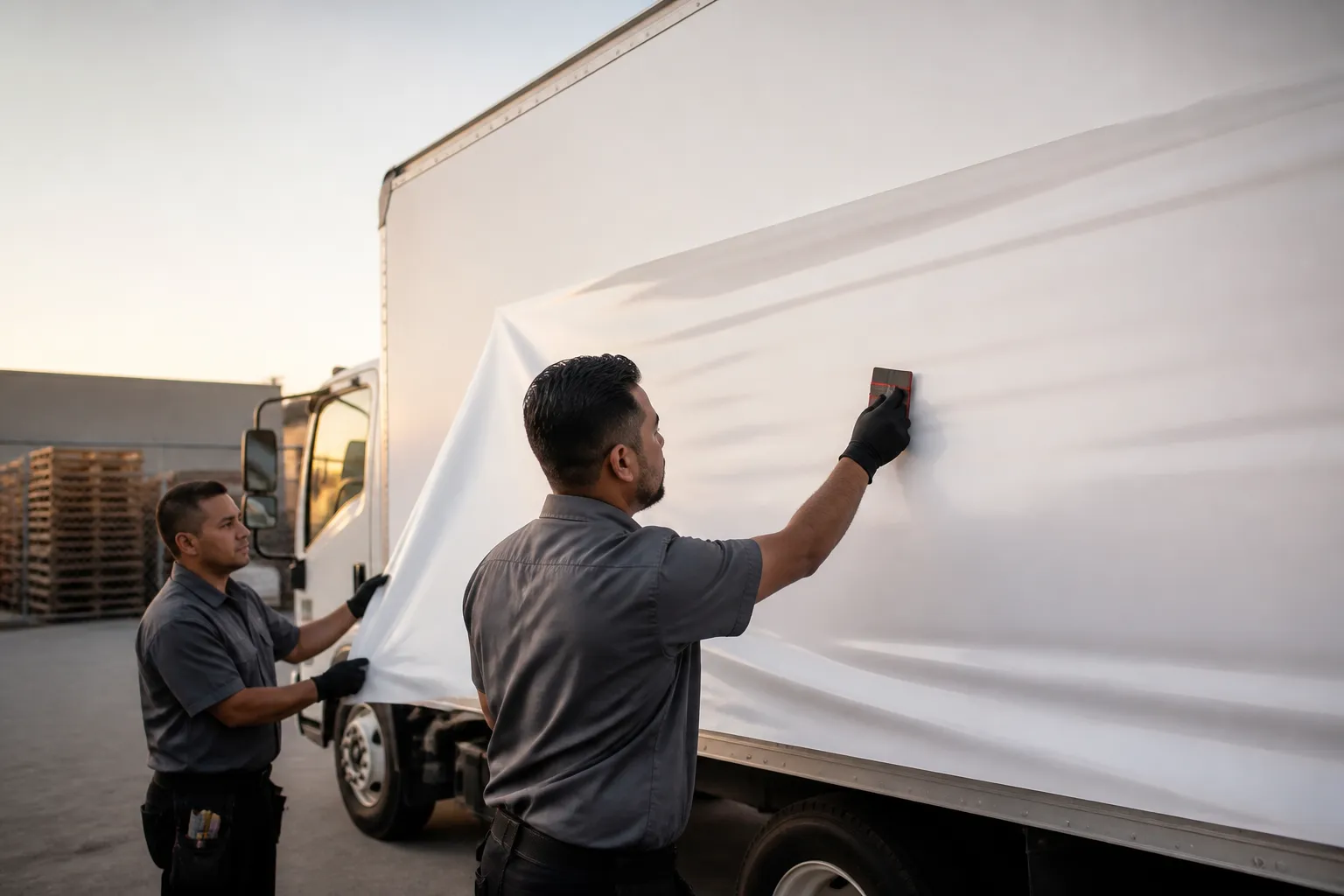
Pick the company that talks about your legal display requirements before it shows you a single mockup. Then confirm the installers can actually install. Then get everything in writing before any vinyl is printed. Most sales pitches skip at least two of those steps. This guide is general information, not legal, financial or professional advice, so check specifics with your state agency and a licensed professional.
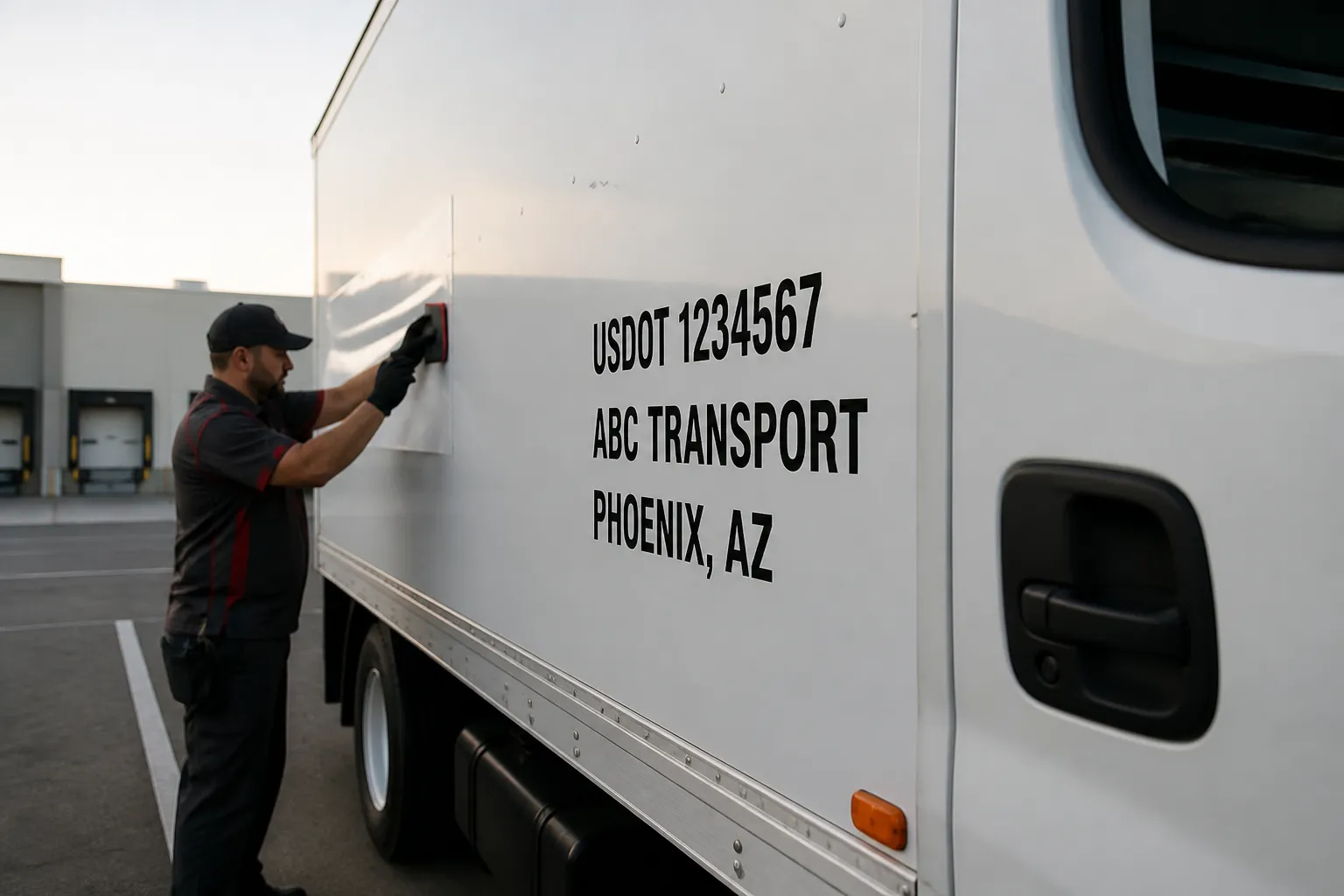
Start with what your vehicles must display
Design comes second. First find out whether your vehicles need a federal USDOT number on the outside. The sources point to three triggers: a gross vehicle weight rating above 10,001 lb, hauling goods or passengers for business across state lines, and carrying certain hazardous materials. Local service fleets may also be asked to show a legal business name, city and state, and a USDOT or state DOT number where one applies.
The rules usually reach past the number itself. Expect requirements on letter height, color contrast against the body or wrap, and placement on both sides, typically near the cab doors. A box truck has a big flat side that suits a bold logo. A van and a trailer do not. Placement differs by vehicle type, so one layout will not fit the whole fleet.
States add their own wrinkles. Massachusetts and other New England states can have rules that differ from federal guidance. I could not find a minimum letter height figure in the research, and I am not going to guess one. Confirm current requirements with the relevant state agency before anything is printed. A wrap that looks great and fails inspection is an expensive poster.
Verify installer skill, not just the portfolio
A portfolio proves someone has good taste. It does not prove the person with the squeegee knows what they are doing. The Professional Decorative and Graphic Association offers a Vehicle & Fleet Wraps designation that tests hands-on installation, not design. Its path is an online prework course, then a three-day workshop with an evaluated test. The program is recognized by several major film makers, and its Master Certified credential is described as not tied to any one vinyl manufacturer.
What does the test cover? Prepping and cleaning surfaces, wrapping rivets with minimal tenting, cutting vinyl without cutting into the surface underneath, and laying film with minimal stretch. Those are the things that decide whether a wrap peels at the seams in year two.
So ask: do the installers who will touch my vehicles hold it, and how do I verify that? Do not accept a badge on a slide. The PDAA runs a Find a Certified Installer directory, but it lists only PRINTING United Alliance corporate members. A company missing from it is not automatically unskilled. It may just not be a member. In that case ask for training records, photos of similar work on similar vehicles, and a past fleet customer you can call.
Know that signage is a different job
Wraps and fixed signs get lumped together. They should not be. Signage often involves permits, zoning laws and structural questions, especially channel letter and monument signs. A shop that mostly wraps vans may not handle any of that. Ask plainly whether permits and structural review are in the quote or someone else's problem.
The International Sign Association offers one-on-one expert help with sign codes, permitting and regulatory challenges, plus code resources. One vendor presents ISA membership as a sign of standards alignment. Treat that as a claim, not a verdict. Ask whether the company actually uses ISA resources or other regulatory guidance, and how it keeps up when codes change.
Questions to ask and warning signs
Bring a short list to the first meeting:
- Do your installers hold the PDAA Vehicle & Fleet Wraps designation, and can I verify it?
- Are my vehicles subject to DOT number display, and what letter height, contrast and placement will you use?
- How do you confirm current state and local requirements before printing?
- Can you handle rivets, box trucks and trailers, and how do you prep surfaces?
A company that answers clearly, and puts it in writing, is easier to hold to account later.
Now the warning signs. Be wary of impression numbers sold as fact. The popular claim of 30,000 to 70,000 views per day is, according to one source, not from a study. Be wary of anyone who never mentions DOT, state or local display rules before design. Noncompliance can mean fines, orders to remove or redo graphics, failed inspections that keep a truck off the road, and extra scrutiny after an accident. And be wary of certification claims you cannot check with the issuing organization.
What the research does not tell you about cost and terms
The sources I reviewed give no dollar prices for wraps, fleet graphics, signage or installation. So I will not invent a US range. Real costs swing with vehicle size, film type, coverage (full, partial or fleet), design work, and your state's requirements. Get itemized written quotes covering design, materials, installation, permits and removal, all based on the same specs, so you are comparing like with like.
Price is not the only term. One source calls a wrap a one-time payment that works for years, but gives no lifespan, so ask for one and ask what the warranty covers. Ask about timelines, insurance, who pays if your vehicle is damaged during installation, and what removal costs at the end. Also ask how to confirm the company's licensing and standing in your state, because the research does not explain that process. Some answers may live only in the contract. Read it before you sign, and have a licensed professional look it over if the fleet is large.
Sources
- Fleet Vehicle Signage Compliance and Branding Guide - Wrap Solutions
- Vehicle & Fleet Wraps Certification
- https://vertexaisearch.cloud.google.com/grounding-api-redirect/AUZIYQFkBTxJERtV_Ts2Aq2E60H82hVlreYLPtJ0M3kJNO5-1UXzebdIMPWk_AlOJAp0BZUn9B0pNv2y37S8cjsbzNHw6Rhj7VOi7Fi0YfY376Nzh1C4ge3xPgZIvZznSi5UyjO-a-y3qvk9yO3b2bsk4GbjhRHMHO0Q_rn8xNZxT0xa-wpCodvALcwQZ7IyqnmjADQzjhhPxphbNDzDA5qs-03YysTAI0MPNypvIvlCanhjRQZtPcpo4etjbGKqDFuAK2tlaw==
- Print & Wrap - International Sign Association
- International Sign Association Membership: Benefits for Sign Design
- Design - International Sign Association
- Vehicle Wraps: The Honest Business Guide for 2026 | Large Format Printing & Event Graphics
Still have a question?
Related guides
-

Is That Professional Certification Worth Paying For? Test It Before You Spend a Dollar
Job postings, an independent issuer, and written renewal terms separate credentials that pay off from expensive decoration. By Dolores Kinnane
-

Choosing a Managed IT Provider Without Trusting Blindly
Before you sign, make the provider show what it watches, who acts when something breaks, and who pays when it fails. By Imogen Tarrant
-

What Managed IT Really Costs a Small Business, and Where the Guides Get Vague
Per-user rates look tidy in the headline, but onboarding fees, out-of-scope labor and the provider-written sources behind them tell a messier story.By AnselmRoarke