How to Choose an Exhibit Company Without Getting Burned
Ask every firm the same hard questions in writing, demand an itemized bill, and treat slick renderings as decoration until the paperwork checks out.
 By Imogen Tarrant ·
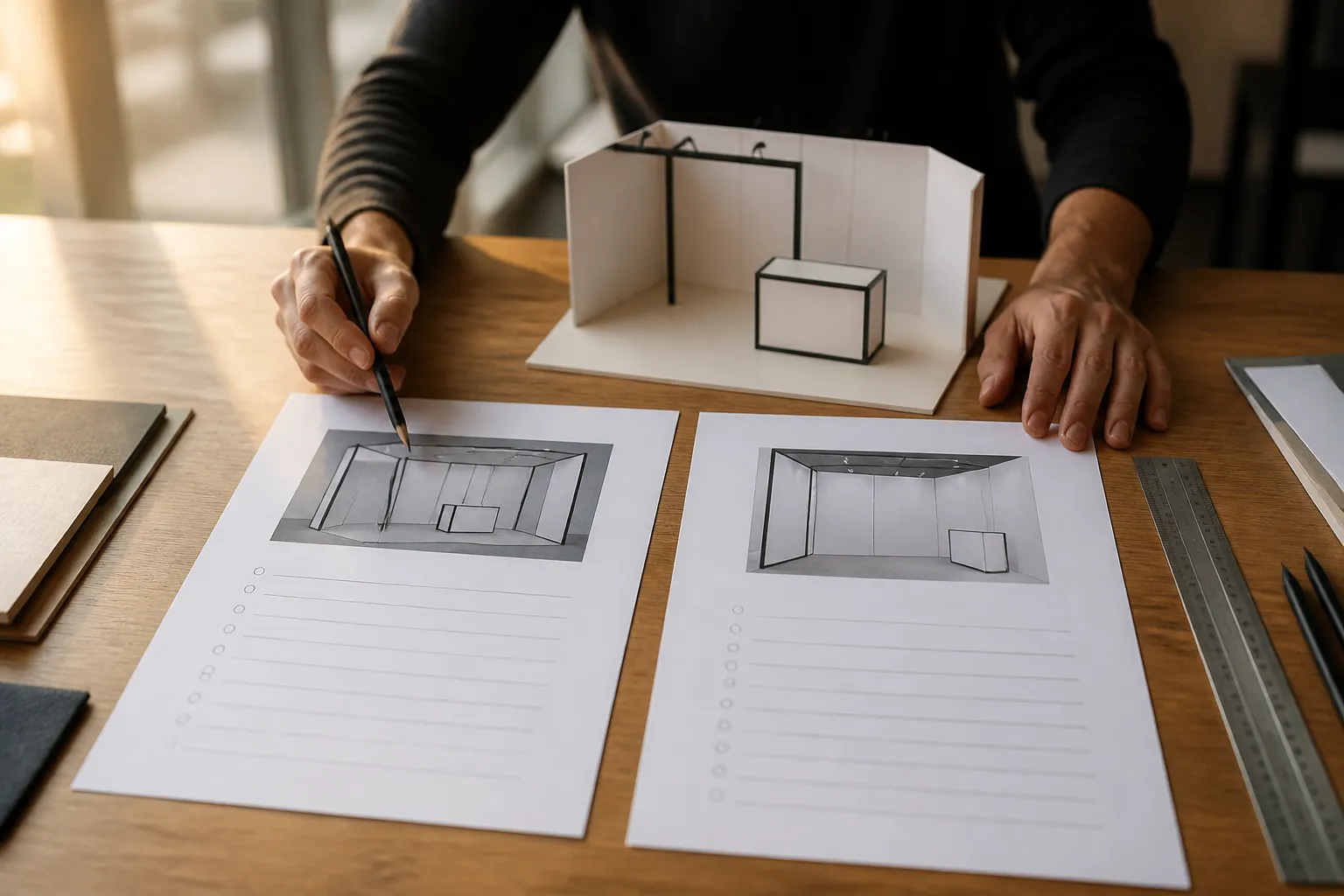
Verdict first: pick the exhibit company that answers hard questions in writing, shows you every line of the bill, and admits what it is best at. Everything else is a rendering with good lighting. This guide is general information, not personal business, legal or financial advice, so run any contract past a licensed professional.

What these companies do and how they fit into a show
Exhibit design and display companies go by several names: exhibit houses, exhibit providers, exhibit builders. They design the booth, often build or rent it, and usually handle graphics and layout. They are not the only players. The industry also counts show management and general service contractors as suppliers, and those are different jobs with different invoices. Before you compare firms, find out which role each one actually plays.
Timing matters more than most first-timers expect. Planning guidance from the International Association of Exhibitions and Events describes a process that starts 6 to 12 months before the show and runs through post-show follow-up. Exhibit design is one step inside that. If you start shopping six weeks out, you are not choosing a partner. You are taking whoever has an opening.
Industry writing calls this one of the most consequential decisions an exhibit manager makes. It is also often shaped by a sloppy request for information or a rushed request for proposals (RFP). Garbage in, garbage out, with a nice cover page.
Start with your own goals, budget and brief
Set your goals, budget, target audience and design plan before you contact anyone, and ideally before you book space. The booth should follow from what you need to say and what technology or presentation setup you need. Not the reverse. Plenty of exhibitors buy the cool structure first and invent the purpose later.
Give firms a realistic budget. Skip the coy "we're flexible" routine. Without a number, you get quotes that cannot be compared, or quotes for a booth you cannot afford. The sources used here do not publish US price ranges for design, fabrication, rental or shipping. Costs vary by state, show and project, so treat any figure in a general article with suspicion and ask for written, itemized quotes.
Then write the design brief. It should cover:
- Your goals and current challenges
- Show dates, plus your submission and selection dates
- The scope of work you expect
Share the timeline early. Vendors with other commitments can bow out, and you get a better shot at finishing on time despite freight and supply headaches.
How to compare firms and what to ask
Start with a blunt question: is your firm more focused on design, service, or cost? Nearly every firm says all three. Make them pick. The answer, and how uncomfortable they are giving it, tells you more than the brochure does.
Next, ask about EDPA certification. The program began in early 2014 after a survey of corporate exhibitors who wanted more transparency and consistency in the RFP process. It evaluates business integrity, capabilities and operational practices. That is a useful signal about trust. It is not a promise your booth will be good, on time or cheap. The sources also do not explain how to verify a firm's status, so ask for proof and confirm it with the certifying organization directly.
Ask how your RFP responses will be evaluated and what you must supply so proposals line up fairly. Then use the same list of questions with every firm. There are no universal right answers, which is exactly why consistency is your only real yardstick. Also ask for references and past project examples. The sources do not cover those, but a firm that dodges them has told you something.
Warning signs to watch for
Murky general contractor charges top the list. Industry advocacy material describes cases where savings go to show management and the costs get recovered through higher exhibitor fees. Exhibiting costs had been climbing for years, especially material handling, electrical and rigging. So demand a line-item breakdown of every service you will pay for, and ask who is billing each one.
Watch for fuzziness about lead and attendee data. If you do not know how leads are captured, who owns them and how you can report on them, you cannot work out return on investment. You are paying for a party with no guest list.
Other flags:
- A firm claiming equal strength in design, service and cost, with no stated priority
- Vague answers about who will actually do the work
- Pressure to sign before you have written your own RFP
Your own vague RFP is a red flag too, and it is the one you can fix. The sources say little about contracts, payment schedules, insurance, warranties or on-site labor rules, so have a licensed professional review those terms before you sign.
Sources
- Exhibitor Advocacy — Home - EDPA
- EDPA Highlights Commitment to Certification Program — Home - EDPA
- https://vertexaisearch.cloud.google.com/grounding-api-redirect/AUZIYQENjMPxiy2-0EX6xKhfmRjR9_FbuMi4nTHiPlhpG2L70xPydV4Z6x2U5qbbw7NNaMUel5o2HwLTjsUN1sxNu1y5rW7CCOOQz4BYCR6yWStS28WqlUv1V64xZLFdKPYbH4tJ8ZkMI4vS
- Sustainability — Home - EDPA
- A Helpful Trade Show Checklist for Sure-Fire Success - IAEE
- Maximizing Attendee & Exhibitor Engagement - IAEE
- What You Need to Know to Pick the Perfect Exhibit Provider
- Writing an Effective RFP
Still have a question?
Related guides
-

Is That Professional Certification Worth Paying For? Test It Before You Spend a Dollar
Job postings, an independent issuer, and written renewal terms separate credentials that pay off from expensive decoration. By Dolores Kinnane
-

Choosing a Managed IT Provider Without Trusting Blindly
Before you sign, make the provider show what it watches, who acts when something breaks, and who pays when it fails.By Imogen Tarrant
-

What Managed IT Really Costs a Small Business, and Where the Guides Get Vague
Per-user rates look tidy in the headline, but onboarding fees, out-of-scope labor and the provider-written sources behind them tell a messier story. By AnselmRoarke