How to Vet a Janitorial Contractor for a Medical or Dental Office
Judge the bid on its paperwork, disinfectant labels, and cleaning procedures, because a shiny lobby tells you nothing about infection control.
 By Dolores Kinnane ·
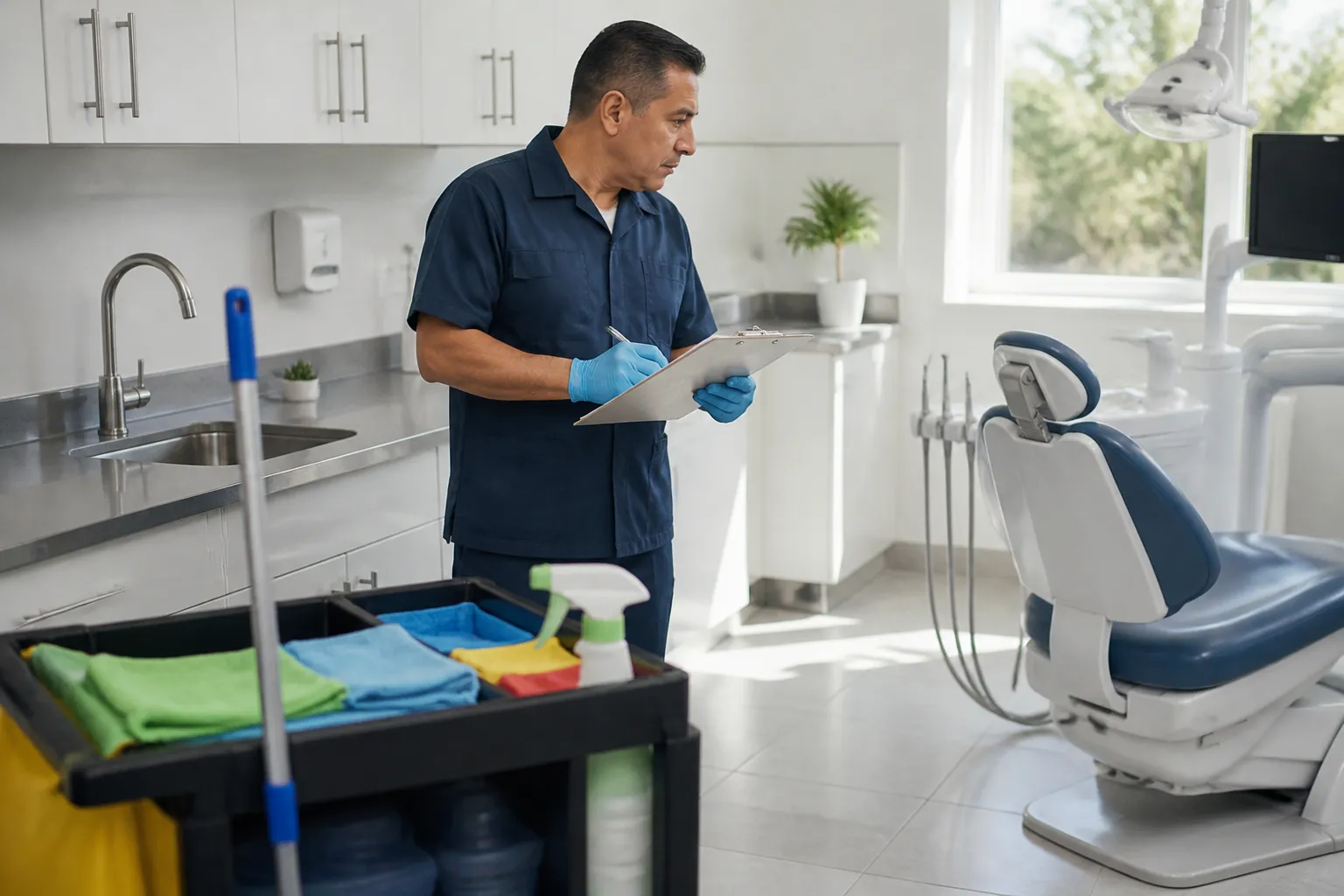
Verdict first: hire a janitorial contractor for a medical or dental office on its paperwork and its procedures, not on its price per square foot or the shine on the lobby floor. A vendor who says "we clean medical offices" has told you nothing. Ask what that means, in writing. This is general information, not legal, medical or financial advice, so run your final choices past a licensed professional such as your compliance officer or attorney.
Why medical and dental cleaning is a regulated service
In a clinic, cleaning is not a courtesy. OSHA's Bloodborne Pathogens Standard (29 CFR 1910.1030) and state health department rules shape how healthcare spaces get cleaned and disinfected. Your office carries that obligation. Your contractor does not absorb it just because the contract is signed.
Cleaning comes first, and disinfecting second. CDC guidance says disinfection can be compromised if a surface is not cleaned first. So a proposal that lists "sanitizing" with no mention of the cleaning step ahead of it deserves a raised eyebrow.
Know the vocabulary, because sales pitches blur it. Disinfection kills many or all disease-causing microorganisms but not bacterial spores. Sterilization kills everything, spores included, and is for patient care items. A janitorial crew should not be sterilizing anything. If a bid claims it does, stop reading.
The main federal reference is the CDC's Environmental Infection Control Guidelines. The page was updated December 14, 2023, but the guideline itself dates to 2003. Ask which current standards the contractor actually follows. Watch whether the answer is a document or a shrug.
Know the difference between routine and terminal cleaning
Routine cleaning is the regular stuff: trash, restrooms, general surfaces. Terminal cleaning is a top-to-bottom decontamination of a clinical space. One keeps the office tidy. The other is what keeps a procedure room safe for the next patient.
One industry guide says terminal cleaning should happen after each patient in procedure rooms, at the end of each day for all exam rooms, and after any known or suspected contamination. It covers horizontal and vertical surfaces, equipment exteriors, light switches, door handles and the patient care zone. Check that every proposal names both types and says how often each happens. If a bid only says "nightly cleaning," it has answered half the question.
Then look at the high-touch list. Door handles and push plates, light switches, exam table rails, keyboards, phone handsets, faucet handles, waiting-room armrests, elevator buttons. The guide says these need disinfecting several times a day, not just after hours. A contractor who shows up once at 9 p.m. leaves all of them untouched while patients use them. Either your staff covers the daytime rounds, or the contract does. Decide which, in writing.
Check how disinfectants are chosen and used
Disinfectants are pesticides, regulated by the EPA, and the label is the law on how to use them. The EPA says that if a label has no directions for a given pathogen, it has not reviewed data on whether the product works against it. So ask for the product names, then check them against the EPA's list of selected registered disinfectants. It takes ten minutes.
Next, dwell time. That is how long the surface must stay visibly wet. Most hospital-grade products need one to ten minutes. Wipe and dry right away and you have cleaned, at best. This is the most common way a disinfecting program turns into theater, so ask how staff are trained on contact times and how anyone checks.
Dental offices have a specific bar. CDC-aligned guidance calls for an EPA-registered intermediate-level hospital disinfectant with a tuberculocidal claim on clinical contact surfaces and spills. Product choice also depends on the surface material, the level of kill needed, cost and ease of use. One product rarely covers everything, so a contractor with a single jug for the whole building is telling you something.
Understand dental-specific and spill procedures
Dental practice has its own rhythm. Between patients, clinical contact surfaces are covered with impervious barriers. Staff remove and discard them wearing gloves. Visibly soiled surfaces are cleaned, then disinfected. At day's end, every clinical contact surface gets cleaned and disinfected, barriers or not. Find out who owns which step, your clinical staff or the contractor, before the first night of service.
The research also points to where effort pays off. Walls, floors and sinks do not appear to contribute much to cross-contamination in dental settings. Frequently touched clinical surfaces can hold microbes. A sensible program spends its time on the second group rather than polishing the first.
Spills of blood or other potentially infectious material need immediate attention. The sequence: wear appropriate PPE, pick up visible material with disposable paper towels into a labeled leak-proof container, clean with detergent and water, then disinfect with an appropriate EPA-registered product. Ask the contractor to walk you through it step by step. Fumbling is informative.
One more detail. Carpet and cloth furnishings cannot be reliably disinfected, so they are avoided in patient care, lab and instrument processing areas. Floors and sinks get detergent and water or a hospital disinfectant and detergent.
Ask for documentation before you sign
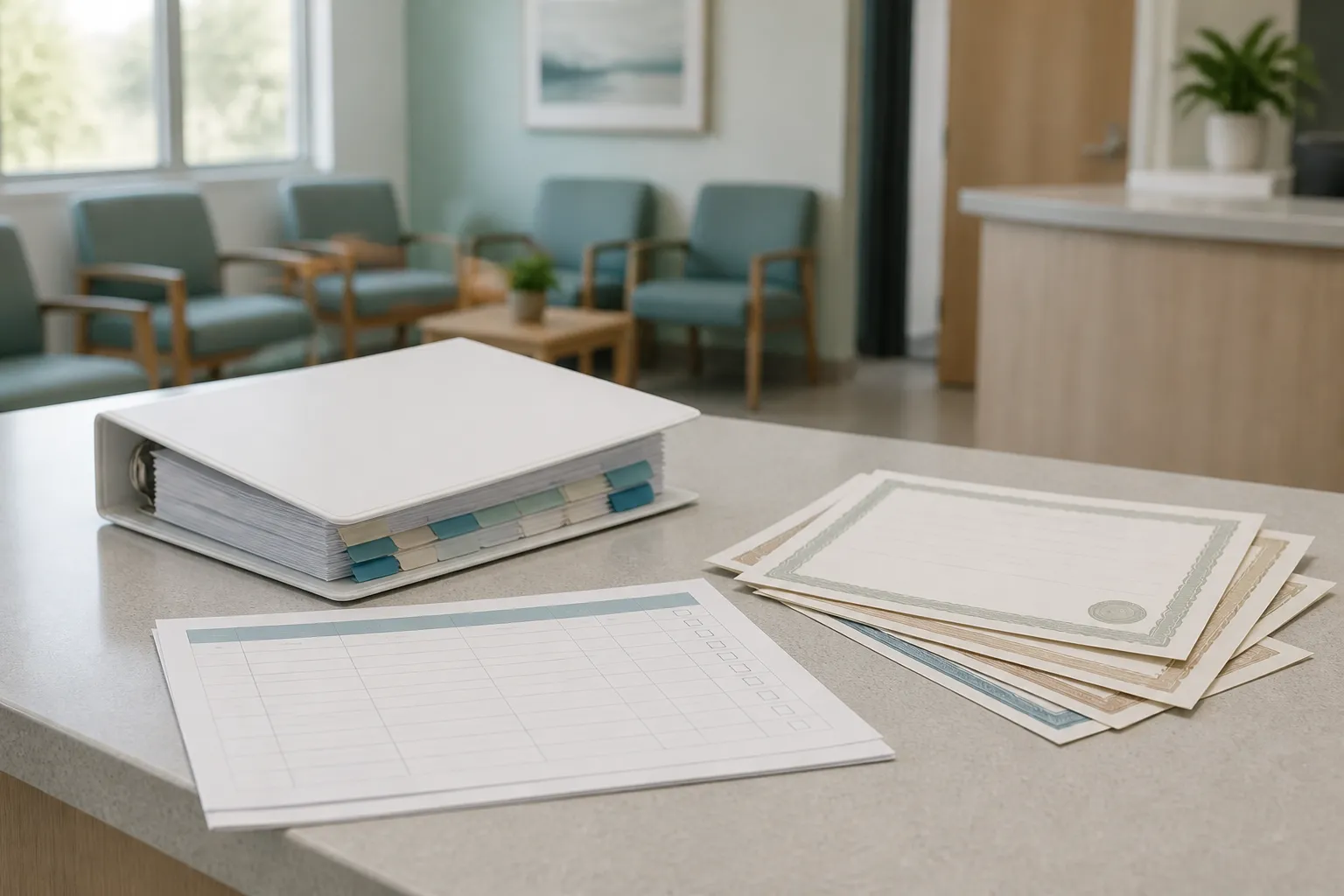
OSHA inspectors expect paper. Useful records include written procedures for each area, staff training records, dated cleaning logs, safety data sheets for every chemical, incident reports for exposure events, and quality checks such as ATP testing results. Ask for samples during the proposal stage. After you sign is too late and too awkward.
Ask plainly whether the program follows the Bloodborne Pathogens Standard and your state's health rules, and how compliance is documented. A vague answer means ask for the actual files.
- Which OSHA and state requirements do you follow, and how do you document them?
- Which EPA-registered disinfectants do you use, and do the labels cover our pathogens?
- How do you handle terminal cleaning between patients and at day's end?
- What are the contact times, and how do staff keep to them?
- Can you show written procedures, training records, logs, safety data sheets and any ATP results?
- Do you disinfect high-touch surfaces more than once a day?
Red flags, and a note on cost
Walk away, or at least push hard, if you see any of these:
- Staff wipe surfaces and let them air-dry with no wet contact time.
- Products lack EPA registration or label directions for the target pathogens.
- Carpet or cloth furniture is treated as disinfectable in patient care areas.
- No written procedures, training records or cleaning logs when you ask.
- Only after-hours cleaning, with no daytime disinfection of high-touch surfaces.
On price, the sources I reviewed give no figures, so treat any number with care. Medical cleaning bids vary widely by state, square footage, visit frequency and how much terminal cleaning is included. Get at least three written quotes built on the same scope, and compare line by line. The cheapest bid often just leaves out the terminal cleaning. Also ask each bidder about staff screening and insurance, since those were outside what the research covered, and confirm the details with a licensed professional.
Please seek a professional. This article is general information, not medical advice. Please seek a doctor or other qualified health professional about your own situation. In an emergency, call 911 or your local emergency number.
Sources
- Medical Office Cleaning Requirements: OSHA Compliance Guide | GreenPoint Maintenance Services
- OSHA Standards: Public Facilities Cleanup | Trauma Services
- Environmental Infection Control Guidelines | Infection Control | CDC
- Best Practices for Environmental Infection Prevention and Control | Dental Infection Prevention and Control | CDC
- Environmental Infection Control - Clinical Practice Guideline for an Infection Control/Exposure Control Program in the Oral Healthcare Setting - Dentalcare
- https://vertexaisearch.cloud.google.com/grounding-api-redirect/AUZIYQEkVvfQnn5vxVvXxg9zBGFag0r_B9C118RZhMKAuOxIp57WZ_jt-0be-Y1_pO5eKDifrZdXTzc3LIqbKm2frxosWb5TUJg2v0jeVrBKi5JD2KemOgKMJibUH8O7Zwtu63Ri0H9WEmK3Rv3gY04sP5mZ0cPfW6zw2YGyi3CpncALt5430vbNgEvnuYwcfbvxJUGSvolECP89YySF
- Selected EPA-Registered Disinfectants | US EPA
Still have a question?
Related guides
-

Is That Professional Certification Worth Paying For? Test It Before You Spend a Dollar
Job postings, an independent issuer, and written renewal terms separate credentials that pay off from expensive decoration.By Dolores Kinnane
-

Choosing a Managed IT Provider Without Trusting Blindly
Before you sign, make the provider show what it watches, who acts when something breaks, and who pays when it fails. By Imogen Tarrant
-

What Managed IT Really Costs a Small Business, and Where the Guides Get Vague
Per-user rates look tidy in the headline, but onboarding fees, out-of-scope labor and the provider-written sources behind them tell a messier story. By AnselmRoarke