Your Auto-Renewing Business Contract Will Not Remind You to Cancel
Missing a notice deadline can lock you into another full term, and state protections for business customers are patchy, so find every renewal date before the window closes.
 By Imogen Tarrant ·

Verdict first: the contract will not remind you, and a court will probably not rescue you. Miss the notice date on an auto-renewing business service agreement and you may owe another full term for a service you stopped wanting months ago. Here is how the clause works and what to check while there is still time.
How an auto-renewal clause works
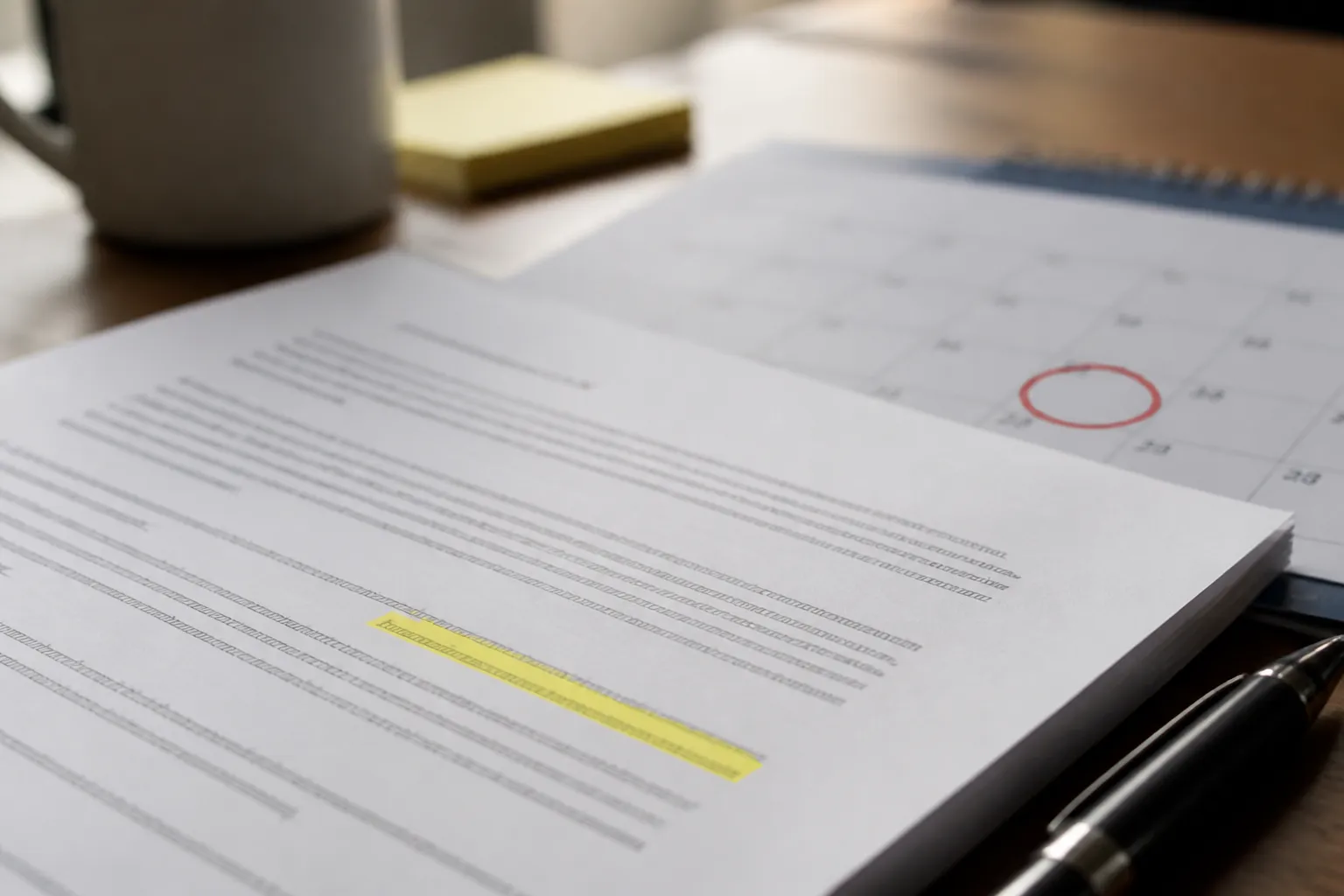
An auto-renewal clause, also called an evergreen or rollover clause, extends the contract for another term unless someone gives written notice before a deadline. A common example is a one-year deal that needs notice at least 60 days before the term ends. Some contracts never say "renew." They say "successive terms." The label does not matter. What the clause does matters.
Every clause rests on four facts: when the term ends, how long the renewal lasts, how much notice is required, and how that notice must be given. The last one trips people up. Written to whom? At what address? Sent how? If any of those is fuzzy, get it confirmed before you rely on your reading of it.
Between businesses, courts often enforce clear renewal language strictly. The logic is that you are a company, you signed it, and you had lawyers available. Protections that help households usually do not follow you into a business contract, so do not assume they will.
Know which rules may apply to your contract
Start with the federal picture, which is murkier than the headlines suggest. The FTC's Negative Option Rule, as amended with the "Click to Cancel" changes, was written to reach both consumer and business contracts. Then the Eighth Circuit vacated those amendments on July 8, 2025, because the FTC skipped a required preliminary regulatory analysis. Commentators expect enforcement to continue through narrower federal action and state attorneys general. Check the FTC directly for the current status. Do not bank on a rule that may not exist.
State law is where business customers sometimes find real help, and it is patchy. New York General Obligations Law § 5-903 covers certain service, maintenance and repair contracts. A renewal is unenforceable against the customer unless the provider sent written notice, in person or by certified mail, 15 to 30 days before the customer's own deadline. It does not apply when the renewal period is a month or less. Wisconsin Statute § 134.49 covers certain business contracts for equipment leases or business services. The renewal provision can be void unless proper notice was given and the customer initialed the clause in a specified spot.
California's Automatic Renewal Law protects personal, family and household purchases. It does not cover business-to-business deals. The sources here give no state-by-state list, so ask a licensed attorney in your state whether any statute reaches your contract.
Find every renewal clause before the deadline
Search each contract for "renew," "renewal," "term" and "non-renewal." Then search again for "extend" and "successive," because a text search for "renew" misses clauses that never use the word. Scanned contracts with no text layer will not show up in any search. Someone has to read those by hand, which is tedious and also the point.
Put the four facts for each contract in one list and sort by notice deadline, nearest on top. Calendar the date the day you sign or discover the contract, and set the reminder well ahead of the cutoff. Have a second person confirm any date that carries real money. One missed date can cost a whole term.
Also check whether the contract obliges the provider to send a reminder. Some do. Many do not. Either way, do not plan around one arriving.
Questions to ask before you act
Ask the provider to confirm in writing three things: when the current term ends, the exact notice deadline, and the exact method for giving notice. Written answers make a later dispute easier. A vague phone reply is worth about what you paid for it.
- Does the renewal allow automatic price increases, changed terms or different service levels?
- Was any reminder or notice sent before the window closed? Keep a copy of anything you got.
- Does the clause fall under a state law such as New York GOL § 5-903 or Wisconsin § 134.49?
The price question deserves the most suspicion. Practitioners flag higher prices, stricter terms, penalties and reduced service as the main dangers of a rollover.
Red flags and what to negotiate
Be wary when the other side sets the renewal terms and owes you no reminder. Watch for penalty clauses, tougher cancellation rights or lower service levels in the renewal period. Watch the notice window too. One commentator notes that a stated 30-day notice can work out to 60 or 90 days once the mechanics are applied. Read the fine print as if it were written by the party who benefits from it, because it was.
When you sign or renew, ask for better exits. Cancel-anytime on 30 days' notice is one option if the provider agrees. Shorter renewal terms, a duty to send reminders and caps on price increases are also fair requests. They can only say no.
Costs and limits of this guide
The sources give no US cost ranges for cancellation, legal review or early termination fees. Those vary by state and by what your contract says, so ask any adviser for a fee estimate before you hire them. Early termination charges, if the contract has them, will be written in the agreement itself.
The sources also do not say how to send a compliant notice, what happens if a provider refuses it, or how to unwind a renewal that already took effect. Those answers depend on the notice given, any price change and your state's law. If a renewal has already happened, read the contract's remedy and dispute terms and consider speaking with a licensed attorney.
This guide is general information only and not legal or financial advice. Its job is narrow: help you find the dates and ask sharper questions before the window closes.
Please seek a professional. This article is general information, not legal advice. Please seek a licensed attorney in your state about your own situation.
Sources
- THE PESKY AUTO-RENEWAL CLAUSE – marell lawfirm
- Evergreen Clauses: How Enforceable are “Automatic Renewal” Provisions? – McLane Middleton
- Negative Option Rule | Federal Trade Commission
- Updated California and FTC Auto-Renewal Regulations Take Effect | Paul Hastings LLP
- Eighth Circuit Vacates the FTC’s “Click to Cancel” Rule, but Federal and State Regulators Likely to Remain Active
- FTC Delays Enforcement of Click-to-Cancel Rule Until July 14 2025
- The Hidden Dangers of Contract Auto-Renewals | JDE Law Firm - Business Litigation Attorneys
- How to Find Every Auto-Renewal Clause in Your Contracts
Still have a question?
Related guides
-

Is That Professional Certification Worth Paying For? Test It Before You Spend a Dollar
Job postings, an independent issuer, and written renewal terms separate credentials that pay off from expensive decoration. By Dolores Kinnane
-

Choosing a Managed IT Provider Without Trusting Blindly
Before you sign, make the provider show what it watches, who acts when something breaks, and who pays when it fails.By Imogen Tarrant
-

What Managed IT Really Costs a Small Business, and Where the Guides Get Vague
Per-user rates look tidy in the headline, but onboarding fees, out-of-scope labor and the provider-written sources behind them tell a messier story. By AnselmRoarke