Finding Free Dental Care Near You: A Practical Guide to Clinics, Programs and Questions to Ask
Free and low-cost dental options come from several different sources, and knowing how each one works can make the difference between a wasted trip and a helpful visit.
 By Walter Pemberton ·
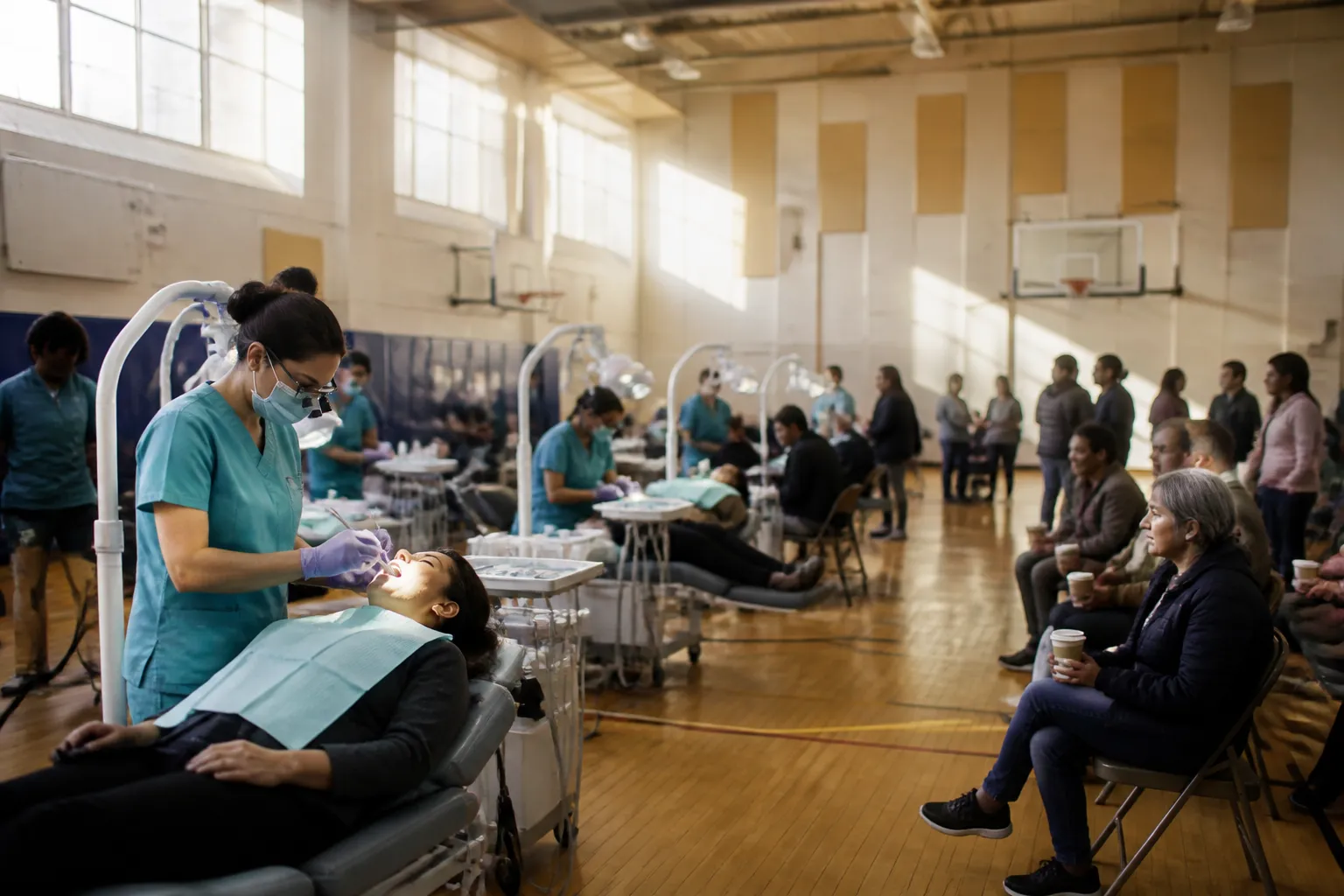
Picture a gymnasium on a Saturday morning in early autumn. Rows of dental chairs stand where the basketball hoops usually hang. Volunteers in scrubs walk people to their spots, and a line of neighbors waits quietly with coffee in hand. Events like this do happen across the country. Finding one takes a little patience, and knowing what to ask makes the trip go more smoothly. This is general information, not personal medical or financial advice, and a licensed dentist or your state health office can speak to your own situation.
Where free and low-cost dental care comes from
Free care tends to come from a handful of places, and they work quite differently. There are temporary charity clinics staffed by volunteers. There are long-running nonprofit programs that match people with donated treatment. There are dental school clinics, dental hygiene school clinics, and community health centers. It helps to know which kind you are looking at before you plan anything.
The National Institute of Dental and Craniofacial Research suggests contacting a dental school in your state. Students there treat patients at a reduced cost, and experienced, licensed dentists supervise the work. Dental hygiene schools may offer supervised, low-cost care too, often routine cleanings. Federally funded community health centers may use a sliding pay scale, where what you pay depends on what you can afford. That is usually a steady option rather than a one-day event.
How temporary free clinics work
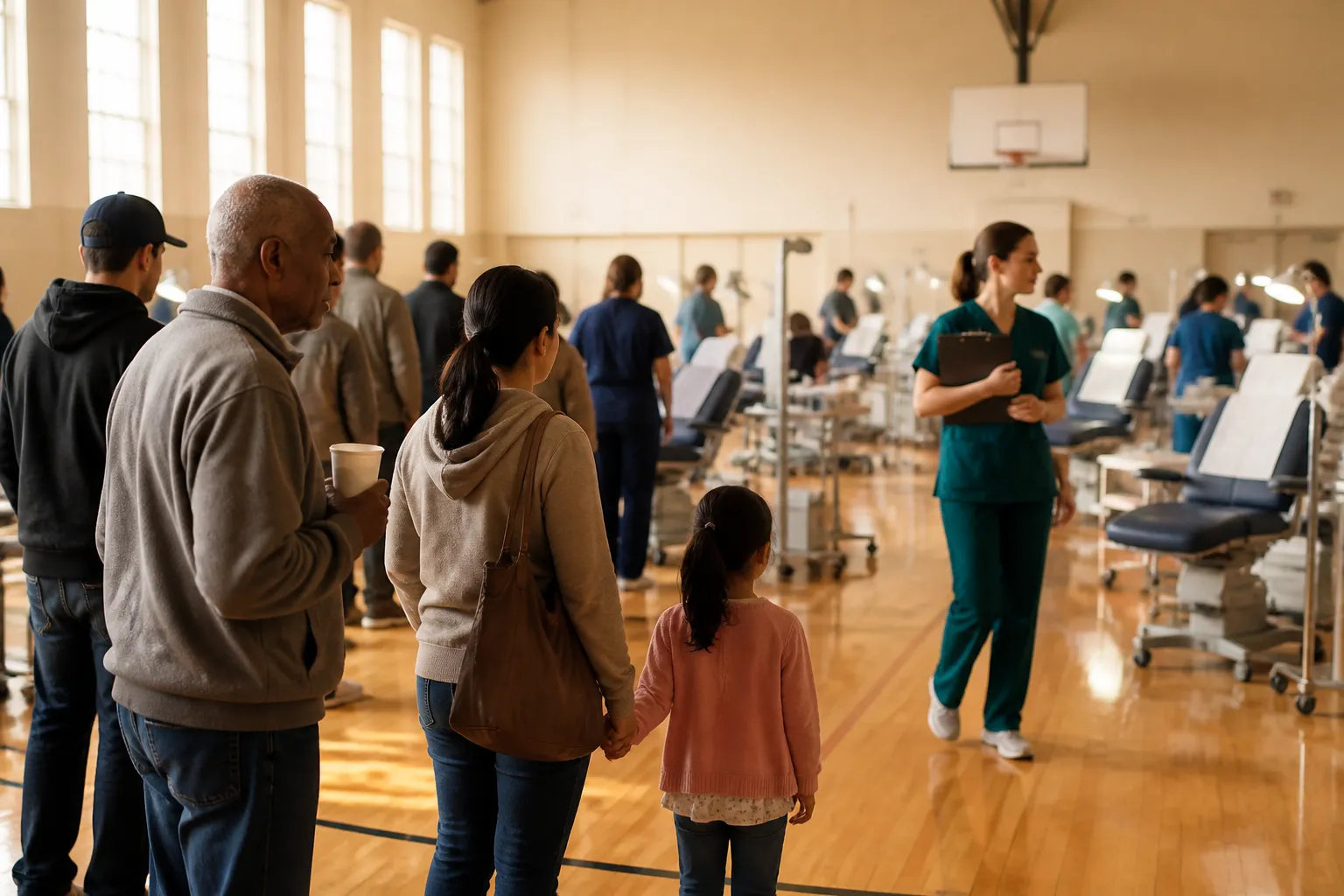
Many free clinics are short events. One national nonprofit that supplies equipment and guidance to charitable clinics describes its typical event as a two-day clinic. A clinic like that may serve around 1,600 patients with around 1,400 volunteers, according to the organization. Its public schedule lists dates and locations, so you can see whether one is within reach and whether the days suit you. The schedule I saw runs well into 2027, so it is worth checking back as new events are added.
Rules about who may attend vary. Some events welcome anyone who shows up, and others have guidelines. The organizer is the right person to confirm who may be seen. Mobile clinics, such as those run by Remote Area Medical, travel to under-served areas and offer dental, vision and medical care to uninsured and low-income people. They run on donations and volunteers. One 2017 event in Wise, Virginia, reportedly served about 2,300 people. Numbers like that tell you something helpful: lines can be long, and you may want to plan for a full day.
Eligibility and application-based programs
Not every charity program is open to everyone. Dental Lifeline Network, a nonprofit that has connected volunteer dentists and labs with patients since 1975, asks people to apply. It describes serving vulnerable adults who are over 65, permanently disabled, or in need of medically necessary care, and who have no other means to pay for or receive treatment. Its state-by-state listings show what is offered where you live.
So check the rules before you travel or send in paperwork. A drop-in event may suit someone who does not meet a program's criteria, and the reverse can be true too. If a program asks for documents, such as identification or proof of income, find out which ones and how early to submit them. Public dental coverage, including Medicaid, varies by state, so ask your state agency or the program itself rather than guessing.
How to choose a free or low-cost option
Start with what you need. A cleaning, a filling, an extraction and dentures are different jobs, and one visit is different from ongoing care. Dental schools and community health centers often suit ongoing needs. A temporary clinic may fit a single problem better.
Then look at the practical side. Temporary events happen on set days in set places, and the one that looks perfect may be hours away. Public materials often do not say how appointments are handled, whether there is a waitlist, or how early to arrive. Ask the organizer. Check eligibility early, too, so you are not surprised at the door.
Questions to ask before you go
A short list, written down before you call, can save a wasted trip.
- Is there any fee, and what does it cover?
- Which services are included, and which are not? Extractions, fillings, crowns and dentures are worth naming one by one.
- What are the attendee guidelines for this event?
- If students are involved, who supervises them, and is a licensed dentist present?
- Who can I contact to confirm details? Get the name, phone number and date, and ask for answers in writing if you can.
Red flags and fraud warnings
Be wary of messages that promise too much. The NIDCR says it does not provide dental care, financial help for treatment, or dental implants. It advises that ads, emails or texts claiming otherwise are likely fraudulent. Do not send money, personal details or bank information in response.
Be cautious, too, if anyone asks you to pay for something described as free. A real clinic should be able to explain what is free and what is not. Confirm events through the organizer's official website or phone line, not a link or number that arrived unasked. If you feel rushed, pause and check first.
One last note on money. Published sources do not give exact prices for dental school clinics or sliding-scale health centers, and costs vary by state and by provider. Ask for a fee estimate before any treatment begins. If you want to read more, the NIDCR guide to finding dental care, the ADCF clinic schedule and the Dental Lifeline Network state programs page are good places to begin.
Please seek a professional. This article is general information, not medical advice. Please seek a doctor or other qualified health professional about your own situation. In an emergency, call 911 or your local emergency number.
Sources
- Finding Dental Care | National Institute of Dental and Craniofacial Research
- Remote Area Medical - Wikipedia
- Upcoming Free Dental Clinics and Volunteering | ADCF
- About the ADCF | Dental Mission of Mercy Clinics
- https://vertexaisearch.cloud.google.com/grounding-api-redirect/AUZIYQGJJI3EpNGGL-OUStk-IgxgqoXVEqgGxZ0Jv6CH2qBm35aqyCkr9OGs4G3CQz55uMJLzMete9XEdc5t6XjL2pbpsBdfYXdKc0H-dcgVMq_Xt-Ze4Hb6iw7ECTeAZPLQbmhzDSwuaxw1zpST1u-axBbi2HSI4BryjNeul-IcoxNtXUP5Qudzw-spk10=
- Dental Care For Qualified Applicants Nationwide | DLN
- Dental Lifeline Network: Our Organization | DLN
Still have a question?
Related guides
-

Clear Aligners Without the Hype: What to Check Before You Start
Mail-order trays look simple, but the FDA says safe treatment still depends on in-person supervision by a licensed dental professional. By Priya Ranganathan
-

Save the Tooth or Pull It? A Careful Look at the Choice
Root canals and extractions differ in more than the first price you hear, so it helps to compare the full path, the recovery and the questions worth asking your dentist. By Lorraine Whitcombe
-

Dentures or Implants: How to Weigh the Choice
A plain-language guide to how conventional and implant-supported dentures differ in comfort, upkeep and cost, with the questions to bring to your dentist.By Priya Ranganathan