How to Tell If a Dental Office Is Clean: Questions Worth Asking
A few visible habits and plain questions about water, sterilization, and sharps can tell you a good deal about how carefully a dental office runs.
 By Walter Pemberton ·
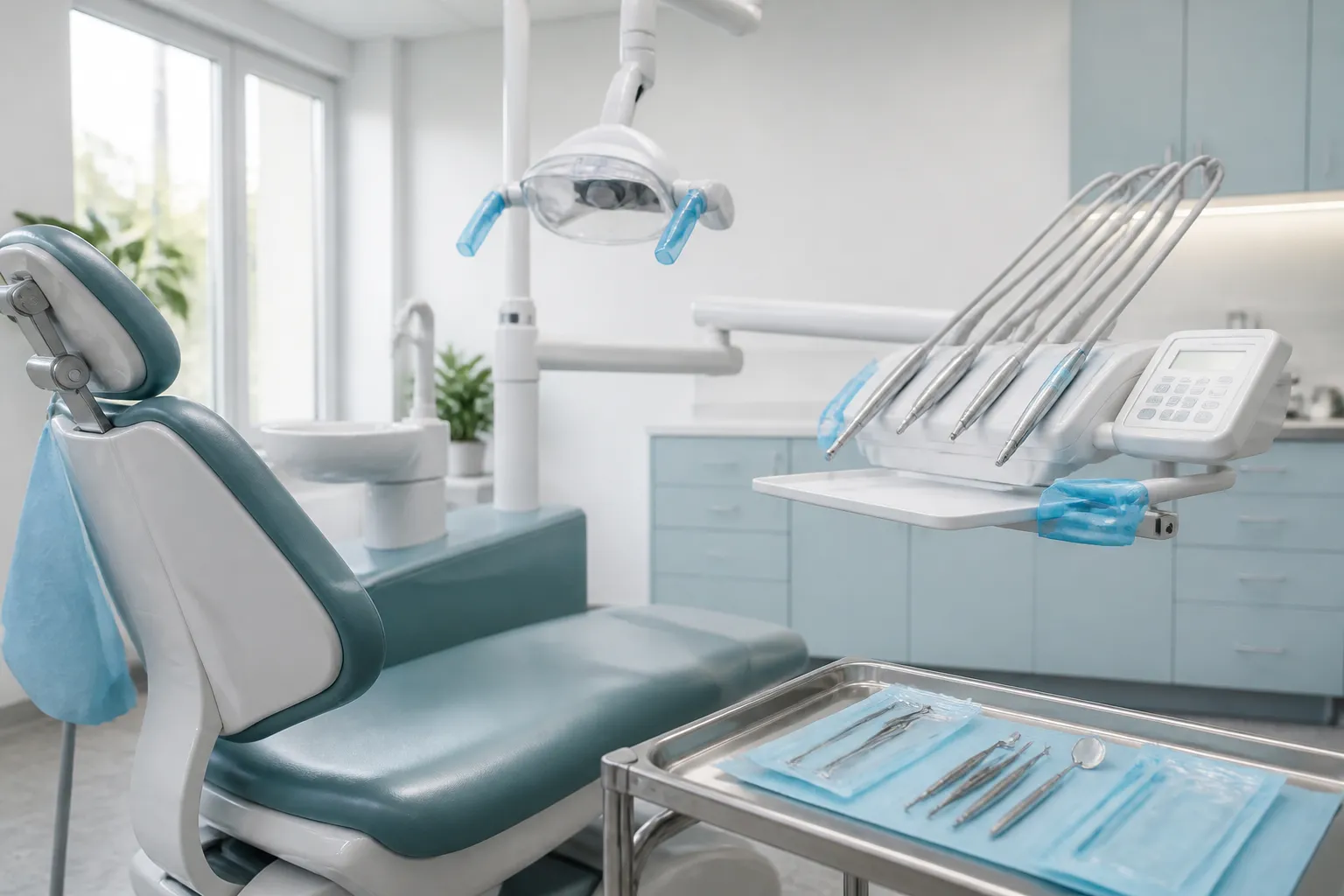
Picture the last time you sat in a dental chair and looked around. The light, the tray, the little sink. Most of us quietly wonder whether it is all as clean as it looks, and then we feel a bit silly asking. You do not need to feel silly. There are plain, checkable signs of a careful office, and a few polite questions will tell you a good deal.
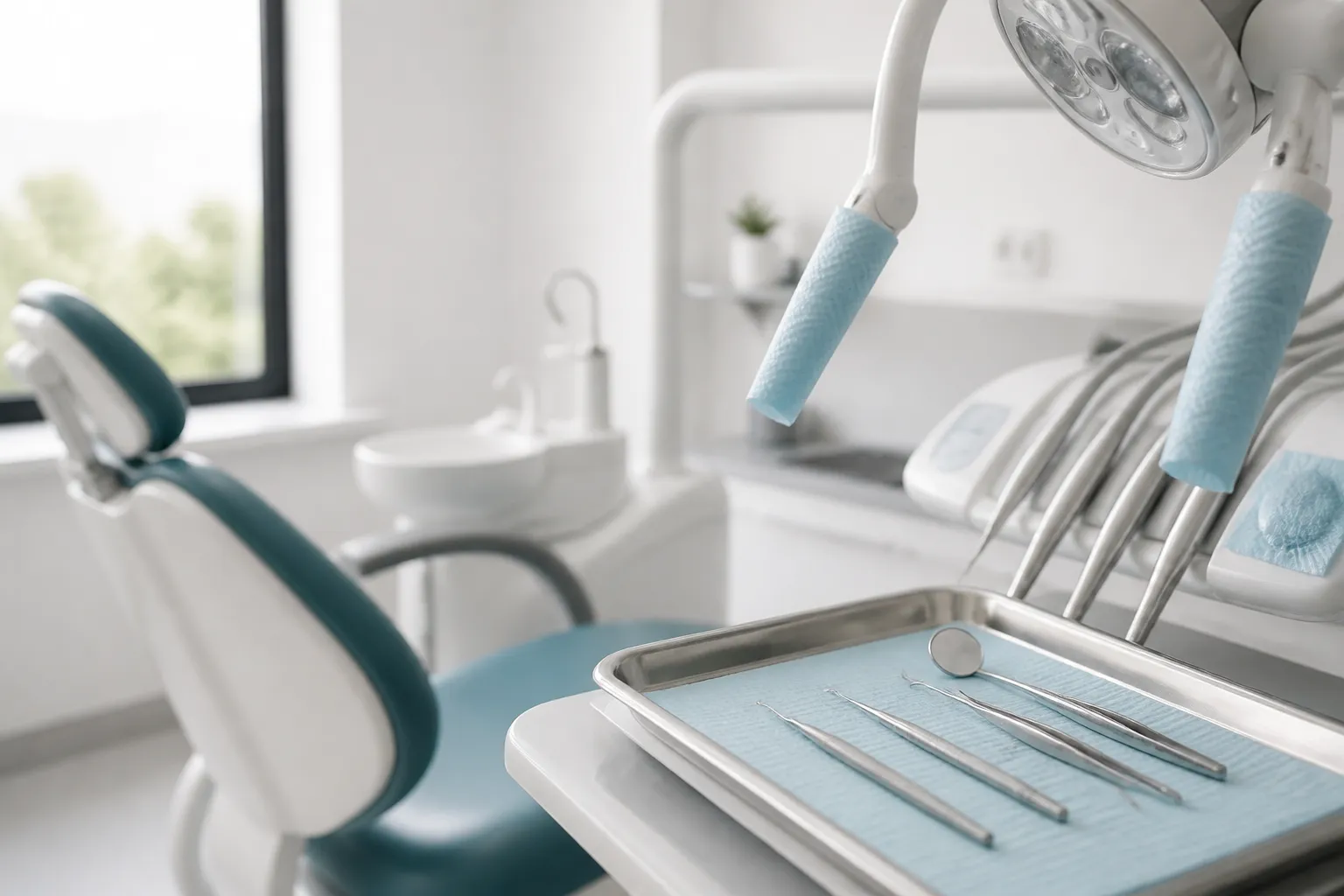
This is general information, not medical advice. For any health decision, a licensed dentist or doctor is the right person to ask.
Start with the CDC's basic expectations
A good yardstick helps before you go looking at anything. The Centers for Disease Control and Prevention (CDC) publishes a Summary of Infection Prevention Practices in Dental Settings, dated May 15, 2024. It covers private practices, dental clinics, dental schools, and even portable sites such as school clinics. So the same basic expectations apply whether the office is large or small.
The foundation is Standard Precautions. In short, blood, saliva, and other body materials are treated as potentially infectious for every patient, not just some. A well-run office should be able to tell you in everyday words how it does this. Saying it has a policy is not quite the same thing.
You may also hear about the 2003 CDC Guidelines for Infection Control in Dental Health-Care Settings. They are archived, yet they still stand as the standard of practice in clinical dentistry. It is fair to ask whether the office works from them and from the current summary. The CDC summary also includes a checklist that can be used to evaluate compliance, though the sources do not say how a patient could confirm an office uses it.
Look at what you can see in the operatory
Much of good infection control is visible if you know where to look. The American Dental Association (ADA) lists several things patients can notice on their own, through its MouthHealthy infection control page. Surfaces should be cleaned and disinfected before each patient. Protective covers should be replaced after each patient, not simply wiped and reused. Instruments should be cleaned and sterilized between patients, and disposable tools and needles should never be used twice.
Watch the staff, too. Gloves, masks, gowns, and eye protection should appear when the task calls for them. Hands should be washed, and fresh gloves put on, before each patient. One detail worth noticing is whether this happens every time or only when someone seems to be watching. Habits that look unhurried and routine usually tell you more than a spotless waiting room.
Ask about dental unit water and waterlines
This is the part most patients never think about. Inside the chair are thin tubes that carry water to the handpiece, the air and water syringe, and the ultrasonic scaler. A layer of microorganisms called biofilm can build up inside them. According to the ADA's page on dental unit waterlines, that film can act as a reservoir for germs, and no single method removes it completely.
The CDC recommends that water used in nonsurgical procedures measure no more than 500 colony-forming units per milliliter (CFU/mL) of heterotrophic bacteria. That matches the limit the EPA sets for drinking water. So a concrete, friendly question is: "How do you keep your dental unit water within that limit, and how do you test it?"
Offices have several tools. Some use filters, chemical treatments, or anti-retraction valves. Others use a water source separate from the public system. Maintenance should follow the equipment maker's instructions. For surgical procedures, sterile saline or sterile water should be the coolant or irrigant, so ask about that if surgery is planned.
Check sterilization, handpieces, and sharps
Sterilization sits at the center of any infection control program. The ADA's page on infection control and sterilization calls sterilizer monitoring essential. You can simply ask, "How do you monitor your sterilizer?" A confident team will describe a routine without fuss.
Handpieces deserve a question of their own. They should be FDA-cleared and sterilized according to the manufacturer's instructions. Sharps such as needles and blades belong in designated sharps containers, which protects staff from needle sticks. Cleaning of the clinic should also move from the least contaminated areas toward the most contaminated, so germs are not carried the wrong way. And it is reasonable to ask how contaminated waste is handled.
- How are instruments sterilized and monitored?
- Are handpieces cleared and sterilized per the maker's directions?
- How is hand hygiene taught and kept up?
- How are sharps and waste disposed of?
Know the red flags and the limits of what is public
Some things should send you looking elsewhere. Reused disposable tools or needles are a clear warning, since the ADA says disposables are never reused. So are surfaces or instruments that are not cleaned between patients, and staff who skip or do not change gloves and protective gear. Be wary if you ask for written proof of waterline maintenance or sterilizer monitoring and there is none. Surgery without sterile saline or sterile water is another concern. Vague or defensive answers count, too. A calm, specific reply is a good sign.
There are limits to what these sources tell us. They do not explain how a patient can look up an office's inspection results, or whether it has been audited. They do not describe a state inspection process, so your state dental board is the place to check licensing and complaints. They do not say how often waterline tests or sterilizer checks should happen, or what to do if you suspect an infection after a visit. They give no cost range for a clean-office check, and any figures would vary by state. The CDC does offer a free training and a DentalCheck app for dental facilities, described on its infection prevention page, and you can ask whether an office uses it.
If something still worries you, a licensed dental professional or your state board can give guidance that fits your situation. Asking good questions is simply part of looking after yourself, and a careful office will not mind.
Please seek a professional. This article is general information, not medical advice. Please seek a doctor or other qualified health professional about your own situation. In an emergency, call 911 or your local emergency number.
Sources
- Infection Prevention and Control in Dental Settings | Dental Infection Prevention and Control | CDC
- Summary of Infection Prevention Practices in Dental Settings: Basic Expectations for Safe Care | Dental Infection Prevention and Control | CDC
- Dental Unit Waterlines | American Dental Association
- Infection Control | MouthHealthy - Oral Health Information from the ADA
- MouthHealthy | MouthHealthy - Oral Health Information from the ADA
- 5 infection control questions you should be asking - Riverstone Family Dental
- Infection Control and Sterilization | American Dental Association
- CDC Guidelines & Recommendations | ADS - Association for Dental Safety
Still have a question?
Related guides
-

Clear Aligners Without the Hype: What to Check Before You Start
Mail-order trays look simple, but the FDA says safe treatment still depends on in-person supervision by a licensed dental professional. By Priya Ranganathan
-

Save the Tooth or Pull It? A Careful Look at the Choice
Root canals and extractions differ in more than the first price you hear, so it helps to compare the full path, the recovery and the questions worth asking your dentist. By Lorraine Whitcombe
-

Dentures or Implants: How to Weigh the Choice
A plain-language guide to how conventional and implant-supported dentures differ in comfort, upkeep and cost, with the questions to bring to your dentist.By Priya Ranganathan