Inlay, Onlay or Crown? A Plain-Language Guide to Choosing
How the two restorations differ, what they tend to cost and last, and the questions worth asking your dentist and insurer before you decide.
 By Lorraine Whitcombe ·
Picture a neighbor leaning over the fence, holding a dental estimate she doesn't quite understand. Her dentist mentioned an onlay, then a crown, and the numbers on the page didn't match what she expected. It is a common spot to be in. This guide walks through how the two options differ and what to ask, so the next conversation feels a little easier. It is general information only, not personal medical, legal or financial advice, and a licensed dentist is the right person to judge your tooth.
What each restoration is
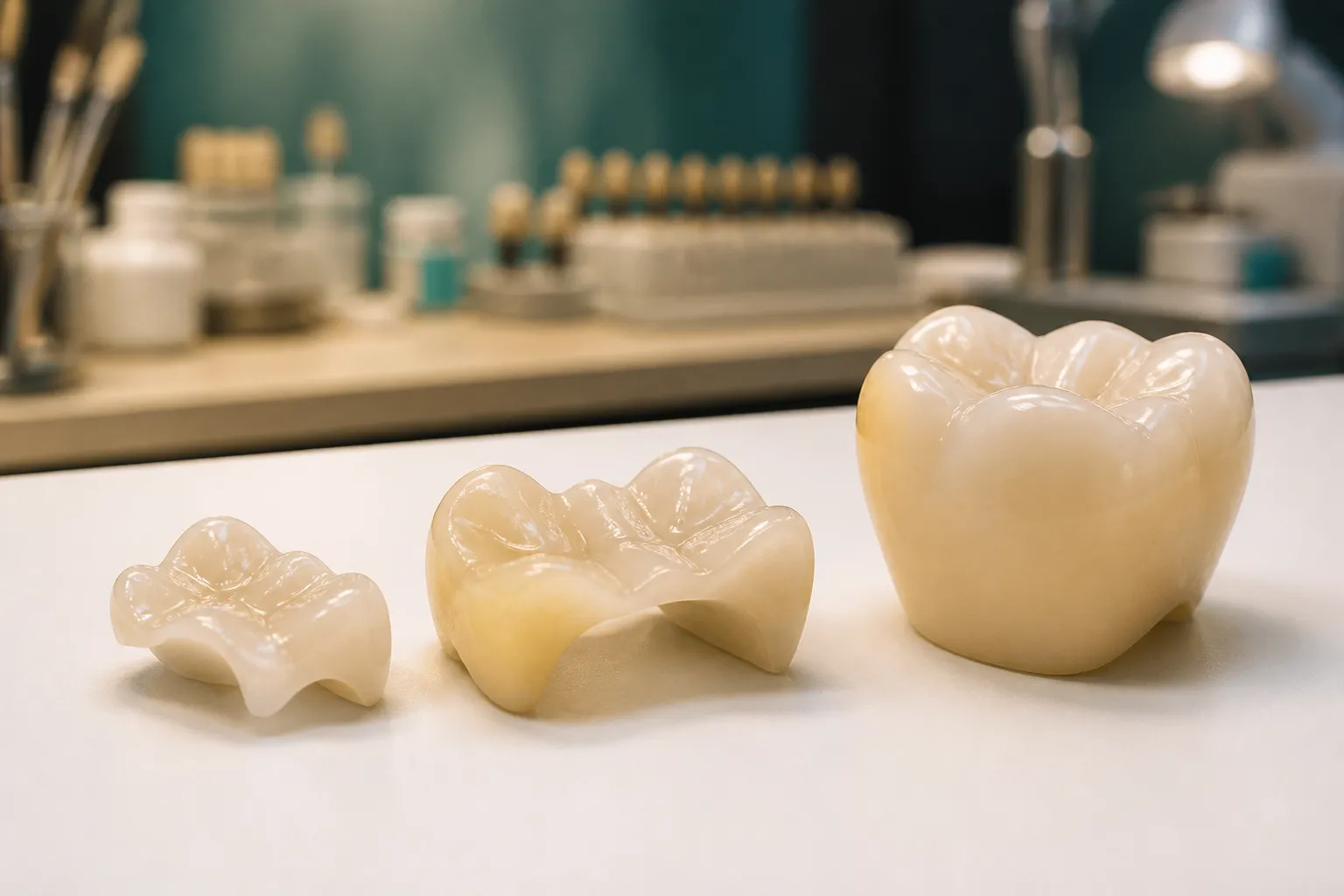
A dental crown is a tooth-shaped cap that covers the whole visible part of a tooth. Dentists use one when a tooth is decayed, broken, weak or worn down. To make room, the dentist removes a small amount of enamel, and the crown is then bonded over what remains.
An inlay sits inside the center of a tooth after decay is cleaned out, a bit like a filling. An onlay is the larger cousin and also covers one or more cusps, the raised points on the biting surface. Both are called indirect restorations because a dental laboratory makes them from impressions of your teeth, rather than the dentist shaping them in your mouth.
Onlays are often described as the more conservative choice, since they keep more of the natural tooth. Whether one will work depends on how much healthy tooth is left, and only an exam can answer that.
How the costs compare
Start with what we can say. One insurer's guide gives an example of about $1,100 to $1,450 for a crown in Orlando, Florida, with porcelain and ceramic crowns reaching the higher end. Metal and stainless steel crowns tend to cost the least. Front teeth usually cost more. Those numbers are one city's example, and crowns can price quite differently by state, by practice and by tooth.
Now the honest gap. The sources reviewed for this guide do not give a dollar range for inlays or onlays, so a direct price comparison would be guesswork. Gold versions are generally described as the most durable and the most costly kind of filling. Porcelain and resin are priced differently. The most useful step is a written estimate for your specific tooth.
Be gentle with online estimators and clinic promotions. Delta Dental's own tool, for instance, says it shows estimated ranges and does not guarantee fees, coverage or what you will owe. Cash-only specials are promotions, not quotes you can compare side by side. Ask for estimates that list the procedure code, the material and the number of visits.
Durability and how long each lasts
Crowns generally last five to 15 years with good care. Gold inlays and onlays are often said to last 20 years or more, which helps explain why people accept the higher price.
Material matters a great deal. Metal crowns rarely chip or break and wear the longest, though their color limits them to teeth out of sight, like back molars. Porcelain-fused-to-metal crowns pair metal strength with a more natural look, but the porcelain can chip and show the metal underneath.
For porcelain or resin inlays and onlays, the sources don't offer a clear lifespan. So ask your dentist what they expect for the material they are proposing, and why.
Insurance and out-of-pocket costs
Many dental plans treat crowns as major restorative work. A plan with coinsurance may pay as much as 50 percent, and often that is the ceiling. Deductibles, annual maximums and waiting periods can shrink what the plan actually pays.
How a given plan handles inlays and onlays is less clear. The sources don't say, and plans differ. A phone call to your carrier can settle it. Ask these:
- Is this restoration classed as major or basic?
- What is my annual maximum, and how much is left?
- Does a waiting period apply?
Then ask the dental office for the estimated cost after insurance, not only the total fee. With that one number for each option on the same tooth, the comparison gets much simpler.
What to ask before you decide
Begin with the big question: is an inlay or onlay suitable for this tooth, or is a full crown needed? Then ask how many visits each takes. Because a lab makes the piece, expect at least two appointments.
Ask which material the dentist recommends and why. A good answer should touch on cavity size, tooth location, looks, expected lifespan, insurance and cost. If gold comes up, ask whether the office places it routinely, since it is not offered everywhere.
Last, ask what happens if the restoration needs repair, and whether that is covered. Write the answers down. A licensed dentist and your plan's own paperwork should have the final word, and a second opinion is a perfectly ordinary thing to want.
Please seek a professional. This article is general information, not medical advice. Please seek a doctor or other qualified health professional about your own situation. In an emergency, call 911 or your local emergency number.
Sources
- Dental Crowns: Types, Procedure & Care
- Fillings (Gold Inlays) | MouthHealthy - Oral Health Information from the ADA
- What Are Dental Inlays and Onlays: Difference, Process, Cost & Benefits
- Dental Filling Options | MouthHealthy - Oral Health Information from the ADA
- How Much Does a Dental Crown Cost With or Without Insurance? | Humana
- Dental crown costs and insurance: What you need to know
- Dental crowns guide: overview, types, procedure & more
- Dental Procedure Cost Estimator | Delta Dental
Still have a question?
Related guides
-

Clear Aligners Without the Hype: What to Check Before You Start
Mail-order trays look simple, but the FDA says safe treatment still depends on in-person supervision by a licensed dental professional. By Priya Ranganathan
-

Save the Tooth or Pull It? A Careful Look at the Choice
Root canals and extractions differ in more than the first price you hear, so it helps to compare the full path, the recovery and the questions worth asking your dentist.By Lorraine Whitcombe
-

Dentures or Implants: How to Weigh the Choice
A plain-language guide to how conventional and implant-supported dentures differ in comfort, upkeep and cost, with the questions to bring to your dentist.By Priya Ranganathan