Root Canal Care: Choosing Between Your Dentist and a Specialist
Both kinds of dentist can perform the procedure, and the choice usually comes down to how often they do it and how complicated your tooth turns out to be.
 By Priya Ranganathan ·

Say your back molar has been aching for a week, and your dentist looks at the X-ray and says the word "root canal." Then comes a second question that nobody quite prepared you for. Do you stay in the chair you know, or go see a specialist? Plenty of neighbors have stood in that spot. The answer is rarely dramatic, but it helps to know what the choice really turns on.
Both kinds of dentist are allowed to do root canals. The difference is mostly how often they do them, and how tricky your particular tooth turns out to be.
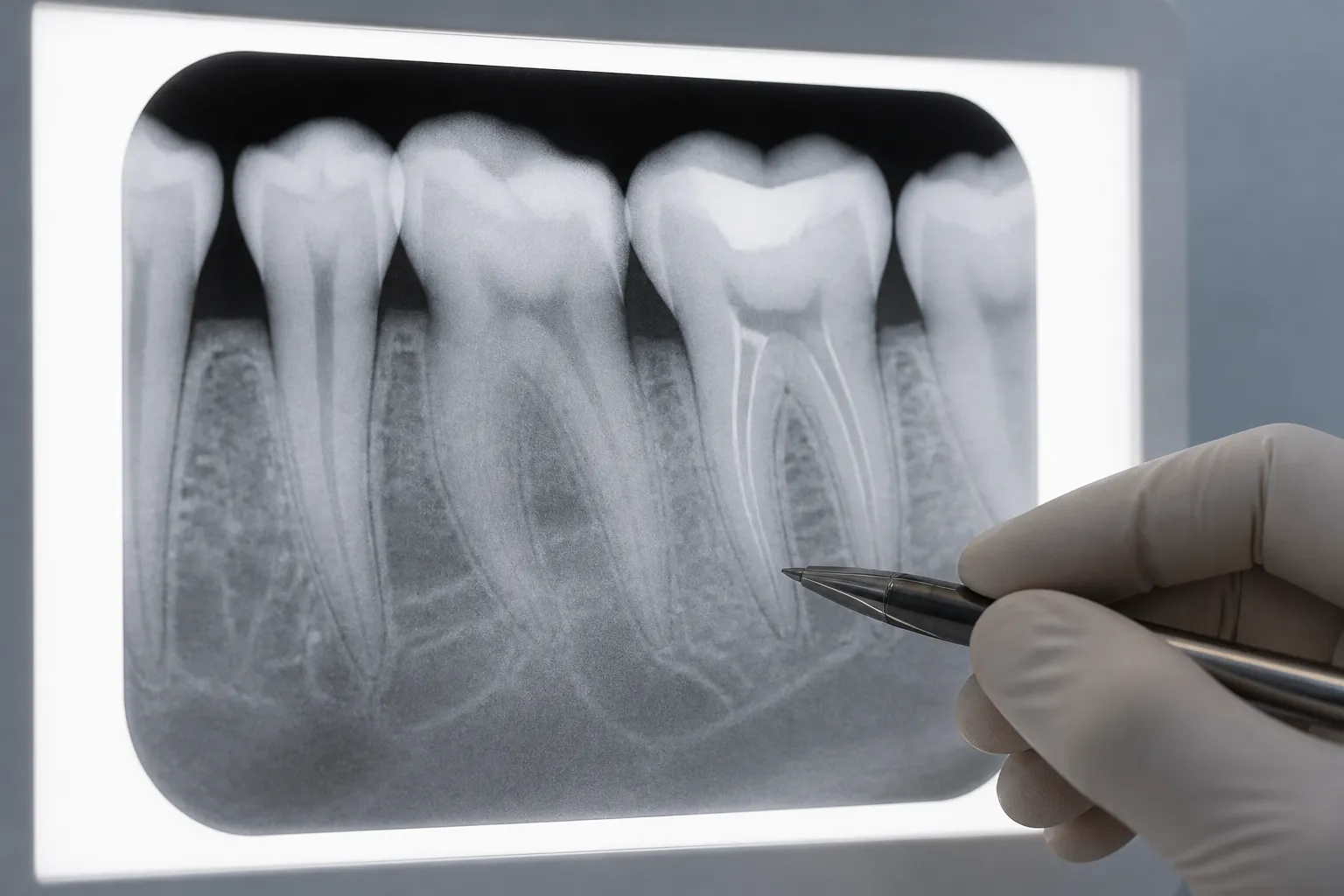
What an endodontist is and what a general dentist does
An endodontist is a dentist who has finished at least two more years of training after dental school, focused on the soft pulp inside a tooth and the tissues around its roots. The American Dental Association describes this as a recognized specialty, and you can read its overview on MouthHealthy. A general dentist, by contrast, handles the everyday run of dental care: cleanings, fillings, crowns, and yes, many root canals.
So neither one is the "wrong" door. Endodontists simply perform root canals far more often, and that steady repetition is what the Cleveland Clinic points to as the basis of their expertise. A general dentist can still give good care for a straightforward tooth. The specialist's focus tends to matter most when the tooth is not straightforward.
What a root canal involves and why it is done
The aim is to save your natural tooth instead of pulling it. The dentist removes infected or damaged pulp, cleans and shapes the narrow canals inside the roots, may use germ-killing medicine, and then fills and seals them. The ADA walks through the steps on its root canal page.
Before that begins, you will usually have X-rays and a numbed tooth. A small rubber sheet, called a dental dam, goes around the tooth to keep it dry and clean. Many cases take one or two visits in the US, while the NHS describes two or more appointments of an hour or two each. A temporary filling closes things up at the end of a session.
Afterward, expect the tooth to feel tender for a few days. If infection had spread, antibiotics may be prescribed. A permanent filling or crown usually comes at a later visit, and that step matters, because it protects the treated tooth from new damage.
When a specialist is more likely to be recommended
Endodontists commonly take on a root canal that did not heal the first time, surgery at the root tip (called an apicoectomy), and teeth hurt by an injury. Unusual root shapes, badly decayed teeth, and pain that is hard to pin down can also tip things toward a referral.
If your dentist suggests one, try not to hear it as bad news. It is a normal part of care. A 2026 survey from the American Association of Endodontists, summarized in its newsroom, reports that 53% of root canal cases are now referred, up from 43% in 2012. Dentists said they refer based on skill, past results, patient satisfaction, and a caring approach. A simple, friendly question works well here: "What makes you lean toward referring me, or toward treating this yourself?"
Costs and what affects them
I wish I could hand you a tidy price table. The sources behind this guide do not give US dollar figures, and real costs vary by state, by which tooth is involved, by how many visits it takes, and by whether a specialist does the work. Specialist fees are often higher than a general dentist's, though that is something to confirm rather than assume. Ask any office you are considering for a written estimate.
Also ask about the crown. It is often a separate step and a separate charge. And check with your dental plan about what it covers for endodontic care and whether a referral is required. In the UK, by comparison, the NHS treats a root canal as a band 2 treatment, with a set charge for most people unless they are exempt. For personal budgeting, a licensed professional or your plan administrator can give you firmer answers.
Questions to ask and warning signs
It can help to bring a short list to the appointment:
- Is my case one a general dentist can complete, or do you recommend a specialist, and why?
- Will I need a crown or permanent filling, and who will place it?
- What happens if the tooth does not heal?
- What recovery, sensitivity, or antibiotics should I expect?
If a root canal does fail, options can include retreatment, surgery, or removing the tooth and replacing it with an implant or bridge. Knowing that in advance makes the conversation calmer.
Do not sit on certain symptoms. Pain, swelling, or a pimple-like bump on the gum can point to an infection that may spread to the bone and jaw. Waiting can make a tooth harder to save, so call a dentist promptly. This article is general information only, not medical, legal or financial advice, and a licensed dentist who has examined your tooth is the right person to guide the decision.
Please seek a professional. This article is general information, not medical advice. Please seek a doctor or other qualified health professional about your own situation. In an emergency, call 911 or your local emergency number.
Sources
- More Dentists Are Referring to Endodontists, New AAE Survey Finds - AAE Newsroom
- Client Challenge
- Endodontics | MouthHealthy - Oral Health Information from the ADA
- Root Canals | MouthHealthy - Oral Health Information from the ADA
- What is an Endodontist?
- Root Canal: Procedure & Recovery
- Pulp Necrosis: Causes, Symptoms & Treatment
- Root canal treatment - NHS
Still have a question?
Related guides
-

Clear Aligners Without the Hype: What to Check Before You Start
Mail-order trays look simple, but the FDA says safe treatment still depends on in-person supervision by a licensed dental professional.By Priya Ranganathan
-

Save the Tooth or Pull It? A Careful Look at the Choice
Root canals and extractions differ in more than the first price you hear, so it helps to compare the full path, the recovery and the questions worth asking your dentist. By Lorraine Whitcombe
-

Dentures or Implants: How to Weigh the Choice
A plain-language guide to how conventional and implant-supported dentures differ in comfort, upkeep and cost, with the questions to bring to your dentist.By Priya Ranganathan