Silver or Tooth-Colored? What a Filling Really Costs
Price, insurance and a few health questions can all shape which filling you choose, so it helps to know what to ask before the dentist asks you.
 By Priya Ranganathan ·
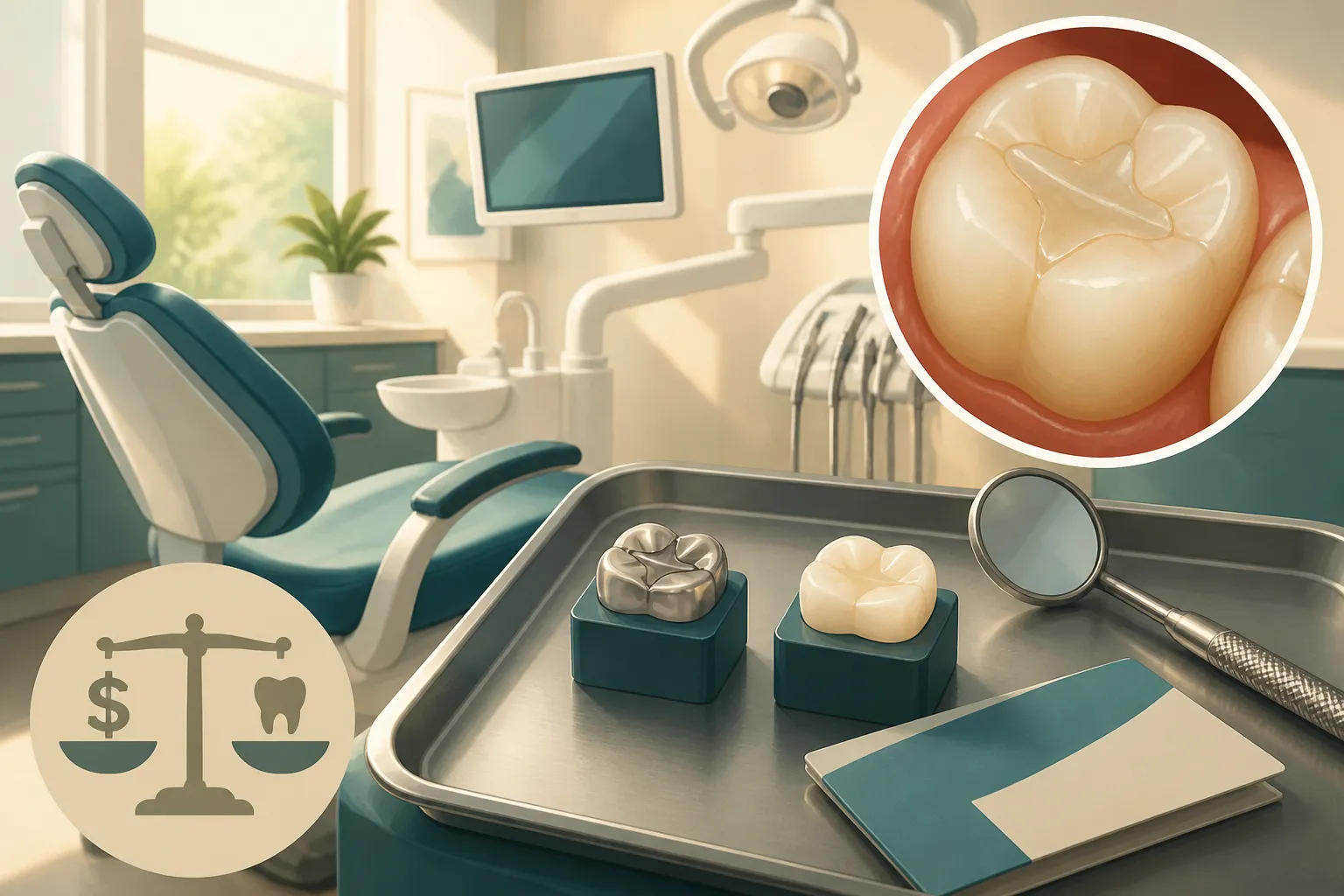
Say you are sitting in the dental chair, and the dentist mentions that an older filling in your back tooth is wearing down. Then comes the question that stops many of us: do you want the metal kind or the tooth-colored kind? The price is rarely the first thing on your mind. It usually becomes the first thing a day later. This guide walks through what each option tends to cost, how insurance can shift the bill, and what to ask before you say yes. It is general information, not personal medical, legal or financial advice, so please check details with a licensed dentist and your insurer.
Why the two fillings cost different amounts
Start with the materials. Dental amalgam is what many people call a silver filling. It is a mix of liquid mercury and a powdered alloy of silver, tin and copper. The FDA says "silver fillings" is not a recommended name, since it does not describe what is actually in the material. Tooth-colored composite is something else entirely. It is a resin with glass or quartz filler.
Amalgam is generally the less expensive of the two. Composite costs more, and gold or porcelain inlays and onlays cost considerably more than either one.
Fees are usually set by the number of tooth surfaces restored, not by how long you sit in the chair. So a small filling on one surface will cost less than a larger one that wraps around several. Prices also shift with the state you live in, the practice, and the dentist's experience. Treat every number below as a rough national range, not a quote.

Typical U.S. price ranges
Published figures differ from one source to the next. One dental practice reports a tooth-colored filling at about $150 to $550 depending on size, and amalgam at about $100 to $400. Another puts a simple amalgam filling near $100 to $200 and a composite near $150 to $300. Both say the final fee depends on location, size and the dentist's expertise.
Here is the catch for anyone thinking about swapping out old metal. These figures describe new fillings. The public sources reviewed here did not give prices for replacing a silver filling already in your mouth. Taking out the old material and rebuilding the tooth can involve different work, so ask for a separate estimate.
Online cost calculators can help you plan. They are still only estimates. They do not promise a fee, your coverage, or what you will owe.
How insurance can change what you pay
Insurance can close much of the gap. One practice says that with a PPO plan covering 70 to 80 percent, the patient's share for one tooth may land around $30 to $165. Your own number depends on your deductible, your annual maximum and how your plan is written.
The detail that surprises people is the back tooth. In one insurer's example, a composite on a front tooth counts as a basic procedure, usually covered at 80 percent of the allowed amount after the deductible. A composite on a back tooth may be paid only at the amalgam rate. Picture a $350 composite with a $200 amalgam allowance. The patient pays the $150 difference, plus 20 percent of the $200 allowance.
So a plan that covers fillings in general can still leave you with a bigger bill than you expected. Some plans do not cover composites at all. Read your summary of benefits, or call the insurer and ask about your specific tooth.
Choosing between materials and what to ask
The ADA says you have the right to decide, after talking with your dentist, which materials are used in your care. Dentists usually decide case by case, looking at cavity size, location and what you prefer. Amalgam is very durable and costs less. Composite looks more natural and suits small to mid-size fillings on front or back teeth. It generally takes longer to place, and the tooth has to stay clean and dry while it is done.
No filling lasts forever. Some studies suggest composite may need replacing more often than amalgam. The public sources here did not give reliable lifespans in years, so ask the dentist what they expect for your tooth.
A few questions are worth writing down before the appointment:
- Will you give me a written estimate, and how was it built, for example by surface count?
- Will your office verify my benefits before the visit?
- Could a benefit downgrade rule change what I owe?
- Does my plan cover a composite on this particular tooth, and what is the allowed amount?
There is also the health side. The FDA says amalgam can release small amounts of mercury vapor, and that placing or removing a filling can briefly raise exposure for patients and staff. It also says studies have not shown conclusive evidence of harm in the general population. It names groups who may be more susceptible: people who are pregnant or planning pregnancy, nursing mothers, children under six, people with a known mercury allergy, and people with neurological impairment or kidney dysfunction. If you fall into one of these groups, raise it before any removal and ask what precautions the office takes. The sources reviewed also do not say when a healthy old amalgam should be replaced, or whether it needs to be at all. That is a conversation for your dentist and, if relevant, your doctor.
A few cautions before you book
Do not lean on an online estimate as if it were a bill. Confirm with the office and the insurer. Watch the back-tooth rule described above, since the difference over the amalgam allowance comes out of your pocket.
Finally, waiting has a cost too. Decay tends to grow, and the price gap between two offices is often small next to the cost of treating a bigger problem later. Daily basics still matter most: fluoride toothpaste twice a day, flossing, a balanced diet and regular checkups.
Please seek a professional. This article is general information, not medical advice. Please seek a doctor or other qualified health professional about your own situation. In an emergency, call 911 or your local emergency number.
Sources
- Dental Amalgam Fillings | FDA
- Information for Patients About Dental Amalgam Fillings | FDA
- Dental Filling Options | MouthHealthy - Oral Health Information from the ADA
- Dental filling cost in 2026: real pricing explained | Serenity Dental
- Fillings (Tooth-Colored) | MouthHealthy - Oral Health Information from the ADA
- Tooth fillings cost and insurance: What you need to know
- Understanding Delta Dental Coverage for Tooth Colored Fillings | Carolina Complete Dentistry
- Cost of Tooth Filling Without Insurance: What to Expect and Ways to Save - Derek H. Tang, DDS
Still have a question?
Related guides
-

Clear Aligners Without the Hype: What to Check Before You Start
Mail-order trays look simple, but the FDA says safe treatment still depends on in-person supervision by a licensed dental professional.By Priya Ranganathan
-

Save the Tooth or Pull It? A Careful Look at the Choice
Root canals and extractions differ in more than the first price you hear, so it helps to compare the full path, the recovery and the questions worth asking your dentist. By Lorraine Whitcombe
-

Dentures or Implants: How to Weigh the Choice
A plain-language guide to how conventional and implant-supported dentures differ in comfort, upkeep and cost, with the questions to bring to your dentist.By Priya Ranganathan