The Tooth That Stopped Hurting
Pain that fades is not always a sign the problem has gone, and knowing what a root canal does can help you decide when to book the appointment.
 By Lorraine Whitcombe ·
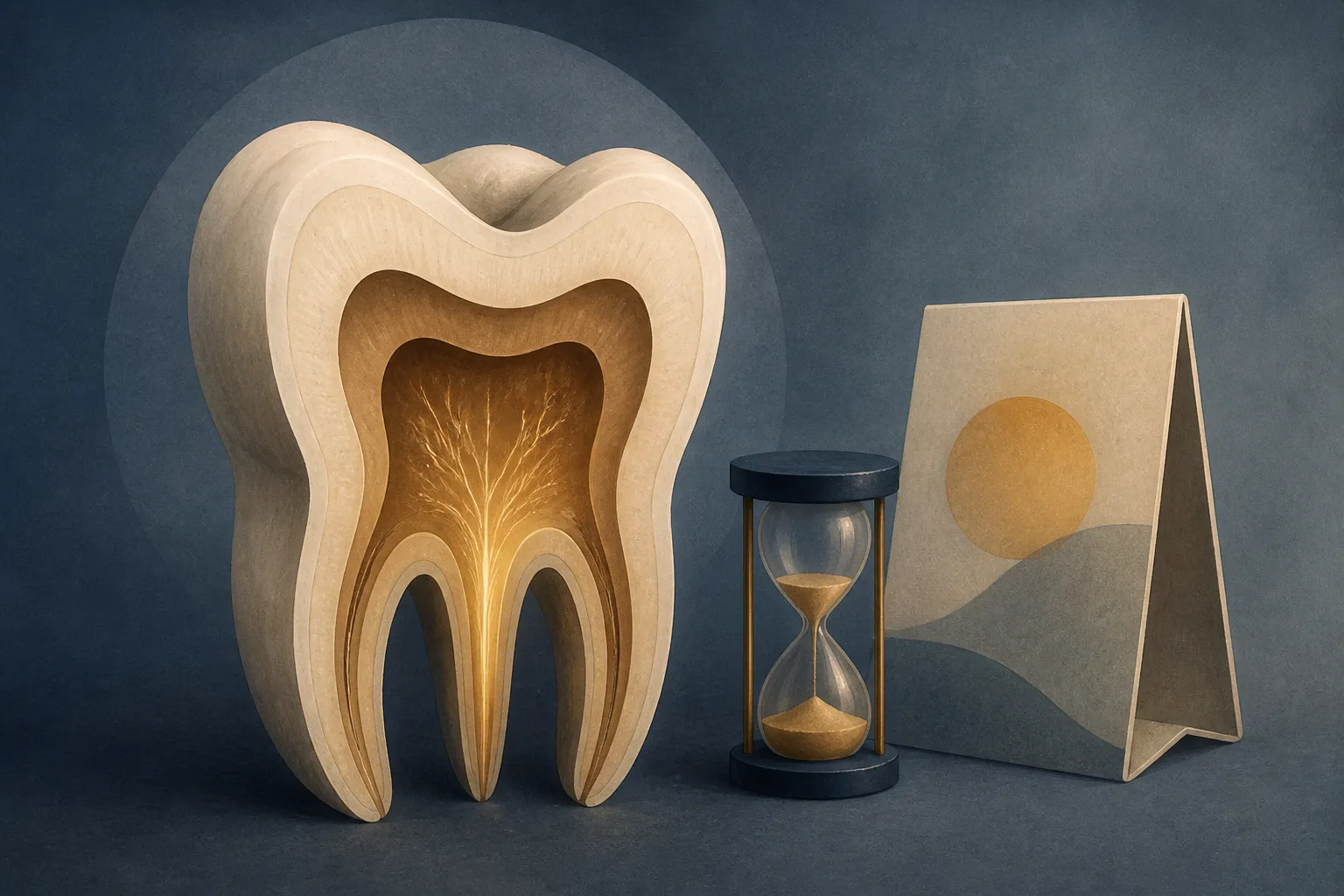
Maybe you know the feeling. A tooth ached for a few days, then it quieted down, and now you are wondering whether the appointment can wait until after the holidays. It is a very human thought. It is also worth a second look, because a tooth that stops hurting has not always stopped being a problem.
This is general information, not medical, legal or financial advice. A licensed dentist can look at your actual tooth and tell you what is going on.
What a root canal treats
Inside every tooth is the pulp, a soft tissue that holds nerves and blood vessels. A root canal is the treatment for an infection in that pulp. The aim is to clean out the infection and keep the tooth, rather than pull it.
The infection can begin in several ways. A deep cavity is a common one. So are repeated dental procedures on the same tooth, a cracked or fractured tooth, or an injury. Sometimes there is no visible crack at all. According to the American Dental Association's MouthHealthy page, the infection needs to be dealt with from inside the tooth. It does not tend to clear up by itself.

What happens if treatment is delayed
Left alone, the infection can move out through the root tip into the tissue around it. That may bring pain, swelling and sometimes an abscess, which is a pocket of pus. Over time, bacteria can damage the jawbone that holds the tooth in place. Losing that bone is one of the main reasons an untreated tooth is eventually lost.
There is a rarer and more serious side. Sources describe infection spreading to the neck, the sinus or the bloodstream. These outcomes are uncommon, but they are the reason dentists tend to say the same thing: do not wait it out.
Why pain stopping is not a sign of healing
This is the part that surprises people. One dental practice article, Delaying a Root Canal: What Happens When the Pain Stops, explains that a tooth can go quiet because the nerve has died. The infection may keep moving into the bone while you feel fine.
The same goes for swelling that shrinks on its own. It does not prove the infection is gone. So a pain-free week is a poor reason to cancel an appointment.
There is a practical cost to waiting, too. A tooth that could have been saved may later need to be pulled, and then replaced with an implant or a bridge. Those replacements are generally more involved than the original treatment.
Warning signs and how quickly to act
Cleveland Clinic lists several signs to watch for:
- A pimple or boil on the gum that may ooze pus
- A swollen jaw
- A tooth that has turned darker
- A loose tooth
- Pain that spreads to the jaw or face
- Pain when you chew or touch the tooth
Its guidance is not to wait if you have swelling and pain. Prompt treatment can relieve the pain, save the tooth and keep the infection from spreading. You can read more on its root canal page.
How fast is fast? The sources I reviewed do not name a number of hours or days. The steady message is to book care as soon as these signs show up. If you have severe pain or swelling, especially with fever, trouble swallowing or swelling that is spreading, contact a dental office or medical provider right away. The sources do not describe after-hours options, so it helps to ask local offices what they offer before you are in a bind.
What treatment involves and what to ask
Most root canals take one or two visits. The NHS notes it can be two or more, each lasting an hour or two. The dentist takes X-rays, numbs the area and places a thin rubber sheet, called a dam, around the tooth to keep it clean and dry. Then the tooth is opened, the infected pulp is removed, and the canals are cleaned and sealed. If there is an abscess, it is drained. Comfort is often described as close to having a filling.
A temporary filling protects the tooth until a permanent filling or crown goes on at a later visit. Some teeth also get a post for support. A few days of sensitivity is normal. Antibiotics may be prescribed if the infection has spread, and over-the-counter pain relievers are commonly suggested. The NHS page covers this too.
Some questions worth bringing along:
- Will I need a follow-up visit, or a referral to an endodontist, a root canal specialist?
- Will I need a crown or a permanent filling afterward?
- Is sedation available if I am nervous, and will I be drowsy afterward?
- If this one fails, what are the re-treatment or replacement options?
Most root canals succeed and can last many years. Still, some fail when the damage is severe, so it is fair to ask about the backup plan at the first visit.
Costs and cost gaps
I wish I could hand you a tidy US price range. The sources I reviewed do not give one, and real prices vary by state, by the tooth involved and by whether a general dentist or a specialist does the work. Any figure you hear should be checked against local quotes.
In the UK, the NHS classes root canal as a band 2 treatment. Most people pay a standard charge, and some qualify for free care or help with costs.
When you compare quotes, ask each office what is included. X-rays, the temporary filling, the permanent crown and follow-up visits can all be priced separately. Then check your own coverage with your insurer, since the sources do not explain how. A licensed dental professional or your insurer can walk you through the details for your situation.
Please seek a professional. This article is general information, not medical advice. Please seek a doctor or other qualified health professional about your own situation. In an emergency, call 911 or your local emergency number.
Sources
Still have a question?
Related guides
-

Clear Aligners Without the Hype: What to Check Before You Start
Mail-order trays look simple, but the FDA says safe treatment still depends on in-person supervision by a licensed dental professional. By Priya Ranganathan
-

Save the Tooth or Pull It? A Careful Look at the Choice
Root canals and extractions differ in more than the first price you hear, so it helps to compare the full path, the recovery and the questions worth asking your dentist.By Lorraine Whitcombe
-

Dentures or Implants: How to Weigh the Choice
A plain-language guide to how conventional and implant-supported dentures differ in comfort, upkeep and cost, with the questions to bring to your dentist.By Priya Ranganathan