What a Lost Front Tooth Could Cost You, and How to Weigh the Options
Implants and bridges carry very different price tags and timelines, so understanding what shapes the final bill helps you ask better questions before you commit.
 By Lorraine Whitcombe ·
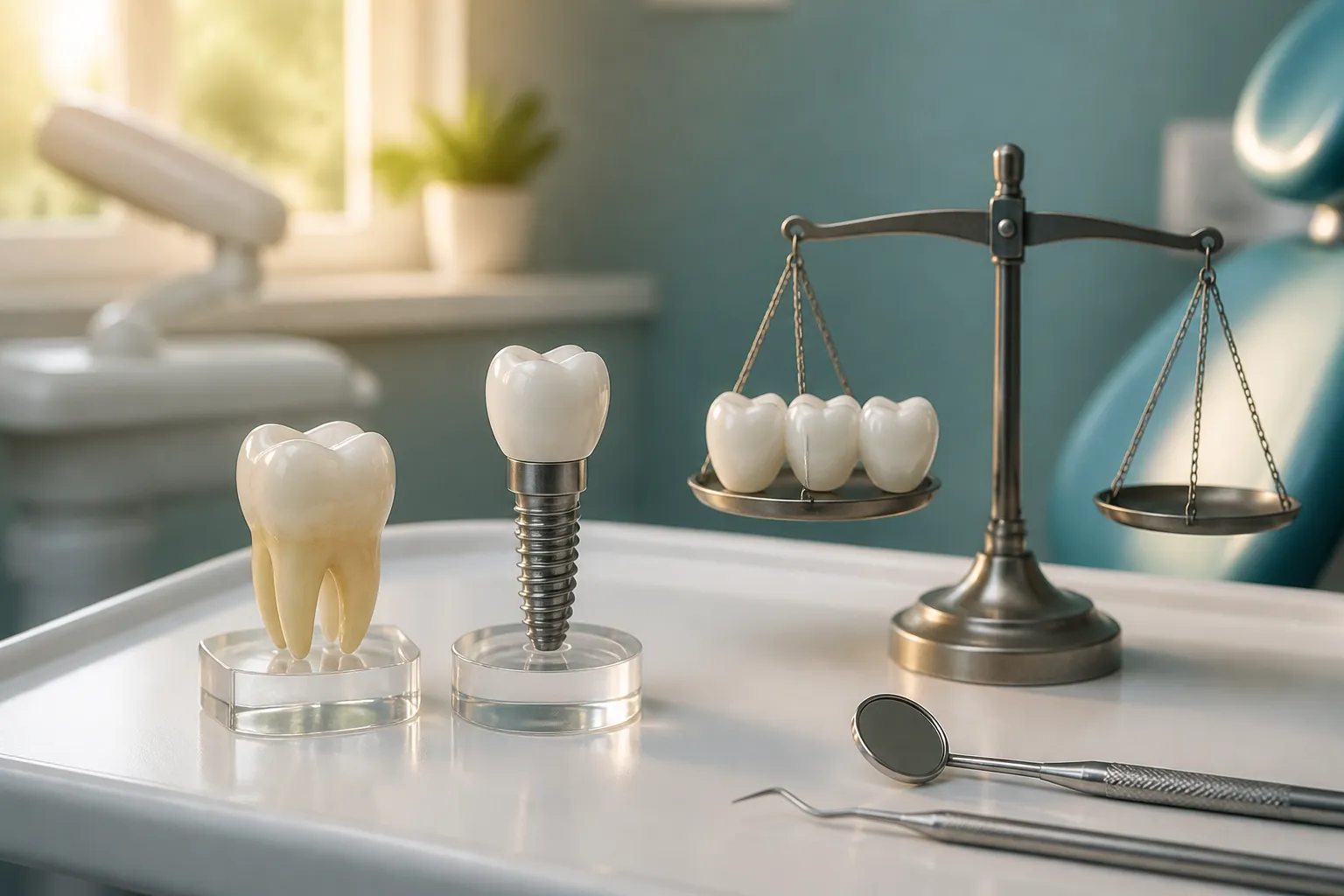
Picture a neighbor who loses a front tooth on a Tuesday. Maybe it was a fall, maybe a long-standing problem that finally gave way. By Wednesday she is asking the question most of us would ask: what is this going to cost? The honest answer is a range, and the range depends on a handful of things worth understanding before you sit in a dentist's chair. This is general information only, not medical, legal or financial advice, and a licensed dentist who has examined you is the right person to guide your own decision.
The two main options and how their costs differ
For a single missing front tooth, dentists most often talk about two choices. The first is a dental implant. That is a post placed in the jawbone, with a crown on top. The second is a bridge, which is a false tooth held in place by crowns on the healthy teeth on each side of the gap. The American Dental Association's MouthHealthy resource and the Cleveland Clinic both describe these as the standard routes.
The trade-offs are fairly simple. An implant usually costs more at the start, but it can last for decades with good care. A bridge generally costs less up front, but it tends to last about 10 to 15 years, so it may need replacing. A bridge also means filing down the two neighboring teeth, while an implant stands on its own and leaves them alone. When you compare, try to think about the total over the years you expect to keep the tooth, and not only the first invoice.
What the typical price ranges look like
A cost survey from the American Dental Association Health Policy Institute, cited by the American Academy of Implant Dentistry, puts the total for an implant, abutment, crown and other necessary procedures at roughly $3,100 to $5,800. That is a national survey figure. Your own price may land outside it, depending on your state, your city and how complicated your mouth is.
For a second data point, one North Carolina dentist's 2026 estimate listed a standard three-unit bridge at about $2,000 to $6,000, and a single implant at about $3,000 to $4,500 before the crown. That is one practice in one state, so please do not read it as a national price. I could not find reliable figures broken down for a front tooth specifically, or by state, so treat everything here as a starting point and not a quote.
What drives the final bill
The total depends on how many teeth are involved, where they sit, how many implants are needed, and whether your mouth has to be prepared first. Preparation can mean removing a tooth that cannot be saved, a bone graft, or a soft-tissue graft. Planning may also include a CBCT scan and a surgical guide. Each step adds cost, so an estimate that leaves them out may not match what you end up paying.
Several specialists may be involved too, such as a periodontist, an oral surgeon or a prosthodontist, and each may bill separately. It is fair to ask early who will be on your team and how their fees are handled.
Then there are the costs that come later. Bridges and dentures may need replacing every 5 to 15 years, and extras like adhesives are not part of the first price. Ask whether follow-up visits are included, and whether a future replacement would be billed on its own.
How it works, and how to choose
Implant treatment usually runs in three phases. First the post is placed in the jaw. Then comes healing, when the bone grows around it, which can take up to several months. Finally the permanent crown is attached. Some people get the implant and tooth in one visit, and a temporary crown or bridge is often worn in the meantime. A bridge is quicker, since it relies on the neighboring teeth rather than new bone.
Your general health matters more than your age. Conditions such as diabetes can interfere with healing, and tobacco use can slow it. Implants also need enough jawbone to hold them. A bridge may suit you better if you cannot have surgery, want a faster result, or are working with a tighter budget. An implant may suit you if you want something longer lasting that does not depend on the teeth beside it. A dentist who has examined you is the most reliable way to get an accurate estimate.
How to read insurance and payment options
Some dental insurers now cover part of implant treatment, though coverage varies widely. If yours does not, ask whether it will give an allowance equal to the cost of a bridge or traditional dentures. That can cut what you pay even when implants are not covered directly. I could not find details on waiting periods or annual limits, so read your own plan documents closely or call the insurer.
Many implant dentists also offer financing. Before you sign, ask about the interest rate, any fees, the repayment period, and what happens if you miss a payment. Compare terms side by side instead of assuming a monthly number is manageable. Your state insurance department and the Consumer Financial Protection Bureau are good places to learn how loan terms work.
What to ask before you agree to treatment
- Is this estimate based on an examination, and does it include the abutment, crown, any extraction, imaging and grafts?
- Which specialists will be involved, and how many visits should I expect?
- What will I wear while I heal, and are there diet limits?
- Does my insurance cover implants, or give an allowance toward a bridge?
- What payment or financing plans do you offer, and on what terms?
- Does a physician need to evaluate me before surgery?
Asking for an itemized estimate makes offers from different offices much easier to compare.
Red flags to keep in mind
Be cautious of advertised implant prices that sit far below the national survey range. They can mean important costs are missing. A price quoted without an examination is another warning sign, because no dentist can know how much preparation you need until they look. If something feels rushed or unclear, it is perfectly reasonable to get a second opinion before deciding.
Please seek a professional. This article is general information, not medical advice. Please seek a doctor or other qualified health professional about your own situation. In an emergency, call 911 or your local emergency number.
Sources
- Value and Cost - The Dental Implant Experts - AAID-Credentialed Dentists
- How Much Do Dental Implants Cost?
- Implants | MouthHealthy - Oral Health Information from the ADA
- Dental Implants: Types, Purpose & Benefits
- Get Dental Implants | Cleveland Clinic
- Dental Bridges: Types & Who Needs Them
- Partial Denture vs Bridge: Pros, Cons, and 2026 Costs
- Dental Implants vs. Bridge: Making the Right Choice for Your Missing Teeth - The Teeth Doctors™ • Worry Free, Five Star Rated Fayetteville Dentist
Still have a question?
Related guides
-

Clear Aligners Without the Hype: What to Check Before You Start
Mail-order trays look simple, but the FDA says safe treatment still depends on in-person supervision by a licensed dental professional. By Priya Ranganathan
-

Save the Tooth or Pull It? A Careful Look at the Choice
Root canals and extractions differ in more than the first price you hear, so it helps to compare the full path, the recovery and the questions worth asking your dentist.By Lorraine Whitcombe
-

Dentures or Implants: How to Weigh the Choice
A plain-language guide to how conventional and implant-supported dentures differ in comfort, upkeep and cost, with the questions to bring to your dentist.By Priya Ranganathan