What a Replacement Retainer Really Costs, and Who Should Make It
A plain, neighborly walk through typical US prices, how long each type lasts, and the questions worth asking before you pay for a new one.
 By Walter Pemberton ·

Most people remember the day the braces came off. The mirror, the first real smile, the sense that it was finally over. Then comes a small plastic case, and a quiet instruction to wear what is inside. Years later, that case is often the thing that goes missing, along with a napkin at a restaurant or a bag at the airport. So what does a new retainer cost, and who should make it? Here is a plain walk through it, as one neighbor to another.
Teeth can keep moving after treatment, so a retainer is often a long-term habit rather than a few months of wear.
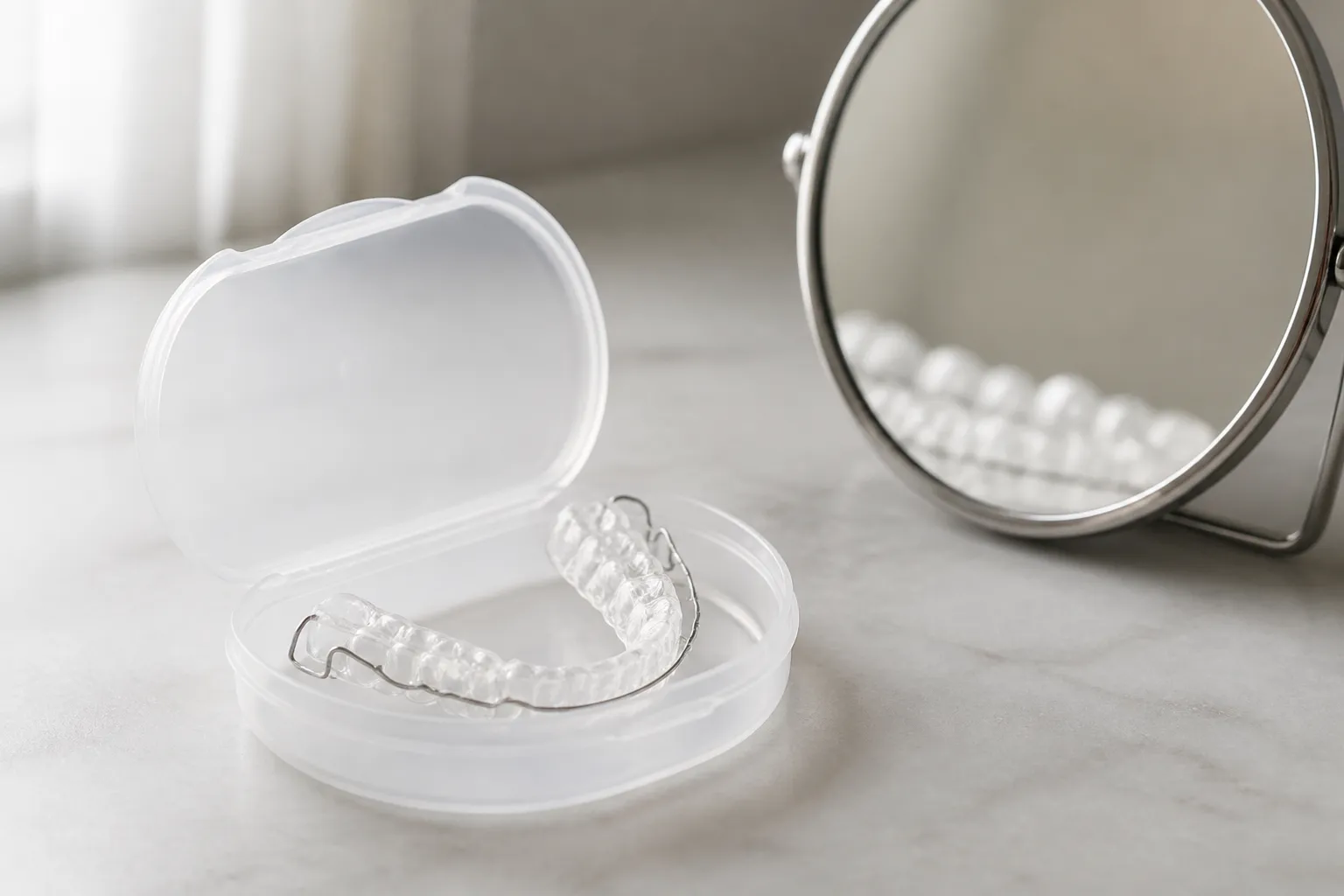
Why retainers matter after orthodontic treatment
A retainer keeps your teeth where the orthodontist moved them. The American Association of Orthodontists (AAO) says everyone should wear one as the final step of treatment. That can feel like a lot to ask after months or years in braces, but there is a reason for it.
The bone around your tooth roots keeps remodeling for a long time. Because of that, teeth can drift even after treatment ends, and many people need a retainer for years.
There are two broad kinds. Removable retainers are the ones you put in and take out yourself. Fixed retainers are thin wires bonded behind the front teeth, and only the orthodontist places or removes them.
What a replacement retainer typically costs in the US
One US practice published a 2026 pricing guide with national estimates per arch, meaning the top or the bottom set of teeth. Clear plastic retainers run about $100 to $300 per arch. Hawley retainers, which are acrylic with a metal wire, run about $150 to $350. Permanent bonded retainers run about $250 to $500.
If you need both upper and lower, that guide suggests budgeting roughly double. Please treat these as a starting point. They come from a single clinic, not an independent national survey, and prices differ by state and by practice.
The AAO notes that the orthodontist sets the fee for replacement retainers. So the most trustworthy number is a current quote from the office that made yours, or from one you are thinking of visiting.
How long each type lasts and what affects it
The same clinic guide reports typical lifespans. Clear retainers worn nightly tend to last about 1 to 3 years. Hawley retainers last about 5 to 10 years with good care. Bonded retainers can last 10 to 20 years, if the bond holds.
Heavy grinders may wear through clear plastic in under a year. If a retainer stops fitting the way it did at first, that may be wear, or it may be your teeth moving. Either way, it is worth a call to your orthodontist rather than a shrug.
Care matters for all of them. Hot water, alcohol, bleach and dishwasher cycles can warp or weaken plastic. Fixed wires need careful flossing and occasional checks to make sure the bond is intact.
Who should replace or check your retainer
The AAO advises seeing a qualified orthodontist for checks and replacements. A well-fitted retainer depends on precise measurements, and a generic one from elsewhere may not hold your teeth where they belong.
It is fair to ask whether the practice is an AAO member or otherwise qualified, and whether the clinician holds a current license in your state. Your state dental board can tell you how to check that. These notes do not walk through those steps.
Choose the type together with your orthodontist. Clear, Hawley and bonded each trade off appearance, durability and upkeep, and the right pick depends on your bite and habits.
Insurance, payment options and questions to ask before you pay
Replacing a lost or broken retainer is usually paid out of pocket. Most dental plans fold retainers into the initial orthodontic package only. The sources here do not cover plan types, annual limits or state rules, so read your own policy.
The AAO says flexible spending accounts (FSAs) or health savings accounts (HSAs) can help reduce the cost. Your plan administrator can tell you whether retainers qualify.
Before you pay, or ideally before treatment begins, consider asking:
- Is the first set of retainers included in the braces or aligner fee, and for how long?
- What does a replacement cost, and is there a separate fee if one is lost, broken or stolen?
- Are periodic retainer checks offered, and are they included?
- Which cleaning and storage steps apply to my type?
Red flags and what to do
A retainer that does not fit at all, or hurts, should not be forced in. Contact the orthodontist, who may remake it or use aligners to nudge teeth back.
A loose wire on a fixed retainer deserves a prompt call. So do teeth that seem to be moving, since that can signal relapse.
There are gaps worth naming. The cost figures come from one clinic guide. These sources do not include independent cost comparisons, state-by-state prices, warranty terms or complaint routes for retainer disputes. If any of that matters to you, ask the office directly.
This is general information only, not medical, legal or financial advice. A licensed orthodontist or dentist can speak to your own mouth and your own budget.
Please seek a professional. This article is general information, not medical advice. Please seek a doctor or other qualified health professional about your own situation. In an emergency, call 911 or your local emergency number.
Sources
- Metal Retainers vs Clear Retainers | Pros & Cons
- Orthodontic Retainers: Types, Care, & Life After Braces | AAO
- Will My Teeth Move Again Post-Treatment? | American Association of Orthodontists
- Orthodontic FAQs: Your Questions Answered | American Association of Orthodontists
- Retainer Cost: How Much Retainers Cost Per Arch in 2026
- Orthodontic FAQs: Your Questions Answered | American Association of Orthodontists
- 箍牙出問題點算?分辨警號、第二意見同投訴途徑(2026)|香港牙科指南
- British Orthodontic Society > BOS Homepage > Orthodontics for Adults > FAQ > What happens when my braces are removed?
Still have a question?
Related guides
-

Clear Aligners Without the Hype: What to Check Before You Start
Mail-order trays look simple, but the FDA says safe treatment still depends on in-person supervision by a licensed dental professional. By Priya Ranganathan
-

Save the Tooth or Pull It? A Careful Look at the Choice
Root canals and extractions differ in more than the first price you hear, so it helps to compare the full path, the recovery and the questions worth asking your dentist. By Lorraine Whitcombe
-

Dentures or Implants: How to Weigh the Choice
A plain-language guide to how conventional and implant-supported dentures differ in comfort, upkeep and cost, with the questions to bring to your dentist.By Priya Ranganathan