What Braces Really Cost, and How to Read the Estimate
A plain-spoken walk through the factors that shape the price of orthodontic care, so you can compare quotes with a steadier eye.
 By Walter Pemberton ·

Most of us know someone who got braces as a kid, and a growing number know someone who got them at forty. The first question at the kitchen table is almost always the same: what will this cost? The honest answer is a range, and the range is wide. This guide walks through what drives it, so you can read an estimate with a steadier eye. It is general information only, not medical or financial advice, and a licensed dentist or orthodontist is the right person to look at your own case.
Those figures are a starting point rather than a quote. The written treatment plan from your provider is the number to compare.
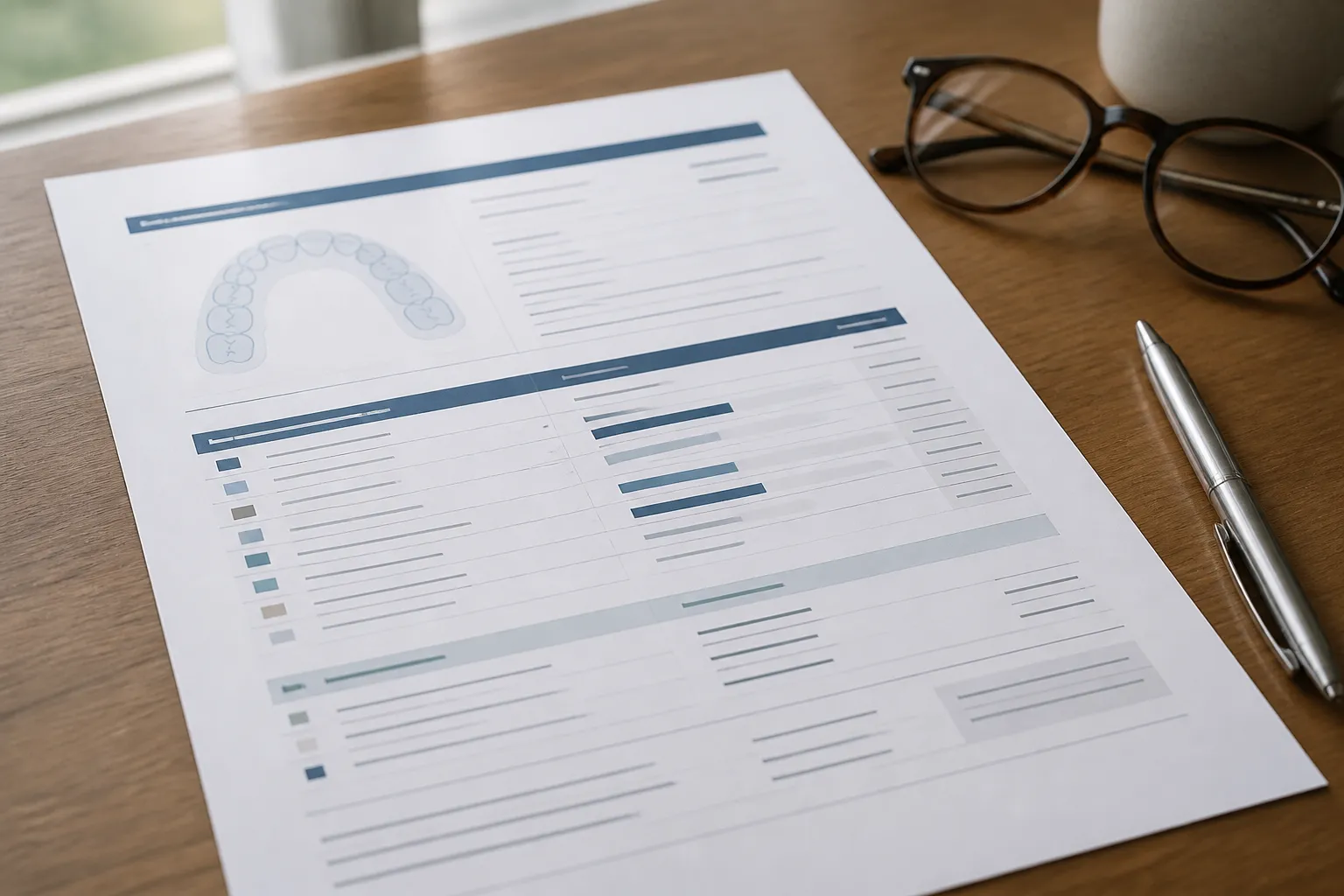
What braces typically cost in the US
One widely cited guide puts the national average for dental braces between $5,108 and $9,221. That is a big gap, and it depends on several things at once. Prices also shift by state and by local cost of living, so a clinic in a pricey metro area may charge more than one in a quiet rural county. The sources I reviewed do not give state-by-state figures, so I will not guess at them.
Traditional metal braces are usually the more affordable appliance. Lingual braces, which sit on the inside of the teeth, tend to cost more because each set is custom made. Clear aligners and ceramic braces land at their own price points, but I could not find reliable national ranges for them. Ask any office for a written estimate that names the appliance and the expected length of treatment.
Time matters as much as hardware. Most people are in treatment for one to three years, then wear a retainer for a while after. If one estimate includes the retainer and follow-up visits and another does not, they are not really the same price.
How children and adults differ
Treatment can begin at any age. Abnormal bites usually show up between ages 6 and 12, and treatment often starts between 8 and 14. That is why many families first hear about braces at a routine childhood checkup.
Adults are a big part of the picture too. The American Association of Orthodontists says about one in three orthodontic patients today is an adult. Many choose clear aligners or lingual braces for cosmetic reasons.
You might expect adults to pay more, or less. The sources do not split costs by age, so I would not assume either. The case itself, such as how far teeth must move and whether the jaw is involved, usually matters more than birthdays.
Children may have dental benefits through a parent's plan or a public program. Rules for public coverage of children's orthodontics vary, and the material I reviewed does not spell them out. Call the program directly before counting on it.
Why treatment is more than cosmetic
Braces are not only about a straighter smile. The American Dental Association notes that an untreated abnormal bite can contribute to tooth decay, gum disease, tooth loss, speech or chewing problems, unusual enamel wear and jaw trouble. Not every crooked tooth leads to those problems, so your dentist is the one to say whether a particular bite is likely to.
Some families see braces as a long-term health expense for that reason. Care at home counts too. Sugary and sticky foods, along with poor cleaning, can cause plaque build-up, staining or permanent damage, and that can mean extra visits. A simple question for your dentist: which foods should we avoid?
How to plan for the cost
Start with your dental insurance policy. Look at covered services, exclusions and limits on orthodontic care. Some plans offer real orthodontic benefits and others offer little or none, so please do not assume.
- Ask about pre-authorization, the percentage the plan pays, and any annual or lifetime maximum.
- Ask the orthodontist's office whether they can estimate what insurance will cover.
- Ask about payment plans, and whether an HSA or FSA can be used.
Financing terms, including interest rates, vary by lender and the sources explain them only briefly. Read any agreement slowly before signing. Online cost estimator tools are handy, but they are rough guides, not promises about fees or out-of-pocket costs.
Choosing a provider and an appliance
Orthodontic care may come from a general dentist or from an orthodontist, a dentist who specializes in dental and facial irregularities. Which is right depends on the dentist's experience and how complex the case is, so ask plainly.
Then compare appliances on looks, cleaning, comfort and speed. Clear aligners come out for brushing and eating, but they work more slowly and suit milder problems. Ceramic braces have tooth-colored or clear brackets, may need more careful upkeep, and may not fix every issue. Lingual braces can be harder to clean and may feel uncomfortable at first.
One gap worth naming: the sources do not explain how to verify an orthodontist's credentials. Your state dental board is a sensible place to check a license, and you can ask the provider about specialty training. A licensed professional can answer what fits your family best.
Please seek a professional. This article is general information, not medical advice. Please seek a doctor or other qualified health professional about your own situation. In an emergency, call 911 or your local emergency number.
Sources
- How Much Do Braces Cost? Factors, Insurance, & Savings | AAO
- How to Save on Orthodontic Care: Budgeting Tips | AAO
- Adult Orthodontics: Smile with Confidence at Any Age | American Association of Orthodontists
- Braces | MouthHealthy - Oral Health Information from the ADA
- Places to Look for Affordable Dental Care - Dental Benefits | MouthHealthy - Oral Health Information from the ADA
- Does your child need braces? | Delta Dental
- Dental Procedure Cost Estimator | Delta Dental
- How Much Do Dental Braces Cost? Pricing and Insurance Guide
Still have a question?
Related guides
-

Clear Aligners Without the Hype: What to Check Before You Start
Mail-order trays look simple, but the FDA says safe treatment still depends on in-person supervision by a licensed dental professional. By Priya Ranganathan
-

Save the Tooth or Pull It? A Careful Look at the Choice
Root canals and extractions differ in more than the first price you hear, so it helps to compare the full path, the recovery and the questions worth asking your dentist. By Lorraine Whitcombe
-

Dentures or Implants: How to Weigh the Choice
A plain-language guide to how conventional and implant-supported dentures differ in comfort, upkeep and cost, with the questions to bring to your dentist.By Priya Ranganathan