What to Do When a Filling or Crown Comes Loose Before Your Dentist Can See You
A lost filling or crown is worth a same-day call, and a few gentle steps at home can keep the tooth comfortable until you are seen.
 By Lorraine Whitcombe ·
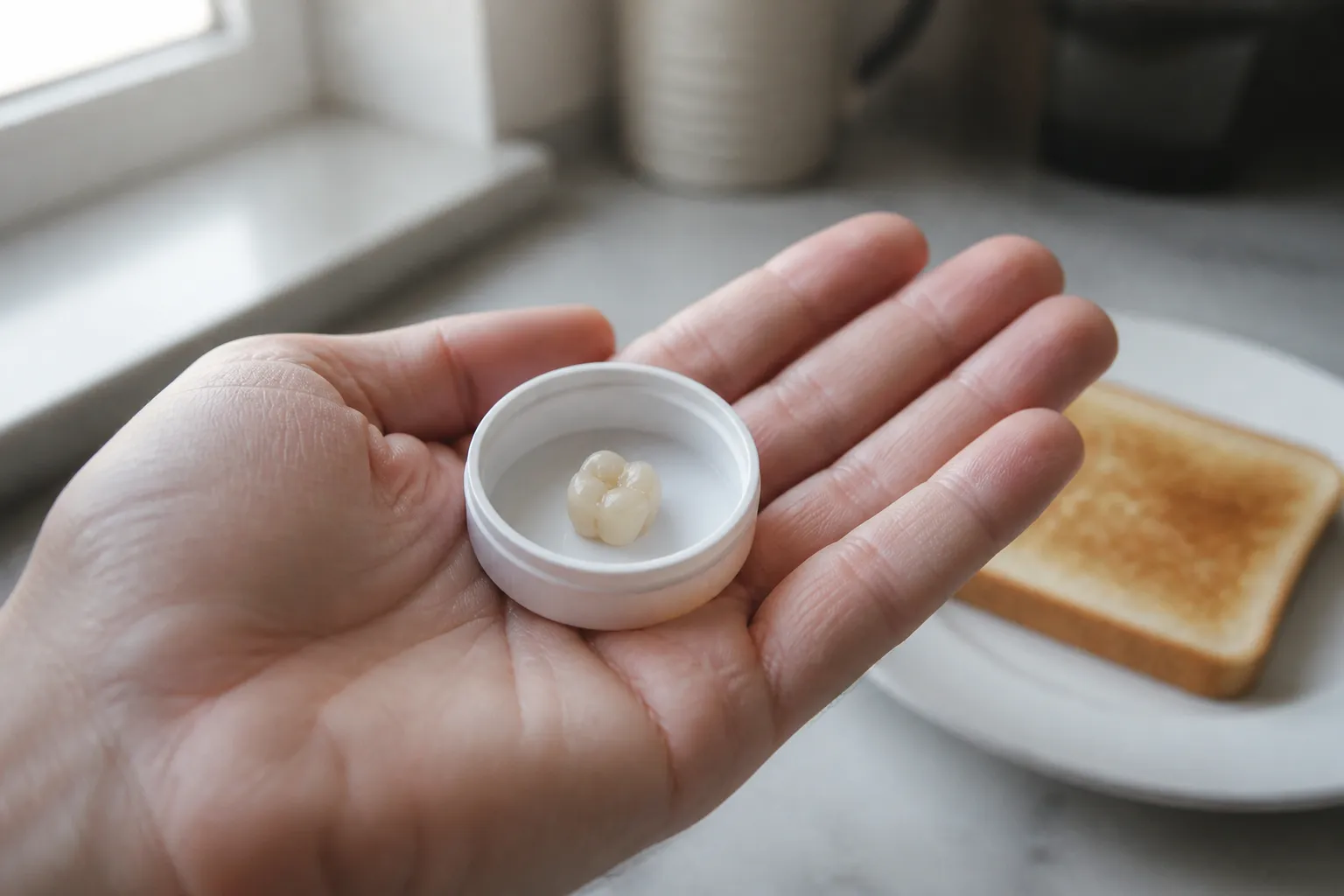
It usually happens over something ordinary. A bite of toast, a caramel, a piece of bread crust, and suddenly your tongue finds a hole where a filling used to be. Or a crown comes loose and sits in your palm like a tiny helmet. Then you call the dentist and hear that the next opening is two weeks away. If that is where you are today, take a breath. There is a sensible way through the waiting, and this guide walks through it.
Who to contact first
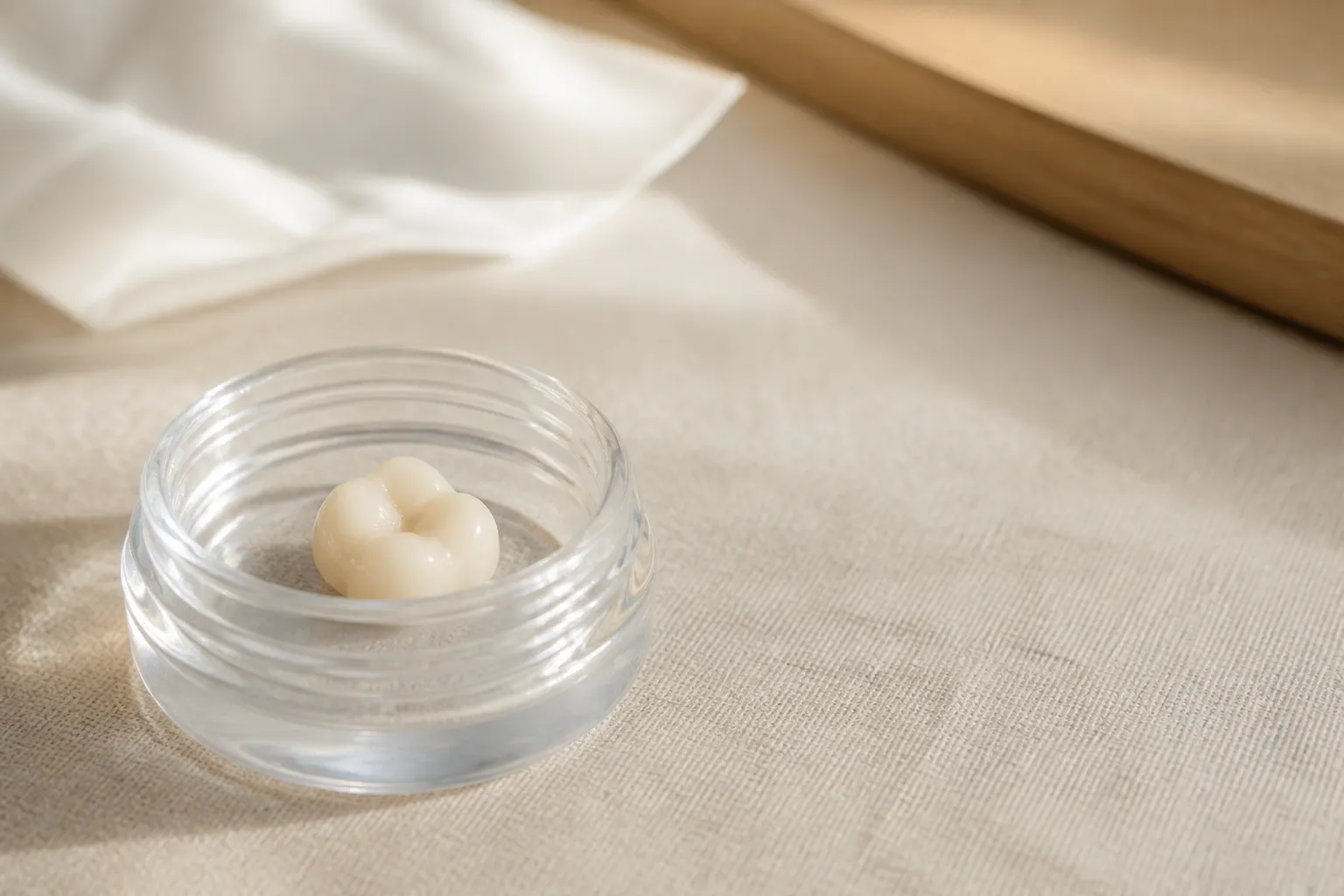
A lost filling or crown is a dental problem, so a dentist is the right person to see. A general doctor cannot provide dental treatment, so a visit there is unlikely to fix the tooth. If the crown came off whole, keep it somewhere safe and bring it along. A small clean container works well.
Start by calling your own dentist, even if it is after hours. Many offices keep room in each day for emergency patients, and some have an emergency number for calls outside regular hours. Describe things as fully as you can. Say which tooth it is, whether it hurts, and whether you can see the inner part of the tooth. Ask for the after-hours number and save it in your phone for later.
If you have no regular dentist, or the office is closed and the problem feels urgent, the sources point to an urgent care center or the nearest emergency room. Readers in Wales may have another route: the NHS dental helpline handles urgent dental care there, and a Dental Access Portal lets people register interest in routine NHS treatment. Those services may not apply elsewhere, so check what exists where you live.
What the dentist will do
The dentist will look at the tooth and talk through the options. Often the first step is a temporary filling or repair to protect the tooth. A longer-term filling or new crown may come later. If the tooth cannot be saved in its current state, it may need root canal treatment or, in some cases, removal.
Here is a detail worth knowing. A crown that is undamaged, sitting on a healthy tooth, can sometimes be cleaned and professionally re-cemented. That may spare you the cost of a whole new crown. It is a fair question to ask: can this one go back on, or does it need replacing?
Care at home until you are seen
Home care is about keeping the area clean and calm. Rinse gently with warm salt water. Keep brushing twice a day with fluoride toothpaste, and go very softly around the exposed spot. Chew on the other side, and skip hard foods for now.
The tooth may feel sensitive. Very hot or cold drinks can make it worse, and a toothpaste made for sensitive teeth, dabbed right on the tooth, may help. Try to cut back on sugary foods and drinks, and keep them to mealtimes, since sugar feeds the bacteria that like to settle in an open spot.
You can also cover the area for a short time. Dental wax or temporary filling material, often sold at drugstores, can do this. For a crown that has come off, some practices say a small dab of dental adhesive or denture cream may hold it briefly. Think of these as a bandage, not a repair.
- Do not use superglue. It can harm the tooth and the tissue around it.
- Do not put aspirin on the tooth or gums. It can burn the tissue.
Why waiting carries risk
Under a lost filling or crown sits dentin, the inner layer of the tooth. It is softer than enamel and more open to decay. Bacteria can get in, which may mean a new cavity, or an infection that calls for a root canal.
There is a slower problem too. Neighboring teeth can drift toward the gap. That may change your bite, bring on jaw pain, and make a later crown or filling harder to fit. For these reasons, the sources treat a lost filling or crown as urgent. Calling the same day, even if you only get a temporary fix, is a kind thing to do for your tooth.
Signs that need emergency care now
Some symptoms mean you should not wait for an appointment. Swelling of the face or jaw from a dental problem is a dental emergency. So is bleeding that will not stop, or pain that medication does not ease. For a suspected broken jaw, hold a cold compress to the area and go to a dentist or hospital emergency department right away.
One general source on dental abscesses also lists swelling under the tongue, trouble swallowing, difficulty opening the mouth, breathing discomfort, and high fever as signs needing immediate medical care. It was not written about lost fillings, so treat these as warning signs, not a diagnosis. If you feel unsure, getting seen is the safer choice.
Questions to ask when you call
- Do you reserve emergency appointments, and how soon can you see me?
- What is your after-hours number?
- Can the crown be re-cemented, or does it need replacing?
- Is a temporary repair an option while I wait?
Cost and coverage
The sources behind this guide do not give prices for emergency visits, temporary repairs, re-cementing, or replacement, so I will not guess at a range. In the US, dental costs vary by state, by office, and by what your tooth needs. Insurance coverage for emergency visits and restorations also varies by plan.
Two practical steps help. Ask the office for an estimate before treatment begins, and check your plan's benefits for emergency dental care. A licensed dentist and your insurer can give you answers specific to your situation. This article is general information only, not medical or financial advice.
Please seek a professional. This article is general information, not medical advice. Please seek a doctor or other qualified health professional about your own situation. In an emergency, call 911 or your local emergency number.
Sources
- NHS 111 Wales - Health A-Z : Lost Filling or Crown
- Dental Service Information and Q&As - NHS Western Isles | Serving the Outer Hebrides of Scotland.
- Dental Emergencies | MouthHealthy - Oral Health Information from the ADA
- 야간진료치과 - 이포유치과의원
- What Is a Dental Emergency and Where To Go for Care
- Dental Emergency - What if I break a Tooth | MouthHealthy - Oral Health Information from the ADA
- Don’t Panic: Your Guide to Lost Fillings and Crowns
- 5 Steps to Handle a Lost Filling or Crown - Kingston Smiles NY
Still have a question?
Related guides
-

Clear Aligners Without the Hype: What to Check Before You Start
Mail-order trays look simple, but the FDA says safe treatment still depends on in-person supervision by a licensed dental professional. By Priya Ranganathan
-

Save the Tooth or Pull It? A Careful Look at the Choice
Root canals and extractions differ in more than the first price you hear, so it helps to compare the full path, the recovery and the questions worth asking your dentist.By Lorraine Whitcombe
-

Dentures or Implants: How to Weigh the Choice
A plain-language guide to how conventional and implant-supported dentures differ in comfort, upkeep and cost, with the questions to bring to your dentist.By Priya Ranganathan