Whitening Strips or the Dentist Chair: How to Choose
Prices, speed, and safety differ widely between store-bought products and professional treatment, so the right choice depends on your timeline, your teeth, and your budget.
 By Walter Pemberton ·
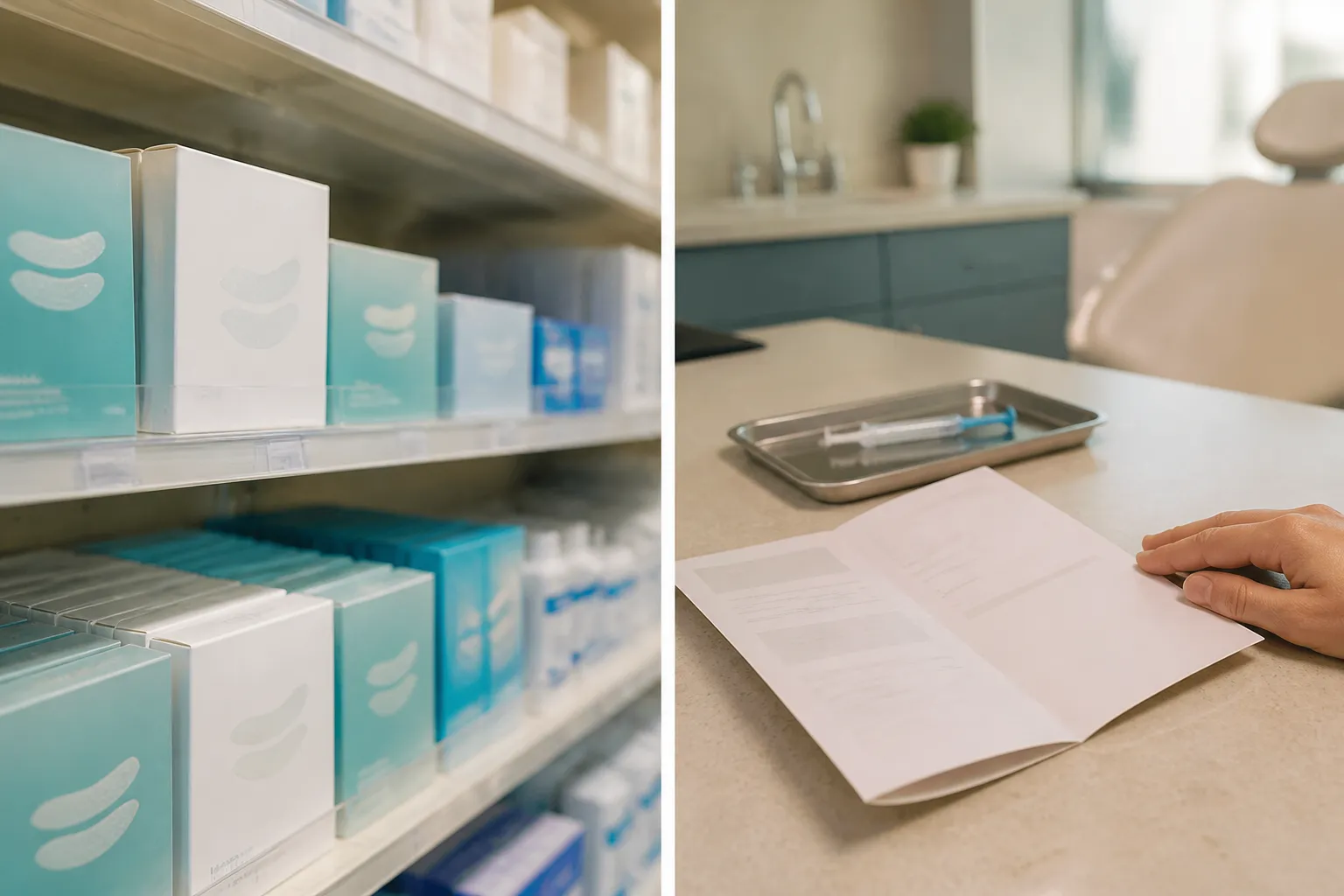
Picture a neighbor standing in the pharmacy aisle, a box of whitening strips in one hand and a wedding invitation in the other. The strips cost about the price of lunch. A dentist's quote might cost as much as a weekend away. Which one makes sense? The honest answer is that it depends, and the price gap tells only part of the story.
What each option costs in the US
Over-the-counter products are sold for home use. These include strips, gels, rinses, whitening gums and paint-on films. They usually run about $20 to $60, which makes them the cheapest way to start. They are a different category from treatment a dentist supplies, though, and that matters when you compare prices.
Dentist-provided take-home kits sit in the middle. They use custom-fitted trays and a gel the dentist supplies. Published ranges are broad, roughly $100 to $600. One Oklahoma practice lists custom trays at $250 to $500, so quotes can differ even within that band.
In-office whitening costs the most. Published US estimates put a single session at about $300 to $1,000. Laser-assisted sessions have been reported to average around $792, and one branded system around $583. In big cities the numbers climb, with Los Angeles cited at $700 to $1,200 per treatment. One Oklahoma City-area practice lists about $400 to $800.
Please treat all of this as a rough guide. Prices vary by state, city and practice, and the sources I reviewed do not give current state-by-state averages. Ask local offices for written quotes, and ask whether the price covers one visit or a full course.
How speed and results compare
In-office and laser treatments are built for quick change. They use roughly 25 to 40 percent hydrogen peroxide. One source reports lightening of up to 8 shades in one to two sessions. Another says 6 to 10 shades in one session. Those figures disagree, so think of any shade number as an estimate, not a promise.
A typical in-office visit is one appointment of about an hour or two. The dentist applies gel, sometimes with a laser, while a soft shield protects your gums and you wear eye protection.
Dentist-supervised take-home kits are gentler and slower. They generally use 10 to 22 percent carbamide peroxide in trays worn daily. Many schedules run one to two weeks, and some stretch to two to six weeks.
Store-bought products tend to give smaller changes. One source cites 2 to 3 shades over 30 days for 10 percent products. Another cites 1 to 2 shades over weeks to months. Gel-filled trays are the fastest home option, sometimes showing change in a few days. Strips and gels usually take about two weeks.
The type of stain matters too. Whitening mainly lifts surface stains. Whitening toothpastes and gums do little for stains inside the tooth. Whitening also does not change crowns, dentures, implants or tooth-colored fillings, so those may stand out afterward. A dentist can talk through that with you.
Insurance, HSA/FSA and ongoing costs
Dental insurance rarely pays for whitening, since it is considered cosmetic. The code often used is D9972. Some sources say an HSA or FSA may reimburse it when a medical need is documented, but that claim comes mostly from practice marketing pages. Please check with your insurer or account administrator before counting on it.
Ask what the quote leaves out. A check-up, a cleaning, or treatment for cavities or gum disease usually comes first and is often billed separately. The sources I used say little about consultation fees, follow-up visits, touch-up kits or financing, so ask about each one by name.
Then think about the long run. Results may last one to three years with good maintenance, according to one US source, and around three years in a UK source. Ask what touch-up schedule is advised and what a refill of gel or a replacement tray costs. That can change the real total.
How to choose and what to check
Start with four things: how fast you need results, how sensitive your teeth are, your budget, and where you would rather have treatment. Someone with a wedding in a few weeks may lean toward an office visit. Someone with sensitive teeth, or who likes a slow and steady pace, may prefer take-home trays. Some practices price a combined package of both, so it is fair to ask.
Dentist-supplied trays are generally more effective than store-bought strips. They use higher concentrations and fit the shape of your teeth.
Before you book, confirm the person treating you is a licensed dental professional. In the US, your state dental board usually offers a license lookup. The sources here do not explain state board rules or FDA oversight of whitening products, so verify those through official channels. UK readers can check the General Dental Council register.
Here are questions worth bringing to the appointment:
- Are my teeth and gums healthy enough, and do I need a check-up first?
- Will whitening work on my kind of stain, given any crowns, dentures or implants?
- Is the price for one session or a full course, and what does a kit include?
- What side effects are likely, and how will my gums be protected?
- How long will results last, and what touch-ups will I need?
Red flags and safety considerations
Be careful with whitening offered at beauty salons, or with kits bought online or at pharmacies without dental guidance. They may work less well and can harm teeth and gums. The chemicals are strong, and the NHS advises they should be used or sold only by trained dental professionals.
Age and pregnancy matter as well. The UK source does not recommend whitening for anyone 17 or younger. Another source suggests waiting for patients under about 14 to 16. Whitening is generally not recommended during pregnancy or breastfeeding. Active cavities or gum disease should be treated first.
Common side effects include temporary sensitivity to cold or sweet foods, sore gums or throat, and white patches on the gums. Ask ahead of time how these are handled and what to do if they linger. One source says these products have been used for decades without a reported rise in problems, but it gives no figures. Long-term data is limited, so mention any personal risk factors to your dentist.
What the numbers do not settle
Several figures conflict across sources, including shade changes and some take-home kit prices. No single number here is settled. Your local range may land outside the ones above. In the UK, professional whitening is not available on the NHS and must be paid for privately.
This is general information, not medical, legal or financial advice. A licensed dentist can look at your teeth and give you a quote that fits your situation, and your insurer or plan administrator can answer the coverage questions.
Please seek a professional. This article is general information, not medical advice. Please seek a doctor or other qualified health professional about your own situation. In an emergency, call 911 or your local emergency number.
Sources
- Whitening | American Dental Association
- Teeth whitening - NHS
- Teeth Whitening Cost: Professional vs. At-Home Options | Gentle Dental
- Is Teeth Whitening Safe (and Does It Work)?
- Professional Teeth Whitening: Cost, Methods & Results (2026)
- In-Office vs Take-Home Teeth Whitening: Which Option Works Best in Moore, Norman, and Mustang? | 29th Street Dental Care
- Dental Teeth Whitening Cost: What to Expect in 2026
- 10 Teeth Whitening Methods and What They Cost | Rejuvenation Dentistry
Still have a question?
Related guides
-

Clear Aligners Without the Hype: What to Check Before You Start
Mail-order trays look simple, but the FDA says safe treatment still depends on in-person supervision by a licensed dental professional. By Priya Ranganathan
-

Save the Tooth or Pull It? A Careful Look at the Choice
Root canals and extractions differ in more than the first price you hear, so it helps to compare the full path, the recovery and the questions worth asking your dentist. By Lorraine Whitcombe
-

Dentures or Implants: How to Weigh the Choice
A plain-language guide to how conventional and implant-supported dentures differ in comfort, upkeep and cost, with the questions to bring to your dentist.By Priya Ranganathan