Upgrading to 200 Amps Without the Surprise Bill
Panel costs are only part of the story, so here is what a 200 amp upgrade typically runs, what can get added on, and what to ask before you sign.
 By Neil Ostrander ·

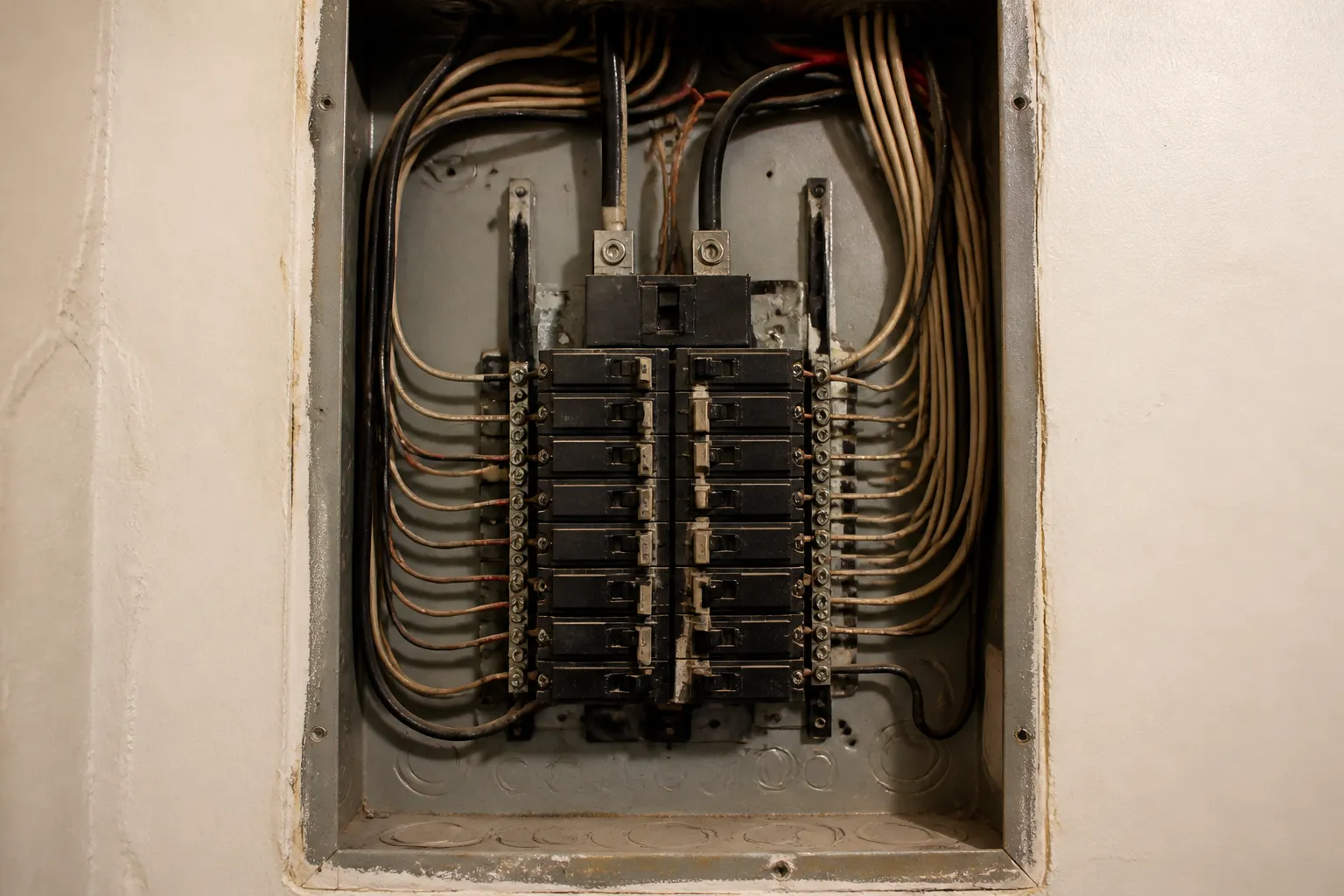
Your lights dim when the microwave runs. The breaker trips when someone starts the hair dryer. Or you just want a heat pump and your panel looks like it was installed during the Carter administration. Either way, you are now reading about 200 amps. Good. Let's keep the bill from surprising you.
A flat number can understate an older home's job, because once the service is touched, the inspector can ask for more.
When a 200 amp upgrade makes sense
A 200 amp service is the standard upgrade target. It moves more power through the house than smaller panels, which matters if you are adding central air, an electric range, an EV charger, or a heat pump. Estimating tools list those four as the usual reasons.
Older homes are the common candidates. Their systems were often sized for fewer loads, and a house built before air conditioning was normal may struggle with modern appliances. Do not guess from the appliance list alone. Ask a licensed electrician for a load calculation. It is the reliable way to learn whether you need 200 amps or whether your current service has room to spare.
What the project costs
Estimating tools put a 200 amp service at about $1,500 to $4,000 installed, with a typical job near $2,500. Add a whole-house surge protector and a permit, and one example lands around $1,800 to $5,100. These are contractor and retailer estimates, not official price data. Your state, region, and local jurisdiction will move them.
Here is where the money goes:
- Panel material: about $500 to $1,500, depending on brand and features.
- Electrician labor: about $40 to $100 per hour, averaging near $75.
- Time: roughly 4 to 8 hours for a basic panel replacement or subpanel job, up to 12 for a full replacement.
Then come the add-ons. They are where a tidy quote gets less tidy.
- Wiring replacement, if existing wiring must handle higher amperage: $500 to $1,000.
- Service mast or weatherhead riser: $400 to $1,500.
- Whole-house surge protector: $200 to $600.
- Permit and inspection: $100 to $500. Some sources say $100 to $400.
For context, a 100 amp service runs about $1,100 to $2,500, 150 amp about $1,300 to $3,000, and 400 amp about $3,000 to $8,000. Notice that 200 amps does not cost double 100. Most of the cost is labor and the service entrance, not the panel. If the wall is already open, sizing up is often the cheapest amperage you will ever buy.
Permits, inspections, and what they can add
A service upgrade usually needs a permit and an inspection. In many places that is required, not optional. The fee is normally itemized apart from the panel and labor, so look for it on the quote.
Here is the catch. Once the service is open, an inspector may require work beyond the panel. Think grounding electrodes, bonded water lines, arc-fault breakers, or working smoke and carbon monoxide alarms. In some cases the utility will not reconnect the meter until those are in place. That is why a flat number can understate an older home's job.
The rules are local. Call your building or electrical authority and ask what applies at your address. A general estimate, including this one, cannot tell you that.
How to choose and compare quotes
Get several written bids. Prices swing by region and by how strict your jurisdiction is. Put the bids side by side and compare line by line, not just the bottom number.
- Ask whether the existing wiring needs replacing. That can add $500 to $1,000 and is one of the biggest differences between quotes.
- Ask whether the bid is a full panel replacement or a subpanel. Replacement costs more up front because of added labor and materials. A subpanel may fit a narrower need. A qualified electrician should judge which suits your load.
- Check that the permit, inspection, and any mast or riser work are listed, not implied.
Implied work has a way of becoming invoiced work.
Questions to ask and red flags
Keep this list handy for the walkthrough:
- Does the quote include permit and inspection costs, and what local requirements apply?
- How many hours is the job expected to take, and at what hourly rate?
- Does the estimate include a service mast or weatherhead riser replacement?
- Will the inspector likely require grounding electrodes, bonded water lines, arc-fault breakers, or smoke and CO alarms in this house?
Now the red flags:
- A flat price quoted without anyone walking the house. On an older home, the panel is rarely the only change.
- A quote that leaves out permits or inspections where local rules require them. That can mean a surprise bill or an unpermitted job you inherit.
- Vague answers about hours, rate, or what happens if the inspector wants more.
What the available sources do not settle
The sources behind these numbers are mostly contractor and retailer estimates. They do not give state-specific permit rules, licensing requirements, or which agency issues permits. They do not explain how inspections are scheduled or what a failed inspection means. Official code requirements are not confirmed by any regulator source here.
Insurance, financing, and your own needs, such as load calculations or EV and heat pump specifics, are also outside what these sources cover. This is general information, not personal medical, legal, or financial advice. Talk to a licensed electrician and your local authority before you commit.
So, one question to ask every bidder before you sign: "If the inspector requires more work on this house, who pays for it and how is it priced?"
Sources
Still have a question?
Related guides
-

Tank or Tankless? How to Compare Water Heater Bids on Equal Terms
Learn how tank and tankless units differ, and which details a written plumber's quote should spell out so three bids can be compared fairly. By Renata Okafor
-

Find the Water First: A Practical Guide to Deciding on Mold Testing and Cleanup
Before anyone runs a sample or quotes a job, the moisture source and the size of the visible patch settle most of the decision. By Gideon Aldaine
-

When Your Contractor Doesn't Pay, Your House Might Pay Instead
Paying your contractor in full may not close the book on a mechanics lien, so collect the paperwork and confirm the rules in your state before the work starts.By Neil Ostrander