simplefind Insurance
Insurance
Auto, home, life, health and Medicare cover explained in plain words, so you can compare quotes and know what you are actually buying.
- How much car insurance do I really need?
- Term vs. whole life insurance: which is better?
- When can I enroll in Medicare?
- Does homeowners insurance cover water damage?
Guides · 100
-

The Two-Year Window: When Life Insurers Can Question a Claim
Most policies let an insurer check your application for two years, and New York law sets a high bar for doing so. By Marcus Delaney
-

Filing a Life Insurance Claim in Washington: The Numbers, the Paperwork and the Gaps
Start with the insurer, gather certified documents, and watch the clock: Washington sets a floor of 8% interest from the date of death, with an extra 3% if a claim drags past 90 days. By Hollis Brandt
-

The Fine Print Decides What Final Expense Insurance Pays
A policy's headline benefit can shrink sharply in its first two years, so the certificate matters more than the sales page. By Teodor Valcourt
-

Whole Life vs. Universal Life: Where the Fixed Premium Ends and the Fine Print Begins
Whole life trades flexibility for predictable premiums, while universal life starts cheaper but leaves the lapse risk with you, so read the statements before you sign.By Marcus Delaney
-

Will Filing a Car Insurance Claim Raise Your Rate?
The answer depends on the type of claim, who was at fault, your state's rules and your insurer's pricing, so check each before you file.By Hollis Brandt
-

What 'Full Coverage' Actually Covers, and What It Doesn't
The phrase has no standard definition, so the only reliable way to know what you're buying is to check each coverage by name, limit and deductible.By Teodor Valcourt
-

Teen Car Insurance: Why the Bill Rises and What Actually Lowers It
Adding a teen to a policy almost always raises the premium, and the size of the jump depends on the car, the coverage and the state, so compare written quotes before you decide.By Marcus Delaney
-

How Credit History Feeds Into Your Insurance Premium
One state's review of about 3.4 million policies found credit information lowered more premiums than it raised, but the data is old and the rules vary by state.By Hollis Brandt
-

What to Do When Your Home Insurer Says Goodbye
Notice periods, mid-term cancellation limits and lender rules differ by state, so the first step is confirming whether you received a cancellation or a nonrenewal and when it takes effect.By Teodor Valcourt
-
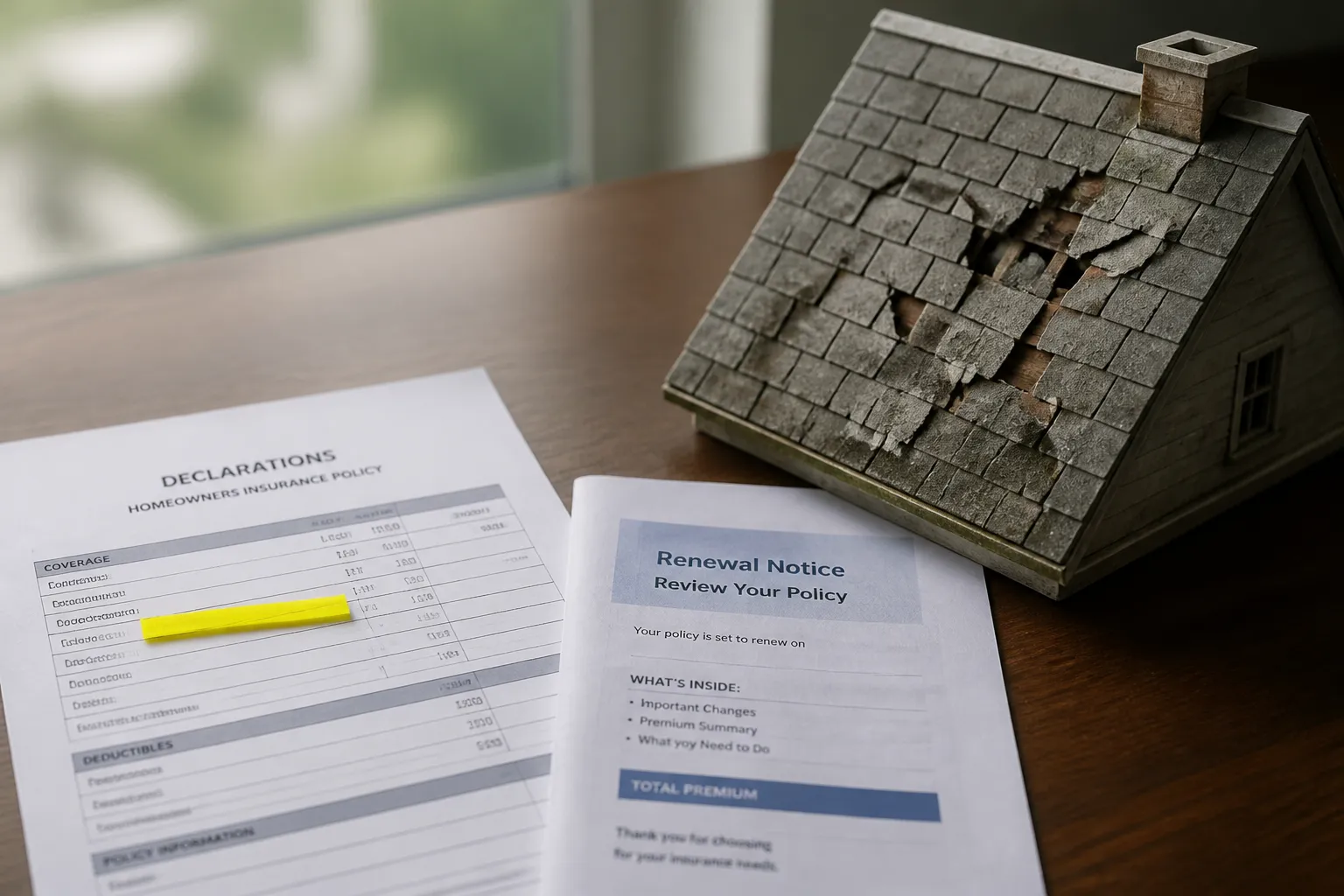
The $10,000 Gap: How Roof Coverage Terms Decide What You Pay
Actual cash value and replacement cost can leave a homeowner with very different bills for the same storm-damaged roof, so check the wording before renewal.By Marcus Delaney
-

When Private Insurers Say No: The FAIR Plan and Surplus Lines Fallback
Fallback coverage can cost several times the standard premium and still leave big gaps, so the declinations, the scope, and the carrier's solvency all need checking before you sign.By Hollis Brandt
-

Flat Versus Percentage: Reading Your Home Insurance Deductible
The same word describes two very different bills, and the difference shows up only when a storm hits.By Teodor Valcourt
Couldn't load more guides.
More guides