After the Hail: How to Handle Storm Chasers Without Losing Your Claim or Your Money
A step-by-step guide to protecting your insurance claim, vetting contractors, and spotting the contract terms and pressure tactics that signal a storm chaser to avoid.
 By Gideon Aldaine ·
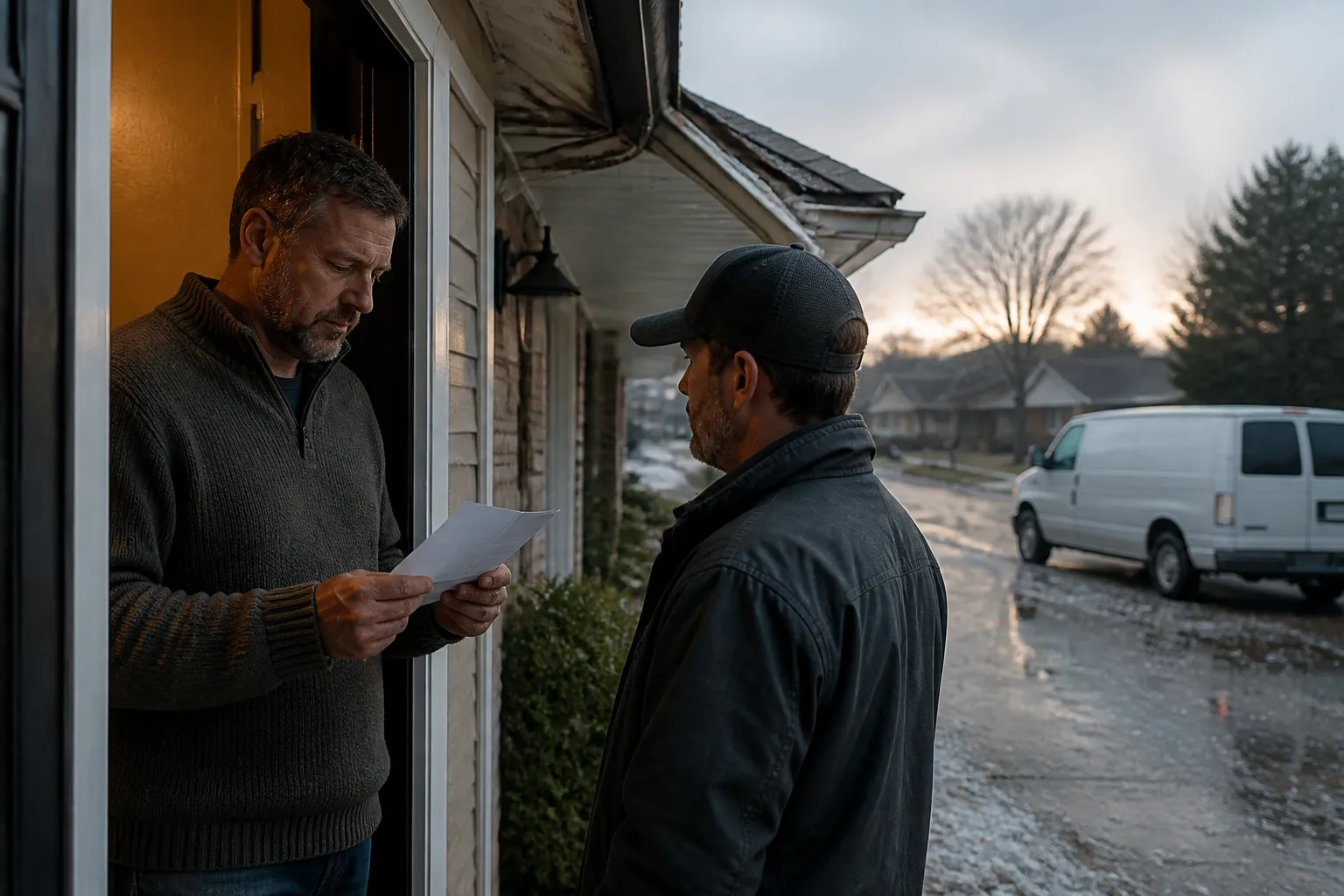
The hail stopped an hour ago, there are dents in the gutters, and a stranger is already at your door with a clipboard and a free inspection offer. What do you do next? This guide walks you through it in order: who these crews are, how the pressure works, how to protect your claim, how to pick a contractor, and what belongs in the contract. It is general information only, not personal legal, insurance or financial advice, so check specifics with a licensed professional in your state.
Storm chasers may mobilize within 24 to 72 hours of an event, which is faster than most local businesses can respond. A sudden flood of unsolicited offers is a warning sign, not a sign of help.
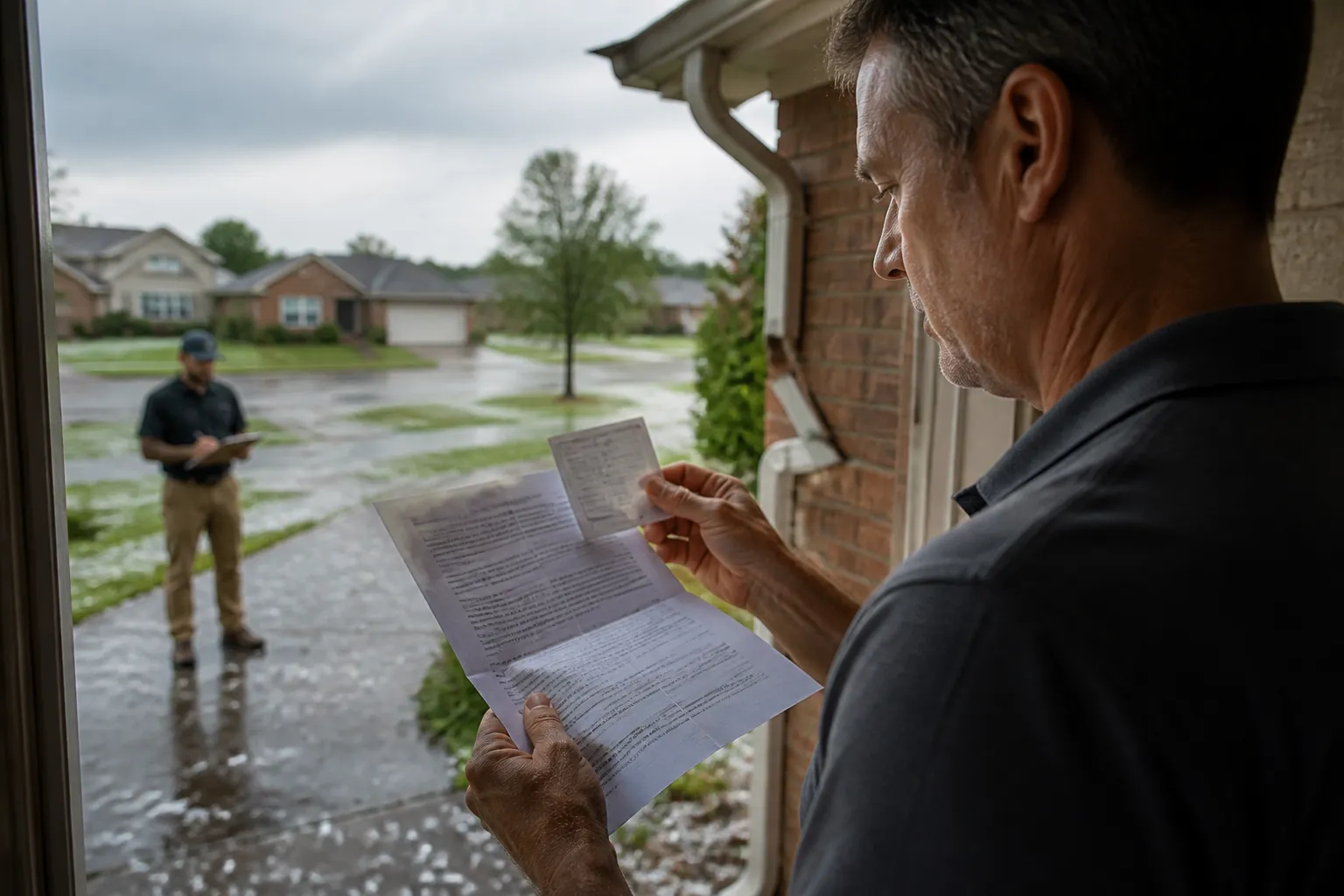
Understand who storm chasers are
Storm chaser contractors are roofing, restoration or general contracting businesses that move into a disaster area for a short time. They usually go door to door, win repair work, and then leave. Many track National Weather Service reports, damage maps and hail tracking services to find the neighborhoods worth working.
Not every one of them is a scammer. Some are legitimate, but others lack a license for your area, offer quick fixes, or make big promises they do not keep. Legitimate multi-state restoration firms keep permanent licensing, bonding and insurance in each state where they work. A crew with no local credentials deserves close scrutiny.
The Federal Trade Commission treats post-disaster contractor fraud as its own category of home repair scam. These operations tend to rise after storms with large insured losses. After a storm, many people want life back to normal so badly that they skip the questions they would normally ask. That is the gap these crews count on.
Know how the pressure works
The free inspection is the hook. The real goal is usually a signed contract before you have time to compare anyone else. Watch for these patterns:
- A large deposit demanded before work starts, followed by a job that is started but never finished.
- An offer to cover your insurance deductible, sometimes paired with a request to file a report that does not match the facts.
- An offer that expires today, so you feel you cannot wait.
That deductible offer can pull you into insurance fraud, even though the contractor is the one who suggested it. The National Insurance Crime Bureau describes a pattern it calls three-D fraud: deceive, defraud, disappear. Some storm chasers collect insurance proceeds and never finish the work. If anyone wants money before you can see progress, slow down.
Protect your insurance claim first
Before you hire anyone, call your insurance company. Then work through this list:
- Ask what your policy covers and what filing requirements apply.
- Confirm the deductible you must pay.
- Save every receipt and keep written notes of each conversation with the insurer or a contractor.
- Ask your agent whether you can make reasonable temporary repairs yourself and what records to keep.
Your insurer provides an adjuster at no charge. You may still hire a third-party professional if you want one, but know the cost. A public adjuster may charge about 15 percent of the settlement, and an attorney as much as 30 percent. Those figures vary by state and situation. Verify a public adjuster through your state insurance department, and an attorney through your state or county bar association.
Be careful with temporary repairs. Payments for them count toward the total settlement. A contractor who pushes a big sum for a tarp and some patching may leave too little for the permanent fix.
Choose a contractor carefully
Start with referrals from neighbors, friends or relatives, and ask your insurance agent for local providers they trust. Then get at least three written bids and compare them line by line. Be skeptical of a very low one. It often hides missing scope or add-on charges later. Repair prices differ widely by state, roof type and damage, so use your own bids as the benchmark rather than a national average.
Next, verify. Use this checklist:
- Confirm the license with the state agency that registers or licenses contractors. About 35 states require some form of general contractor licensing, and others leave it to local jurisdictions, so check both state and city or county.
- Ask for proof of bonding and liability insurance, then confirm the certificates are current by contacting the issuing insurer.
- Look up the business with the Better Business Bureau.
- Request three references for similar projects, and actually call them.
Roof safety matters too. Homeowners should look from the ground only. Leave closer assessment and repair to a professional roofing contractor.
Get the contract right and know the red flags
A good contract is written, specific and boring. Put every promise, guarantee and warranty on paper, including start and completion dates. Ask whether a deposit is required, how much, and when it is due. A reputable contractor will provide a written contract and will not insist on cash only or full payment up front.
Questions worth asking out loud:
- Are you licensed for this state and locality?
- Can you give me three references from similar jobs?
- How much is the deposit, and what does it cover?
- Will you put all warranties and dates in writing?
Walk away if you hear any of these:
- An unsolicited door knock or sales call.
- Pressure to sign on the spot.
- A promise to cover your deductible.
- Discouragement from checking their background.
If you have already paid a storm chaser or suspect fraud, report it to the Federal Trade Commission and your state attorney general's consumer protection office. Keep copies of every document. Rules on cancellation rights for post-disaster contracts differ by state, so ask a licensed attorney or your attorney general's office what applies to you. For more on spotting disaster scams, see the FTC's consumer advice and the BBB's storm chaser tips.
Please seek a professional. This article is general information, not financial, tax or insurance advice. Please seek a licensed financial, tax or insurance professional about your own situation.
Sources
- How To Avoid Scams After Weather Emergencies and Natural Disasters | Consumer Advice
- How to Avoid Potential Fraud After a Disaster | FEMA.gov
- Storm Chaser Contractors: Risks and How to Identify Them
- Avoiding scams after a disaster - Triple-I®
- Storms and Fraud | Georgia Attorney General's Consumer Protection Division
- Roof Repairs After a Storm - National Roofing Contractors Association
- NRCA Urges Homeowners and Business Owners Affected by Severe Weather to Use Caution When Repairing Their Roof Systems | 2022-07-27 - National Roofing Contractors Association
- BBB Tip: Protect yourself from "storm chasers" after a natural disaster
Still have a question?
Related guides
-

Upgrading to 200 Amps Without the Surprise Bill
Panel costs are only part of the story, so here is what a 200 amp upgrade typically runs, what can get added on, and what to ask before you sign. By Neil Ostrander
-

Tank or Tankless? How to Compare Water Heater Bids on Equal Terms
Learn how tank and tankless units differ, and which details a written plumber's quote should spell out so three bids can be compared fairly. By Renata Okafor
-

Find the Water First: A Practical Guide to Deciding on Mold Testing and Cleanup
Before anyone runs a sample or quotes a job, the moisture source and the size of the visible patch settle most of the decision.By Gideon Aldaine