Handyman or Licensed Contractor? How to Decide Before You Hire
Start by sorting your project into repair or construction, then check permit rules and credentials before you compare quotes.
 By Renata Okafor ·
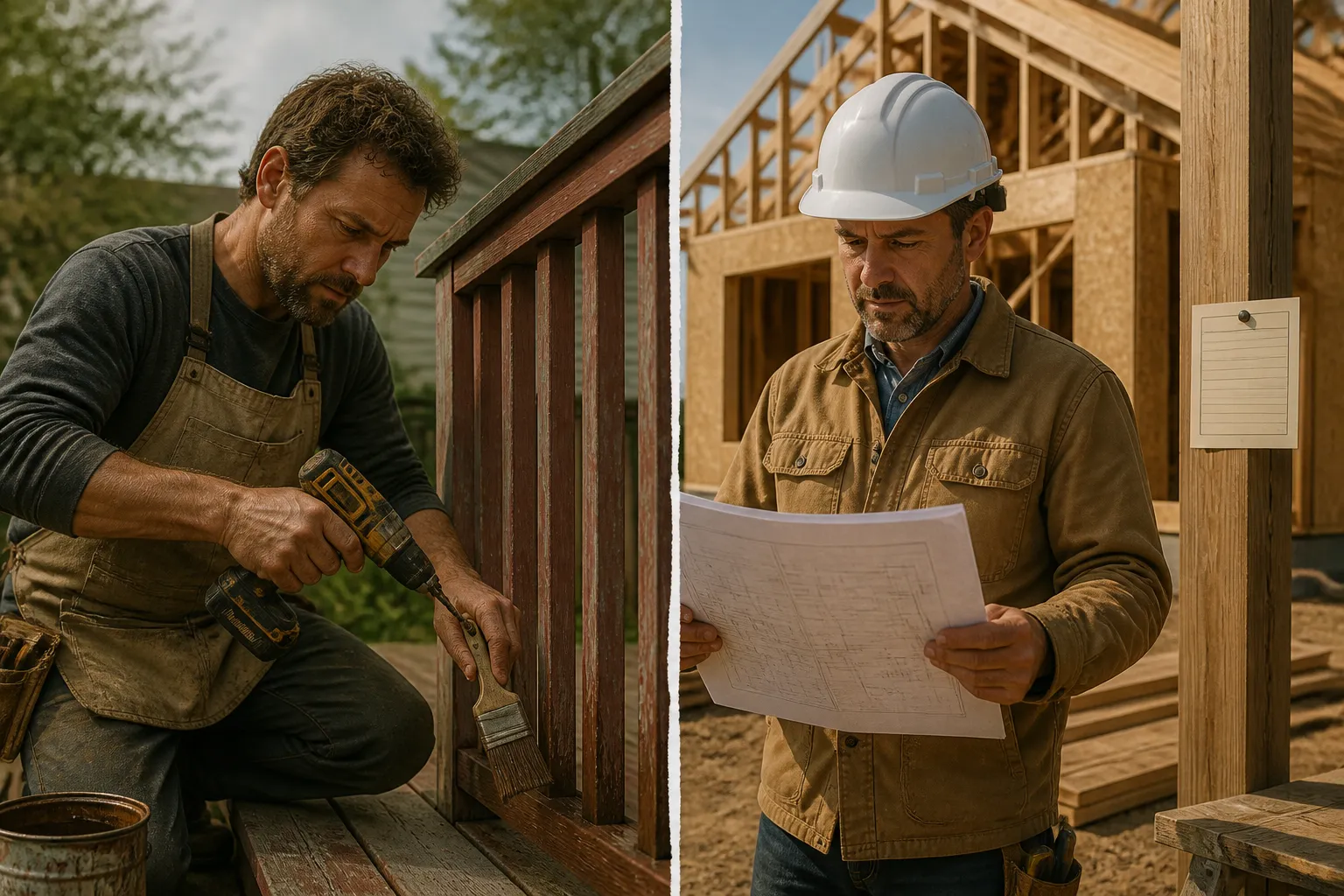
Is the job in front of you a repair, or is it construction? That one question sorts most hiring decisions, and it is worth answering before you collect a single quote. A handyman is often the right call for small, contained work. A licensed contractor is sometimes the only legal one. This guide walks through how to tell which you have, step by step. It is general information only, not legal, financial or personal advice, so check your own state's rules with a licensed professional or your local licensing office.
What a handyman usually does
A handyman typically works alone on small repairs and installs. Think carpentry, painting, caulking, minor plumbing and fixture work, deck repair and drywall patches. Because the work is limited in size, one person can often finish several related tasks in a single visit, which is a big reason handyman jobs are generally described as lower cost than work by licensed tradespeople.
Handymen usually do not manage subcontractors, pull permits or schedule inspections. For a job with one or two trades and no permit, that simplicity is an advantage. One guide suggests a handyman fits projects under roughly $2,500 to $5,000, but treat that as an example only. Costs vary by state, by city and by the project itself, and the sources I reviewed do not give a reliable national price list.
Even inside handyman territory, boundaries matter. A good handyman will tell you when a task falls outside their scope instead of attempting it anyway. If someone is vague about what they will not do, note that.
When a licensed contractor is required
Licensed trade work is generally required for electrical panel work, gas lines, structural changes, new construction and full renovations that need building permits. These rules exist for safety and to make sure work meets local code. They also tend to matter for insurance and warranty terms.
Where you live changes the details. In California, anyone contracting for work that requires a building permit, uses employee labor, or is valued at $1,000 or more in labor and materials combined must hold a current license from the Contractors State License Board. In Ontario, general handyman work needs no license, but electrical, gas, plumbing and HVAC work does. Many other states set their own thresholds, and they can differ a great deal.
Some projects mix the two. A bathroom refresh may be mostly handyman work, yet still need a new circuit from a licensed electrician. In that case the handyman might do carpentry and finish work while a licensed specialist handles the regulated trade.

How to decide before you call anyone
Work through these steps in order. Each one narrows the choice.
- Write down the scope. List what you want done, how many trades are involved, and whether any of it touches electrical, gas or structural elements.
- Ask whether a permit is needed. Permit rules are set locally, so call your building department. If a permit is required, that is a strong signal to hire a licensed contractor who can pull it and schedule inspections.
- Check the age of the house. If it was built before 1978, ask whether the remodeler is an EPA Lead-Safe Certified Renovator. This applies when work disturbs more than six square feet of interior painted surface or 20 square feet of exterior painted surface.
- Compare the size of the job to the threshold. A small repair with no permit leans handyman. A renovation, addition or anything structural leans licensed.
If you land in the middle, such as a mixed project, it is reasonable to ask a licensed contractor which parts need a license and which do not.
How to verify credentials and protect yourself
Whichever type of professional you choose, verify before work begins. In California, you can check a license with the state board at (800) 321-2752. Other states have their own licensing boards, usually reachable through the state government website. Unlicensed workers often lack bonds or workers' compensation, which leaves you exposed if someone is hurt, property is damaged or the work is faulty.
Then run through these questions:
- Is this job within your scope, or does it need a licensed specialist?
- Do you carry workers' compensation and general liability insurance, and can I see proof?
- Can I see past customers and your work, both finished and in progress?
- Do you have a permanent business address, and how long have you operated?
- Will you give me a complete, written contract?
Also check the Better Business Bureau rating and complaint history. One builder checklist notes that three to five years is typical for a business to become sound, so a very new company deserves extra questions.
Red flags
Be cautious of unusually low bids. They may mean the contractor will struggle to pay for materials and labor as the job goes on. Other warning signs include refusing to name past customers, avoiding license or insurance checks, dodging written terms, and pressure to decide fast. The Federal Trade Commission's home improvement scam guidance is a useful place to read more.
Finally, remember the limits here. Cost ranges, licensing rules, contract and payment terms, deposit limits and dispute steps all vary by state. Your state licensing board, local building department and consumer protection office can tell you what applies to you.
Sources
- How To Avoid a Home Improvement Scam | Consumer Advice
- What Kind of Contractor Do You Need? - CSLB
- Garage Door Repair Folsom & Sacramento | ADM ★ 4.9
- Before Applying for a License When No Exam is Required
- https://vertexaisearch.cloud.google.com/grounding-api-redirect/AUZIYQFC5H4F-AlHHp7DGM95GC-FKbbJYOUwq9XHtwuwGFLsrcfv_vqvxUi63SPcZXRsSqsKISeRBGW-g7Rr3PXVYR9cFUpsvaCJf1s54nFkN8uSbRcFh3tFzVb7FbgQ9JwHIlAeyOSUBiiydqJqOgRP02kSTDqGrk1lmBogVGUO34y1iM9O_2hdryew7gqEePbDWcWi
- Checklist for Finding and Hiring a Builder or Remodeler | NAHB
- Handyman vs Contractor — When Do You Need Which? | Handy Man And Home Repairs
- Handyman Vs. General Contractor: Which Do You Need?
Still have a question?
Related guides
-

Upgrading to 200 Amps Without the Surprise Bill
Panel costs are only part of the story, so here is what a 200 amp upgrade typically runs, what can get added on, and what to ask before you sign. By Neil Ostrander
-

Tank or Tankless? How to Compare Water Heater Bids on Equal Terms
Learn how tank and tankless units differ, and which details a written plumber's quote should spell out so three bids can be compared fairly.By Renata Okafor
-

Find the Water First: A Practical Guide to Deciding on Mold Testing and Cleanup
Before anyone runs a sample or quotes a job, the moisture source and the size of the visible patch settle most of the decision. By Gideon Aldaine