Hiring a Contractor for a Backyard ADU: A Step-by-Step Guide
This guide walks through when to hire, what an accessory dwelling unit may cost, how to compare bids, how to verify credentials, and which warning signs to take seriously.
 By Gideon Aldaine ·
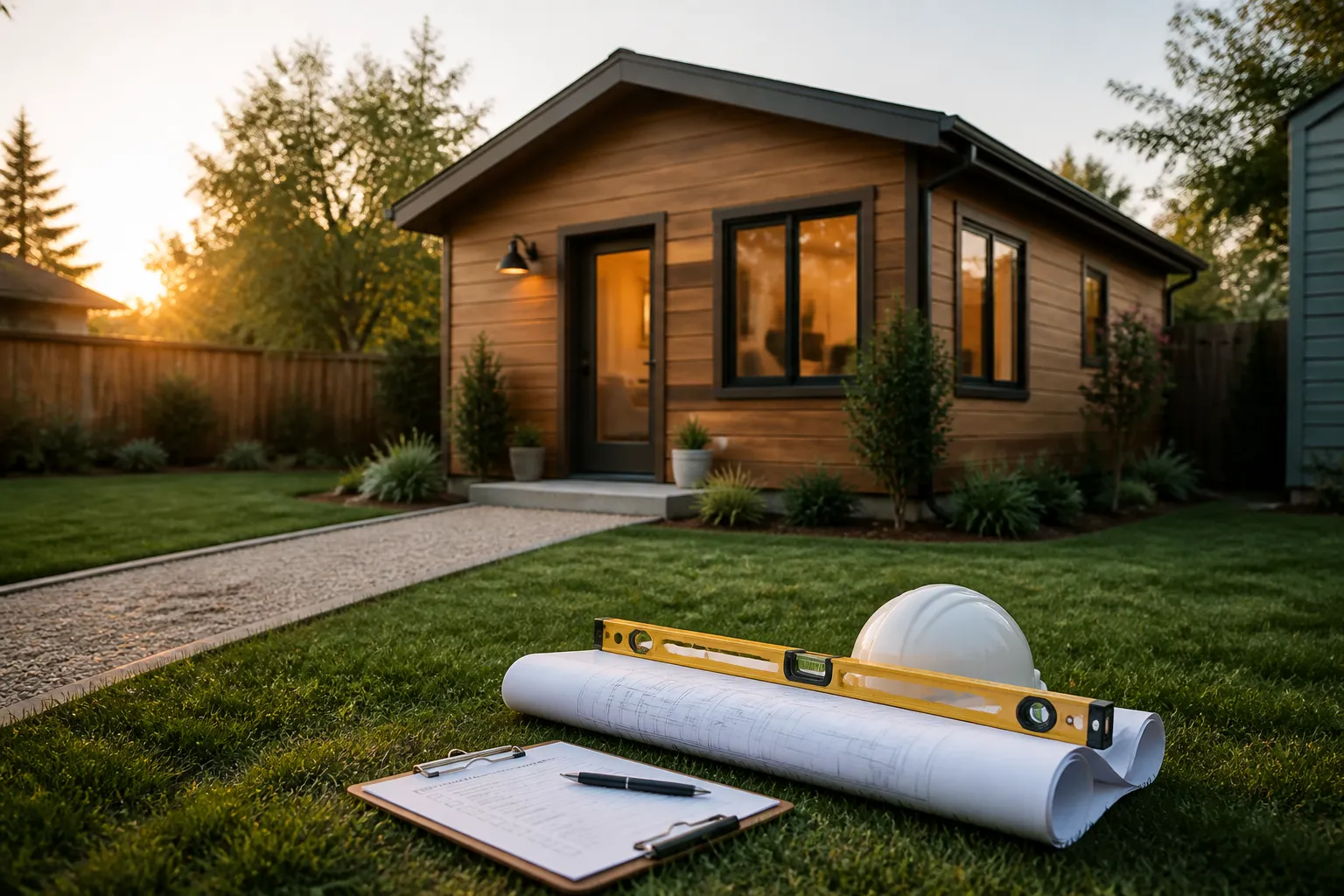
Where do you even start when you want to hire someone to build a second home in your backyard? Most people start by calling the first contractor they find, and most wish they had started with a list. This guide walks through the steps in order: when to hire, what an ADU may cost, how to compare bids, how to check credentials, and which warning signs to take seriously. It is general information only, not personal legal, financial or medical advice, so a licensed professional in your state should have the final word on contracts and financing.
When to bring in a general contractor
The best moment to hire a general contractor (GC) is once you have a full set of construction drawings, even if the city has not approved them yet. Complete drawings mean every bidder prices the same job, and that is the only way to compare prices fairly. Think of it as a division of labor. An architect or designer tells you what is possible on your lot. The GC tells you what it will cost to build.
Before any of that, check which kinds of ADUs your local rules allow for your property. Those rules shape the design, the budget and the permit path. A short planning list helps:
- Find out whether your city or county allows an attached unit, a detached unit, or a conversion of existing space.
- Decide how you will pay for the project.
- Decide which building and design professionals you need.
- Plan to collect bids from at least three GCs.
Three bids give you a realistic range and make outliers easy to spot, high or low.

Understanding what an ADU may cost
Costs vary a great deal by state, city and site, so a national average can mislead you. One regional reference, from the San Mateo County ADU Resource Center, puts a ground-up ADU in the Bay Area at about $625 per square foot as a conservative baseline. Garage conversions there run roughly $250 to $450 per square foot. Those are Bay Area numbers, not a US-wide range, and prices in your market may be quite different. Ask local contractors and your building department for current figures.
Converting existing space, such as a basement or garage, generally costs less than building new. The savings depend on the condition of the structure and on which systems need upgrading.
Several things push the total up or down:
- Trenching for utilities
- Grading
- Local labor rates
- Jurisdictional fees
- Supply chain problems
Ask each bidder which of these they have priced in and which they have left open.
How to compare bids and contracts
Ask for detailed, written estimates, not ballpark quotes, and check that each one covers the full scope. A simple, vague bid often hides gaps that show up later as change orders and higher bills.
Two terms matter most. An allowance is a pre-budgeted amount for something not yet chosen, such as fixtures or flooring. An exclusion is a cost the bid does not include. Two bids with similar totals can look very different once you sort these out line by line.
A solid contract should include:
- A clear scope of work.
- A payment schedule tied to completed milestones.
- A defined process for change orders, including how they are priced and approved.
Read all three before you sign. If something is unclear, ask for it in writing.
Verifying credentials and experience
Legitimate contractors carry general liability insurance and a surety bond, and often workers' compensation for their crews. Request certificates directly from the insurer instead of relying on copies the contractor hands you. For a California project, you can verify license, insurance and bonding through the California Contractors State License Board. Other states have their own licensing agencies, so look up your state's official board.
Local ADU experience matters, because a contractor who knows your jurisdiction's permitting and inspection process can prevent delays. Ask whether they have completed ADUs in your city or county. Nearly one in five licensed California GCs has held a license for less than five years, so look for a real track record and a solid number of finished projects. Then call the references and ask about schedule, budget and how problems were handled.
Pay attention to early conversations too. Clear answers, prompt follow-up and a willingness to put terms in writing are good signs. Price matters, but so do trust, fit and experience.
Questions to ask and red flags to avoid
Bring this list to every interview:
- Does your bid include allowances and exclusions, and what are they?
- How do you handle change orders?
- What is the payment schedule?
- Have you permitted and passed inspection on ADUs in my jurisdiction?
- Can I call past clients?
- Do you carry liability insurance, a surety bond and workers' compensation?
Some warning signs deserve real caution. Vague or overly simple bids are one. Large upfront payments, especially before work begins, are another, and the Federal Trade Commission lists them among home improvement scam signals. Poor communication, no references, or pressure to sign quickly should also give you pause.
A bid far below the other two is a red flag as well. If a price looks too good to be true, it usually is, and the difference often comes back as added costs. The FTC also notes that dishonest businesses sometimes pay to appear at the top of search results, so a high ranking proves nothing about quality.
Gaps to check for your own project
The sources behind this guide do not give national or state-by-state ADU cost ranges, so get local figures from contractors and your building department. Permit requirements, timelines and fees differ by jurisdiction, and your city or county is the authority on them. Seattle, for example, keeps a dedicated ADU page within its construction and inspections permit section, and your own city may have something similar.
Contract protections, dispute-resolution options and state law requirements also differ from place to place. Financing and how to find and vet an architect are not covered in depth here. A licensed professional in your state can advise on contracts and financing, and your state's contractor licensing board can confirm credentials.
Sources
- How To Avoid a Home Improvement Scam | Consumer Advice
- All About Accessory Dwelling Units
- ADU Model State Act and Local Ordinance
- How to Hire the Right Contractor for Your ADU - San Mateo County ADU Resource Center
- Planning Your Accessory Dwelling Unit | Boston.gov
- Accessory Dwelling Unit - Construction and Inspections | seattle.gov
Still have a question?
Related guides
-

Upgrading to 200 Amps Without the Surprise Bill
Panel costs are only part of the story, so here is what a 200 amp upgrade typically runs, what can get added on, and what to ask before you sign. By Neil Ostrander
-

Tank or Tankless? How to Compare Water Heater Bids on Equal Terms
Learn how tank and tankless units differ, and which details a written plumber's quote should spell out so three bids can be compared fairly. By Renata Okafor
-

Find the Water First: A Practical Guide to Deciding on Mold Testing and Cleanup
Before anyone runs a sample or quotes a job, the moisture source and the size of the visible patch settle most of the decision.By Gideon Aldaine