Hiring an Electrician for a Panel Upgrade: A Step-by-Step Checklist
A panel upgrade involves a permit, a utility disconnect and an inspection, so verifying credentials and comparing complete bids before you sign protects your home and your budget.
 By Gideon Aldaine ·
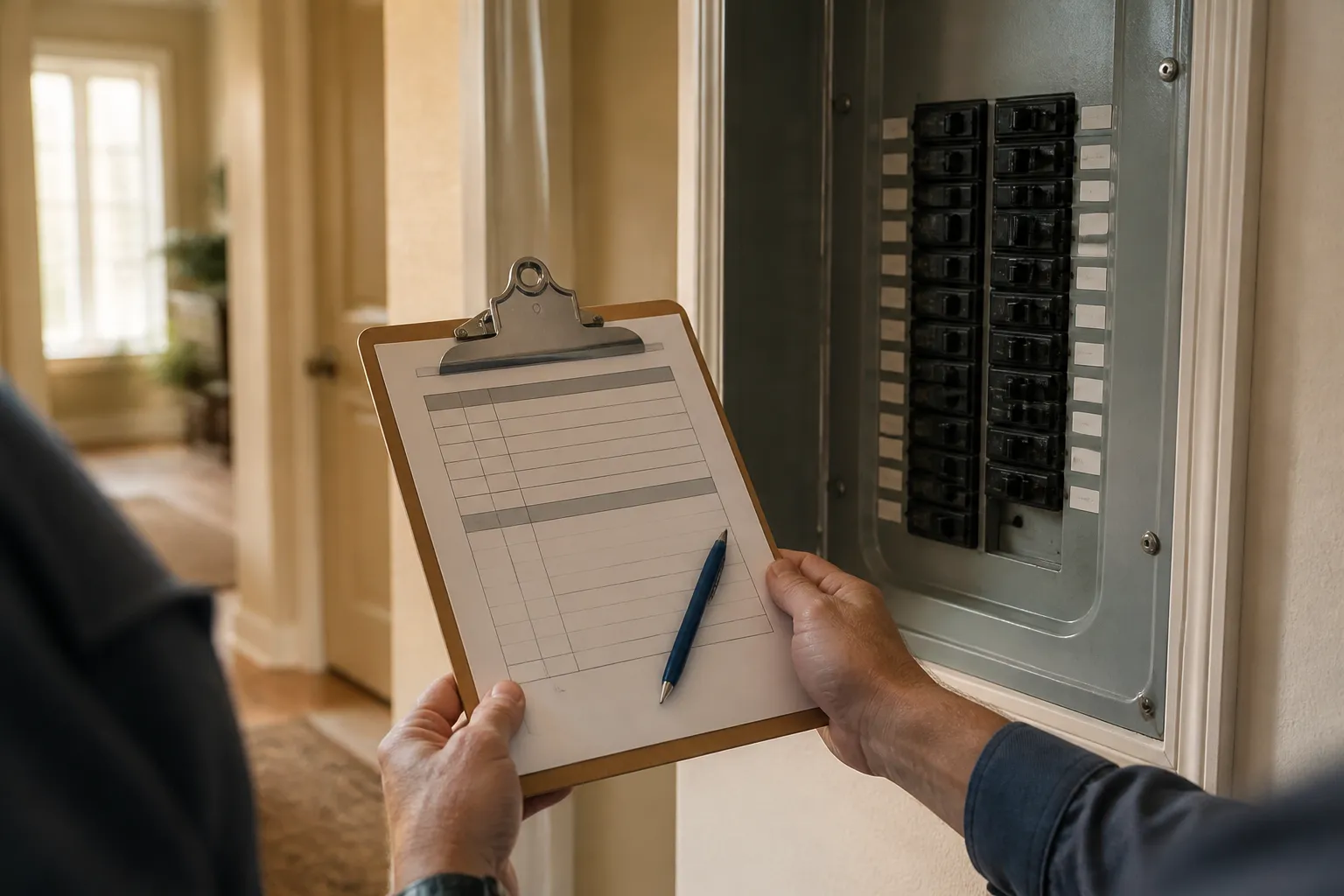
What does a panel upgrade actually involve, and why does the choice of electrician matter so much? The short answer is that you are changing the main service that feeds your whole house. That means a permit, a utility disconnect and a municipal inspection, not just new wiring. This guide walks through the steps in order so you can check each one before you sign anything.

Why a panel upgrade is more than a swap
Electrical work takes specialized knowledge, tools and training, and for dangerous or complex problems it is usually best to call an expert. A panel upgrade fits that description. The job needs a utility service disconnect, which only the utility controls, and the local authority having jurisdiction generally inspects the work before power is restored. So the schedule depends on the utility and the inspector as well as on your electrician.
Panel work typically includes a load calculation, which sizes the new equipment to your home's needs. Keep that in mind, because a contractor who skips it shows up again in the red flags below.
Licensing, master electricians and permits
Electricians generally fall into two groups, master and journeyman. Master electricians complete two additional years of training, can run their own company and can design circuit routing and supervise journeymen. Journeymen work from a master's plans and under permits assigned to the master. On a panel job, then, it helps to know three things:
- Who holds the permit.
- Who is accountable for the design.
- Who will actually be on site.
One source states that all 50 states require a permit for a panel upgrade, and that only a licensed electrician can pull it, a master electrician in most states. A panel installed without a permit may fail a home inspection when you sell, and unpermitted work may void homeowner's insurance for related claims.
Rules differ by place. In Michigan, for example, any panel or service upgrade needs a permit with no size exemption. A homeowner may pull one only for a single-family home they own and live in, and only if they do the work themselves. Check with your own local building department for the rules where you live.
Checking credentials and insurance
Ask for the license number and look it up on your state licensing board's website. Then confirm that the name on the license matches the company and the person who will be on your job. It takes a few minutes and settles a lot.
Next, ask for a certificate of insurance before work begins. It should show general liability coverage and, if the contractor has employees, workers' compensation. One source describes a $1 million general liability minimum as standard. Master contractors are required by law to carry insurance, so a reluctant answer is worth noting.
Also ask whether the company's specialty matches your project. A firm that focuses on large commercial jobs may not suit a small residential fix. Local experience with your utility's disconnect process and your town's inspection timeline can affect how smoothly power comes back on.
Getting comparable bids
Get several bids, and give each electrician the same details. Include the number of outlets, lights, dimmers, hardware and locations. Vague requirements are a common reason bids land far apart.
When numbers differ, ask each contractor to explain what is included. A gap often reflects a different scope of work rather than a different price for the same job. Ask specifically whether the permit, the load calculation and utility coordination are in the quote.
The sources I reviewed do not give a reliable national or state dollar range for a panel upgrade. Costs vary by state, utility, home and scope, so local written bids are your best guide. A licensed professional in your area can tell you what is realistic for your house.
Questions to ask before you hire
- Will you pull the permit for this job? The answer should be yes, without hesitation.
- What is your license number, and will it check out with the state board?
- Are you a master electrician, and who supervises any journeyman work?
- Do you carry general liability and workers' compensation, and can you send a certificate of insurance?
- Have you done this type of project, and do you know the local utility and inspection process?
Red flags to watch for
Some patterns should slow you down. A quote with no load calculation may mean the new panel is not matched to your home's demand. A bid that lists the permit cost as "TBD" leaves you open to surprise charges. Any suggestion that the permit can be skipped is a serious warning.
Watch for upsells added verbally after you sign a written quote. Get any change in writing before work proceeds. Be wary too of commercial specialists quoting small residential jobs without matching experience.
What this guide does not cover
The sources do not explain state license class names, utility disconnect fees and timelines, panel sizing or amperage choices. They also do not cover homeowner permit rules outside Michigan, payment schedules, warranties or dispute handling. Ask any electrician to put contract terms and warranty in writing. This is general information, not personal legal, financial or electrical advice, so consider a licensed electrician, your local building department or your state's consumer protection office for specifics.
Sources
- Home Upgrades | Department of Energy
- https://vertexaisearch.cloud.google.com/grounding-api-redirect/AUZIYQEz37I2CRTa-dYqJ498ia_AoIrIiDwv7WfA5VTOqZfhQc3yRefyJiliocmpESVwnTym9shB4gV4Ew0Za1MoKvU1z9NCa642mTvR6wfbFWrloGvNyXj5MBU-B8L0SRjb7WpnIVrYOZiDt3-M8tUcrihjM8-FwgA4XY7P4SJ0GtC0nj_b1ZPL3mieSTI7QXs=
- How To Avoid a Home Improvement Scam | Consumer Advice
- Guides and Publications - CSLB
- BBB Tip: Hiring an electrician
- What Is the Cost to Upgrade an Electrical Panel?
- How to Hire an Electrician for a Panel Upgrade (Without Getting Overcharged) | PanelNerd
- Electrical Panel Upgrade Permit in Michigan: Easy 2026
Still have a question?
Related guides
-

Upgrading to 200 Amps Without the Surprise Bill
Panel costs are only part of the story, so here is what a 200 amp upgrade typically runs, what can get added on, and what to ask before you sign. By Neil Ostrander
-

Tank or Tankless? How to Compare Water Heater Bids on Equal Terms
Learn how tank and tankless units differ, and which details a written plumber's quote should spell out so three bids can be compared fairly. By Renata Okafor
-

Find the Water First: A Practical Guide to Deciding on Mold Testing and Cleanup
Before anyone runs a sample or quotes a job, the moisture source and the size of the visible patch settle most of the decision.By Gideon Aldaine