Hiring an Emergency Contractor Without Getting Burned
Slow down, get written estimates, and understand how insurance payments and contract terms affect your money before you sign anything.
 By Gideon Aldaine ·
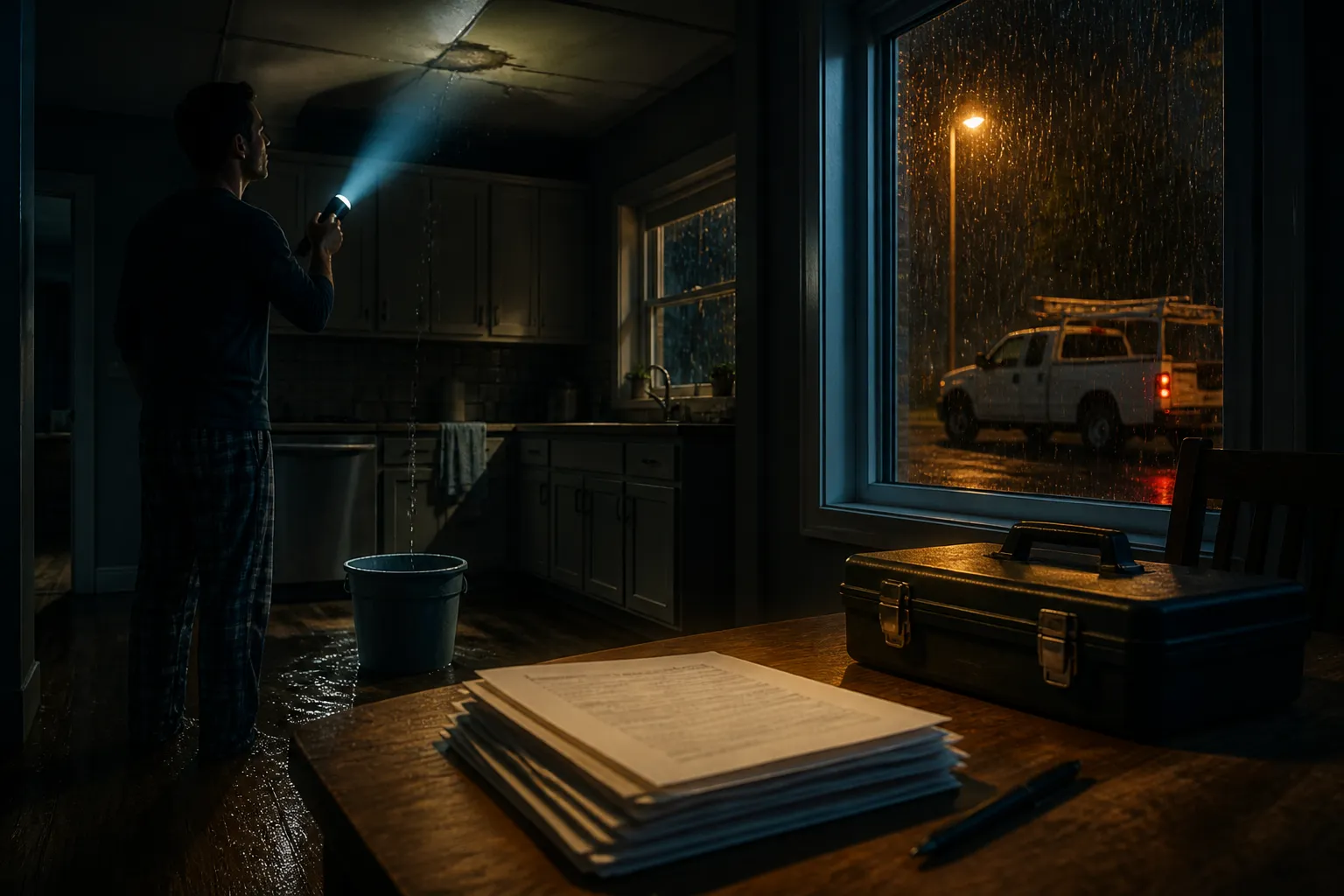
A pipe bursts at 2 a.m., or a tree comes through the roof, and suddenly you need a stranger with a truck. How do you hire the right one when every hour feels expensive? This guide walks through it in order: why overcharging happens, how to compare bids, how insurance money moves, what the contract should say, and which warning signs mean you should stop. It is general information only, not legal, financial or insurance advice, so check your own situation with your insurer and a licensed professional.
Why emergency repairs invite overcharging
After a storm, fire or flood, you may feel pressure to hire the first crew that shows up. Some scammers and poor-quality contractors count on that. Disaster fraud is common enough that many survivors report being approached or victimized. Slowing down, even by a day or two, is one of the best protections you have.
Expect door-to-door offers and unsolicited calls. Being approached quickly does not make someone legitimate, and a paid ad or a top search result does not confirm a business is trustworthy either. Be especially wary of anyone who says FEMA approved them or gave them your name. FEMA does not certify or endorse private contractors. Someone claiming to represent FEMA who cannot give you your FEMA application number should not be trusted.
Get multiple written estimates and check credentials
The Consumer Financial Protection Bureau advises getting written estimates from at least two or three contractors, even when you feel rushed. Side by side, vague or unusually high pricing is easier to spot. You can read the agency's guidance on working with contractors after a disaster.
Good places to find candidates include:
- Referrals from people you trust
- Providers recommended or listed by your insurance agent
- Members of your local builders' association or remodelers' council
Then research each one on billing practices, quality of work and materials, and timeliness. Those are the common problem areas. Confirm the contractor holds a valid license and is in good standing with your state's licensing authority. Lookup tools differ by state. California, for example, offers a license lookup through its Contractors State License Board. Ask for proof of insurance too, and check that it is current.
Understand how insurance and mortgage payments affect timing
Before you sign anything, learn how your claim will be paid. An adjuster inspects the damage and the insurer sets the settlement. That settlement may be paid at replacement cost, meaning today's prices for similar materials and quality, or at actual cash value, which reflects age, condition or market value. Actual cash value can sit well below replacement cost, so a contractor's estimate may be higher than your first check.
Insurance checks are generally made out to you and your mortgage servicer, as most mortgage agreements require. Servicers typically release part of the money before work begins, more as work progresses, and the rest after the job is finished and inspected. The CFPB explains how insurers pay claims in more detail. A contractor who wants the full amount before any work starts deserves a close look. Ask how the insurance and servicer schedule affects when you owe them money.
Know the payment rules, and read the contract closely
Payment rules vary by state. The most detailed guidance in the sources I reviewed comes from California, where rebuilding after a declared disaster is treated as a home improvement project. There, the licensing board's disaster help center says:
- Time-and-materials and cost-plus contracts are not allowed for this work.
- Down payments may not exceed $1,000 or 10% of the total contract price, whichever is less.
- Contractors must be paid based on the actual value of completed work or materials delivered to the home.
The same guidance points toward a fixed-price contract that lists the full agreed price, plus any other payments and when they are due. Ask whether the total works for both of you, and do not leave other payments to a later conversation.
If you live outside California
Do not assume those limits apply to you. Check your state licensing board and consumer protection office for the rules on down payments, contract types and progress payments. Read every change order before signing it, and be wary of any document requiring a progress payment your state does not permit.

Red flags and what to do next
Stop and reconsider if a contractor:
- Asks for personal information, especially bank account details, over the phone
- Pushes you to sign immediately
- Requests a large down payment
- Claims FEMA certification or says FEMA gave them your name
Taking a few days to compare written bids is a reasonable answer to any of these.
Be careful with work that begins before you have a written estimate. The sources I reviewed do not give detailed guidance on emergency tarps, board-up work or temporary repairs, so ask the contractor to put that work and its price in writing, and ask your insurer what it will cover.
If something goes wrong, keep copies of contracts, estimates, payments and messages. Then contact your state licensing board or consumer protection office to learn your options, since the sources do not lay out dispute steps.
As for cost, no reliable national range for emergency repairs turned up in these sources. Prices vary by state, region and type of damage. Your own written estimates are the best benchmark you have, so gather them before you commit.
Sources
- How To Avoid Scams After Weather Emergencies and Natural Disasters | Consumer Advice
- How To Prepare for a Weather Emergency While Avoiding Scams | Consumer Advice
- How To Avoid a Home Improvement Scam | Consumer Advice
- How can I find and work with contractors to rebuild after a disaster? | Consumer Financial Protection Bureau
- How do home insurance companies pay out claims? | Consumer Financial Protection Bureau
- Disaster Fraud | FEMA.gov
- 8 Tips to Avoid Disaster Relief Scams and Fraud
- Disaster Help Center
Still have a question?
Related guides
-

Upgrading to 200 Amps Without the Surprise Bill
Panel costs are only part of the story, so here is what a 200 amp upgrade typically runs, what can get added on, and what to ask before you sign. By Neil Ostrander
-

Tank or Tankless? How to Compare Water Heater Bids on Equal Terms
Learn how tank and tankless units differ, and which details a written plumber's quote should spell out so three bids can be compared fairly. By Renata Okafor
-

Find the Water First: A Practical Guide to Deciding on Mold Testing and Cleanup
Before anyone runs a sample or quotes a job, the moisture source and the size of the visible patch settle most of the decision.By Gideon Aldaine