How Much Countertops Really Cost, and How to Compare Quotes Fairly
Material, square footage, and what each quote includes explain most of the gap between bids, so read the line items before you compare totals.
 By Renata Okafor ·
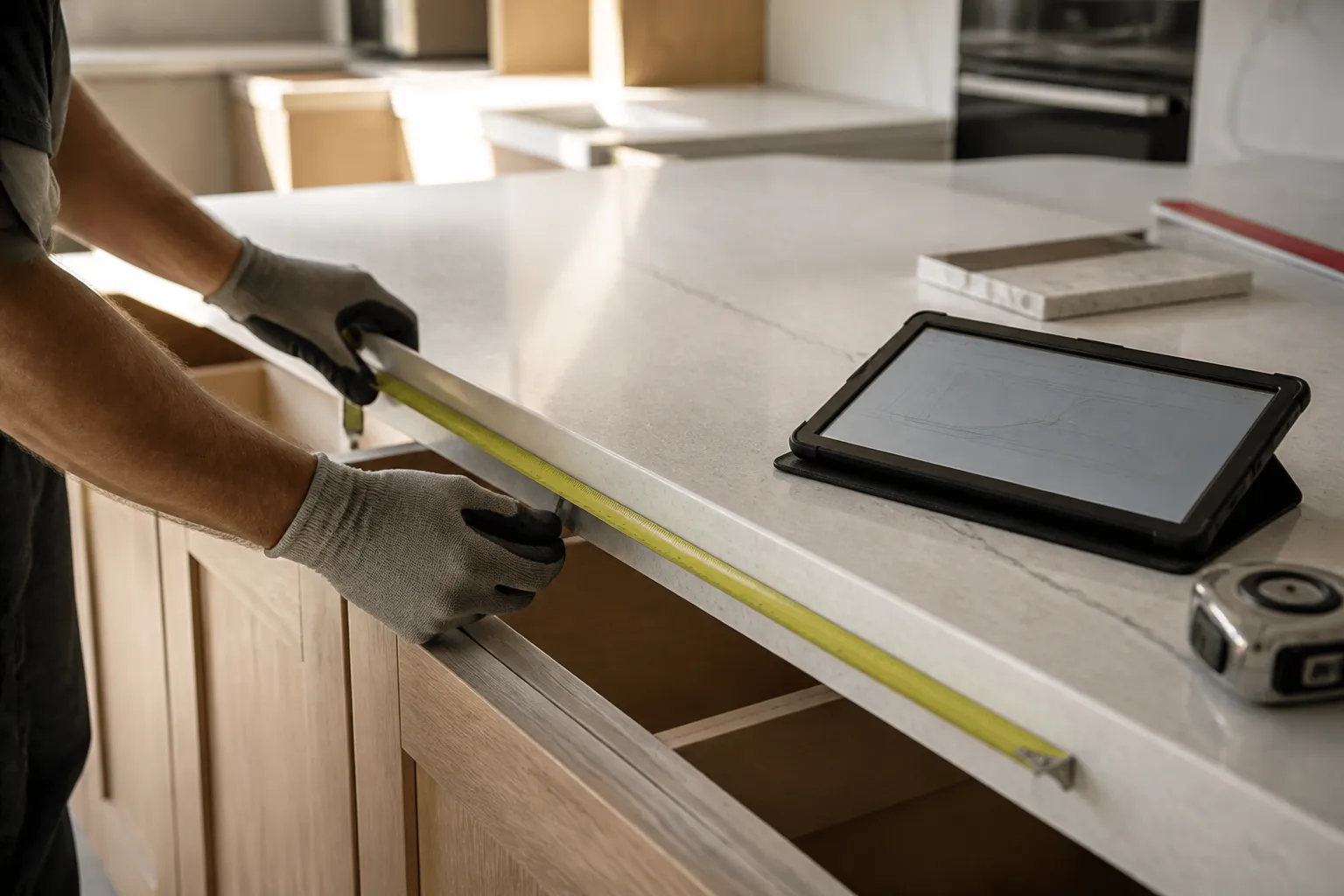
Wondering what a new set of countertops will actually cost, and why two quotes for the same kitchen can sit thousands of dollars apart? The short answer is that material, square footage, and what the quote includes do most of the work. Here is how to read the numbers, step by step. Everything below is general information, not personal financial advice, so check local figures with licensed fabricators and contractors in your area.
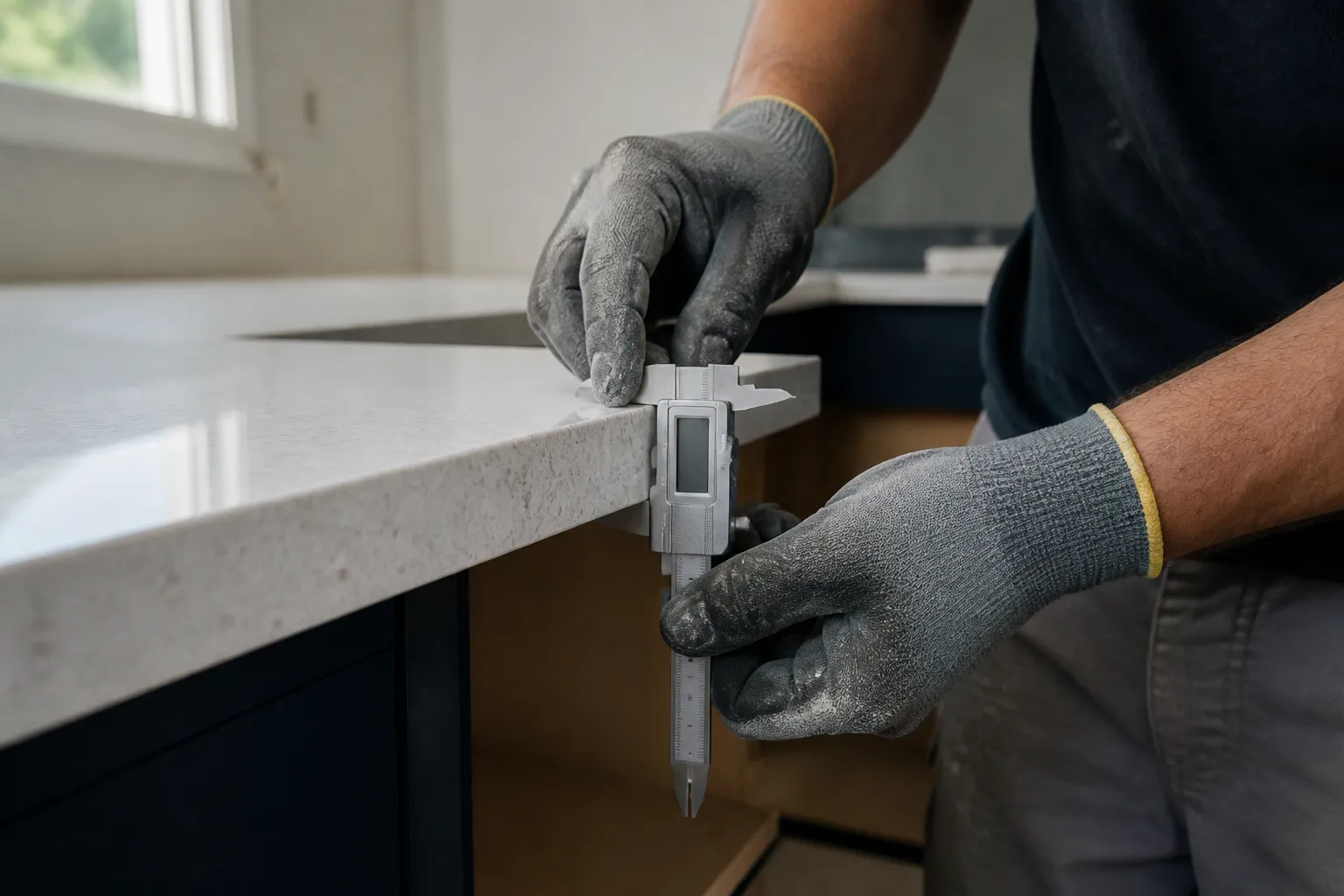
What countertops typically cost by material
Material is the biggest driver of the installed price. The figures below come from contractor, fabricator, and retailer websites, not government data, and they do not agree with each other. Treat them as ranges, not quotes.
- Laminate: roughly $10 to $45 per square foot installed, depending on the source.
- Quartz and granite: mostly about $50 to $150 per square foot.
- Marble: about $75 to $200 or more per square foot.
Labor alone is cited at about $15 to $40 per square foot for 2026. That makes labor a big slice of any stone job, so ask each bidder to split labor from material on paper. Region matters as well. One source reported coastal metros such as San Francisco, New York, and Seattle running 20 to 35 percent above national averages. None of the sources give state-by-state numbers, so call a few local shops before you set a budget.
Typical total costs for a kitchen
Per-square-foot prices are hard to picture, so start with whole kitchens. For about 35 to 45 square feet of countertop, one source estimated these totals:
- Laminate: about $600 to $2,000.
- Quartz or granite: about $2,000 to $6,500.
- Marble: about $4,000 to $12,000 or more.
Other sources land elsewhere. One put a mid-range quartz kitchen of 40 to 45 square feet at about $4,000 to $5,000 installed. Another said a 45 square foot granite kitchen often invoices at $3,800 to $7,500. Quartz project estimates ran from $3,000 to $7,500 in one place and $5,000 to $20,000 in another. At the far ends, a 40 to 50 square foot replacement could cost about $400 for a do-it-yourself laminate job or more than $8,000 for thick exotic stone with a waterfall edge. Kitchen size, slab grade, edge work, and site conditions explain most of that spread.
What adds to the price
Many extras sit outside the base rate. Before you compare bids, look for each of these:
- Tear-out and disposal of the old top: about $5 to $15 per square foot, sometimes with protection for floors and cabinets plus a dump fee.
- Digital template: usually $75 to $200 per project.
- Difficult access: $200 to $500. Complex layouts: $300 to $800.
- Waterfall edges: $300 to $1,000 or more.
- Undermount sink preparation: $100 to $250 above a drop-in.
- Backsplash integration: about $15 to $30 per linear foot.
- Structural support: $200 to $500.
Edge profile, the number of sink and faucet cutouts, and seams also change the total. Large L-shaped runs often need a seam, and hiding it well takes skill. Slab grade counts too. A premium slab with rare veining can cost about twice as much as a builder-grade slab of the same stone.
How installed pricing is usually structured
Most fabricators quote one installed price per square foot that bundles material, cutting, edge profiling, and labor. A typical scope covers templating, layout, fabrication, edge work, sink cutouts, installation, setup, and cleanup. Removal of the old top, plumbing disconnection, and backsplash work often show up as separate lines, so they may not be in the headline number.
That is why the bundled installed price is the one to compare. A showroom or advertised slab price that leaves out templating, fabrication, delivery, and plumbing reconnects can understate the real total by a wide margin. One source said those gaps can nearly double the headline figure.
How to compare quotes and what to ask
Start by asking every bidder for a written, line-item scope. Then line the quotes up side by side, including lifespan and maintenance. Questions worth asking:
- Does the quote include templating, fabrication, delivery, cutouts, and plumbing reconnects?
- What do the edge profile and each cutout add?
- Is tear-out included, and what is the disposal fee?
- Is the slab standard or premium grade?
- Is there a minimum labor charge?
- Does it cover backsplash work and any structural support?
Red flags are easy to spot once you know them. A quote with only a headline per-square-foot number gives you nothing to compare. Pricing presented as fixed deserves a second look, since costs depend on region, slab availability, and job conditions.
Open questions this guide does not answer
The sources here are industry and vendor sites. No regulator or consumer-protection source was included, so permit rules, installer licensing and insurance, warranties, and how to verify a fabricator's credentials are not covered. Check your local building department and state licensing board. Timelines, do-it-yourself versus professional installation, and resale value were also left unanswered. Bring those to your fabricators, and consider a licensed professional for anything specific to your home.
Sources
- Cost to Install Laminate Countertop - 2026 Cost Calculator (Customizable)
- Countertop Installation Cost: Pricing by Material (2026) | EstimationPro AI Blog
- Countertop Installation Cost 2026: Labor Per Square Foot | SlabWise
- Cost to have countertops installed: 2026 price guide | SlabWise
- Kitchen Countertop Cost Guide 2026: Price Per Square Foot by Material | Kitchen Remodeling Ranked
- Granite Countertops Cost: 2026 Price Breakdown and Factors – Signature Stone
- Quartz Countertop Cost 2026: Real Price Per Sq Ft
- Quartz Countertop Cost: 2025 Price Guide for Homeowners
Still have a question?
Related guides
-

Upgrading to 200 Amps Without the Surprise Bill
Panel costs are only part of the story, so here is what a 200 amp upgrade typically runs, what can get added on, and what to ask before you sign. By Neil Ostrander
-

Tank or Tankless? How to Compare Water Heater Bids on Equal Terms
Learn how tank and tankless units differ, and which details a written plumber's quote should spell out so three bids can be compared fairly.By Renata Okafor
-

Find the Water First: A Practical Guide to Deciding on Mold Testing and Cleanup
Before anyone runs a sample or quotes a job, the moisture source and the size of the visible patch settle most of the decision. By Gideon Aldaine