How Much Should a New Garage Door Cost, and What Should the Price Include?
Published estimates for a standard 16-by-7-foot single-car door start around $928 to $1,506 installed, but the real total depends on what each quote actually covers.
 By Renata Okafor ·
How much should a new garage door cost, and what should that price actually include? Published U.S. estimates for a standard 16-foot by 7-foot door, the size commonly used for single-car garages, start at roughly $928 to $1,506 installed. That covers a basic door and labor. The number grows once you add insulation, a new opener, or removal of the old door. Costs vary by state and situation, so treat everything below as a starting point.
What a typical installation costs
Start with the single-car baseline. One published estimate puts a 16x7 installation at $928 to $1,506, including a basic door and labor. The same source lists sectional doors from about $500 for the door alone, roll-up doors at about $1,000 to $2,000 installed, and some installed packages starting near $800. Those figures do not line up neatly, because each one defines "installed" differently.
So before you compare anything, write down what each number covers:
- The door itself, or the door plus labor
- Insulation, if any
- A new opener, which is often priced separately
- Haul-away of the old door
- Permit fees
Openers deserve their own line. Published typical installed prices for common LiftMaster models run from about $525 to about $800, depending on the model and drive type. These are national ballpark figures, not state-specific ranges, so local quotes matter.
What affects the price
Door material and style move the total most. Steel sectional doors are the usual choice for attached garages. Wood, custom, and glass-panel doors cost more. Roll-up doors can suit narrow or low-headroom garages and carry their own price range.
Insulation is the main upgrade to think about in a cold climate. It raises the upfront cost, and the payback comes through less heat loss over time. In a mild climate the math is less clear.
Opener type changes both price and daily comfort. Belt-drive units are generally quieter with less vibration, which helps if a bedroom sits above the garage. Chain-drive units are described as rugged and tend to cost less. Some models add battery backup for power outages.
Two-car and custom doors cost more than single-car doors. Reliable published figures for those are thin, so ask a contractor to price your exact opening. Permits, old-door removal, and structural repairs to the opening may not be in a headline price either.
How to choose the right setup
Work through it in order, and you will make fewer expensive changes later.
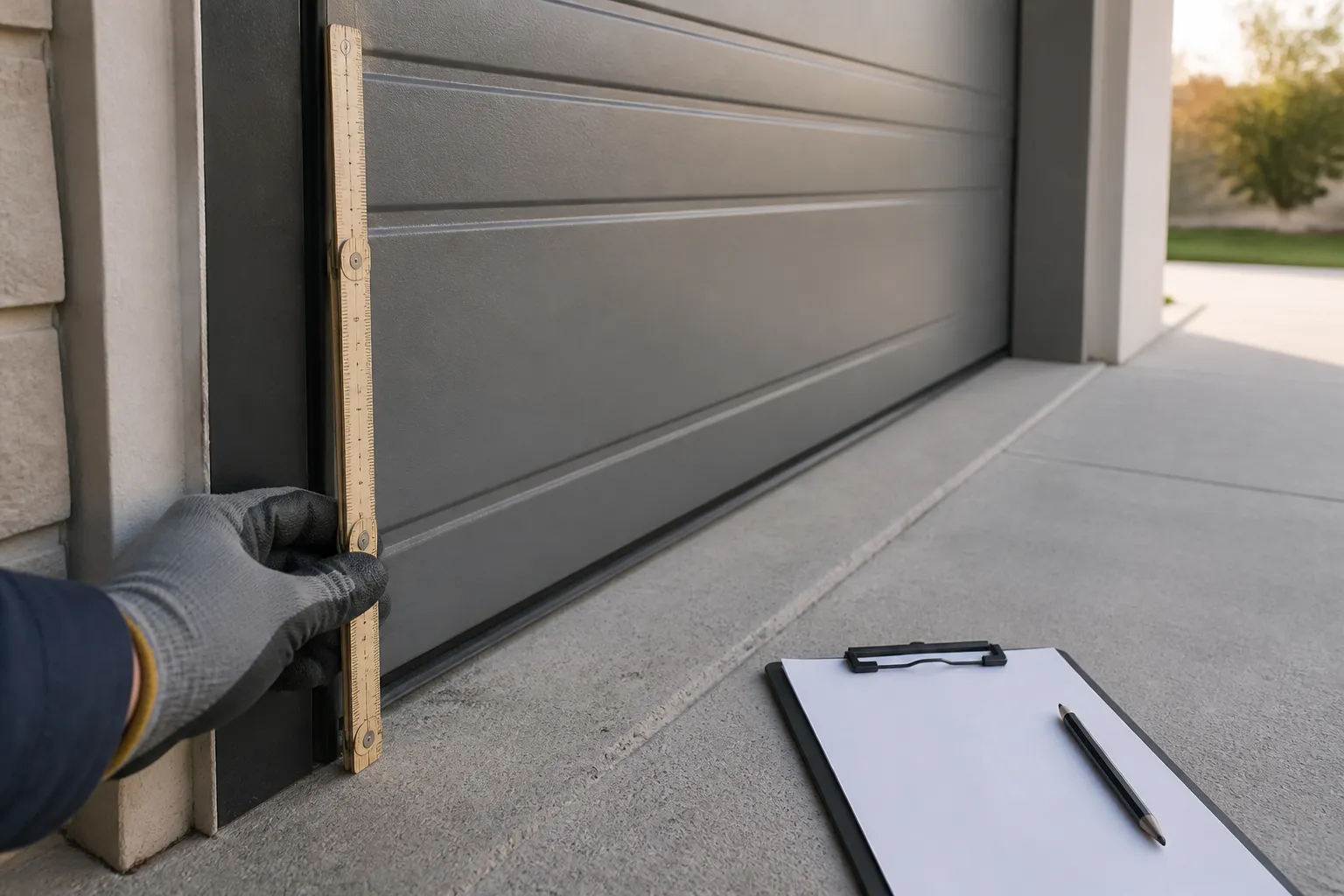
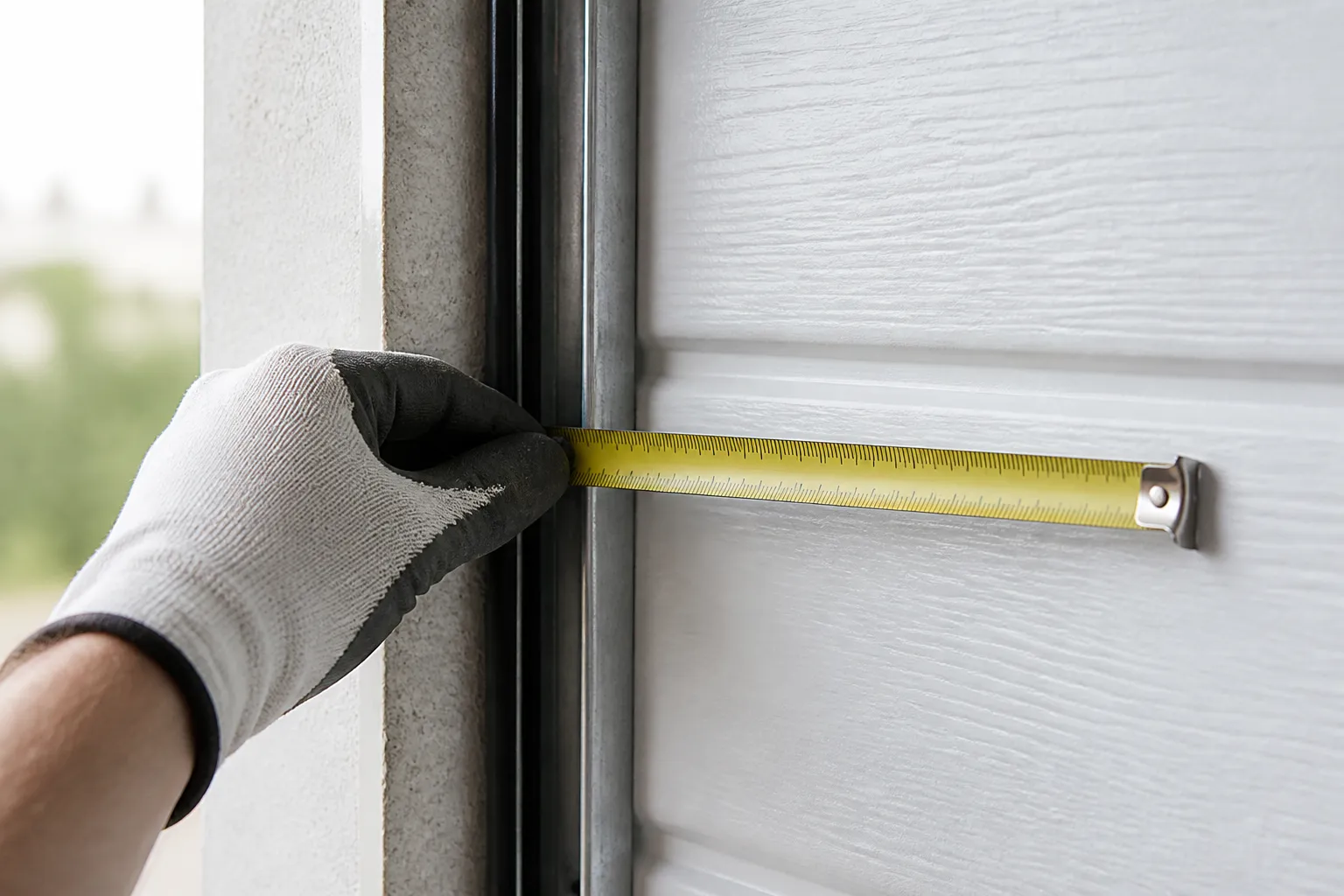
- Measure the opening width, height, and headroom.
- Think about your vehicles and how you use the space.
- Match the style to the garage. Uneven or sloped spaces often suit sectional doors. Tight side clearance or limited overhead room may point to a roll-up.
- Decide on insulation based on climate and whether the room above is living space.
- Pick the opener by safety features first, then noise and extras.
On safety, a modern opener built to the UL 325 standard should have photo-eye sensors that stop or reverse the door when the beam is blocked, plus reversal on contact. Builder-grade openers can be dependable and code-compliant, so a higher price is not proof of better safety. Plan on upkeep too. Test the reversal and photo-eyes monthly, never bypass the sensors, and ask the installer to show you how to run both tests before they leave.
What to ask before you sign
A low headline price can grow fast once add-ons show up. These questions keep the quote honest:
- Does the price include the door, labor, insulation, opener, old-door removal, and permit fees, or is each an extra?
- Does the opener meet UL 325, with working photo-eyes and auto-reverse? Can you see both demonstrated?
- What warranty covers the door, springs, opener motor, belt or chain, and labor? Manufacturer and installer terms differ, so get both in writing.
- Does the written quote name the exact size, material, insulation rating, and opener model?
- Does the contractor hold the license your state requires and carry liability and workers' compensation insurance?
Get at least three quotes on the same specifications. Verify the license with your state's licensing board instead of relying on the contractor's word.
Red flags and scam warnings
The International Door Association has reported scam activity in this trade, including fake repair websites, unmarked-truck repairmen, and a reported $12,000 repair bill. Be cautious of anyone who pressures you to sign on the spot.
Ask for the company name, address, and license number in writing, then look the business up and read independent reviews. A legitimate company will hand these over without fuss. Be wary of:
- A quote far below every other quote
- A large deposit demanded before work starts
- A contractor who discourages a second opinion
If you suspect fraud, contact your state attorney general's consumer protection office or the local licensing board.
One last note on value. Zonda's 2025 Cost vs. Value Report ranks garage door replacement first among remodeling projects for return on investment, though the excerpts available here do not give the percentage. This guide is general information, not personal financial or legal advice. A licensed local contractor can price your actual opening.
Sources
- 2025 Cost vs. Value Report - Zonda
- What the 2025 Cost Vs. Value Report Says About Remodeling
- A Breakdown of the Cost vs. Value Report
- News & Press - IDA
- Member FAQs - IDA
- How Much Does a 2-Car Garage Door Replacement Cost?
- How Much Does 16x7 Garage Door Installation Cost?
- Builder-grade garage door opener guide for homeowners
Still have a question?
Related guides
-

Upgrading to 200 Amps Without the Surprise Bill
Panel costs are only part of the story, so here is what a 200 amp upgrade typically runs, what can get added on, and what to ask before you sign. By Neil Ostrander
-

Tank or Tankless? How to Compare Water Heater Bids on Equal Terms
Learn how tank and tankless units differ, and which details a written plumber's quote should spell out so three bids can be compared fairly.By Renata Okafor
-

Find the Water First: A Practical Guide to Deciding on Mold Testing and Cleanup
Before anyone runs a sample or quotes a job, the moisture source and the size of the visible patch settle most of the decision. By Gideon Aldaine