How to Compare Contractor Bids Without Getting Lost in the Fine Print
A step-by-step way to line up three quotes, verify the license, and read the contract before you sign anything.
 By Renata Okafor ·
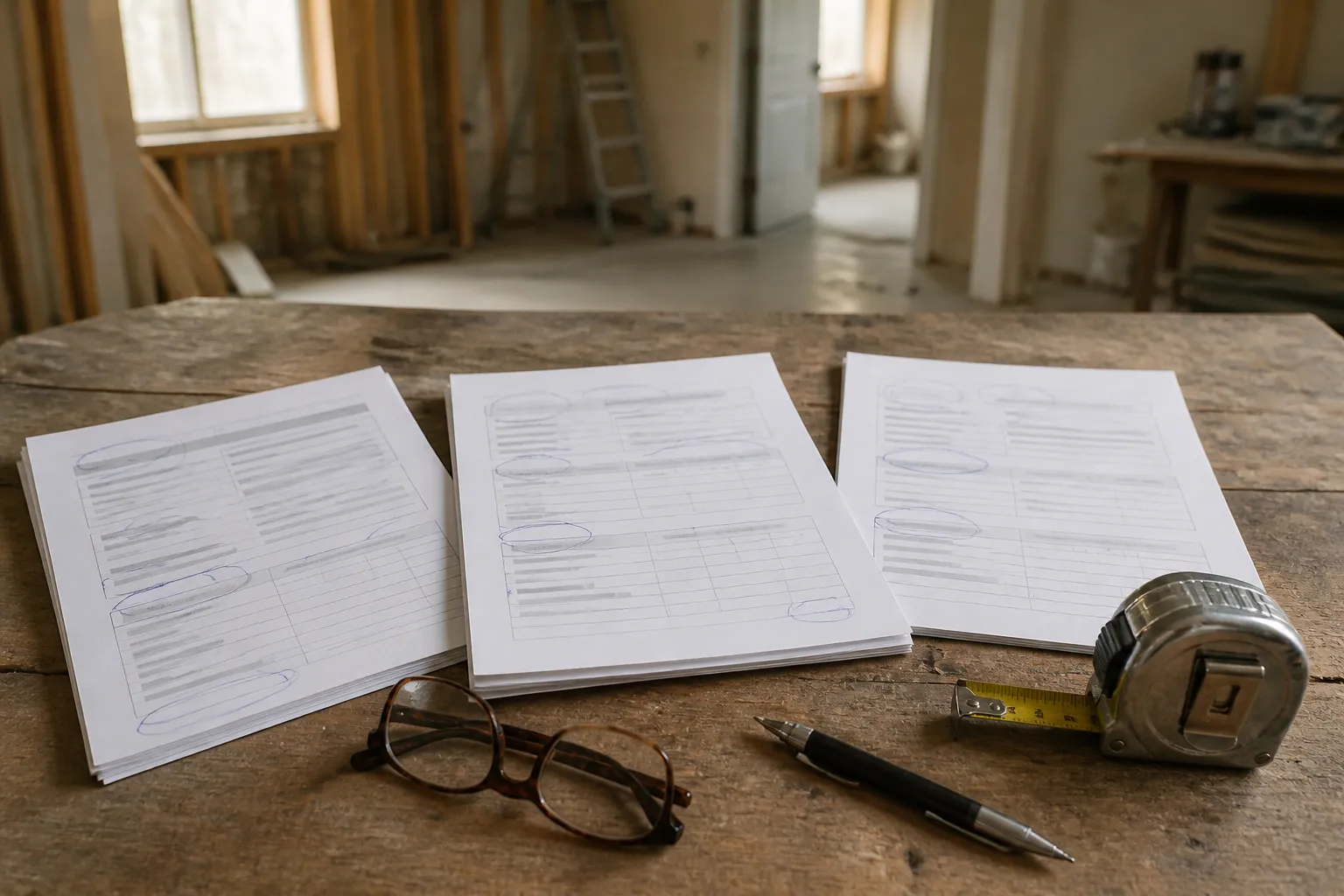
Have you ever held three contractor quotes and felt like you were reading three different languages? One is a single line with a number. One runs four pages. One is cheap, and you cannot say why. This guide walks through how to collect bids, line them up fairly, check the license, and read the contract before you sign. It is general information only, not personal legal or financial advice, so a licensed professional in your state is the right person for your specific project.

Why get at least three bids
Consumer guidance generally says to take your time and get at least three bids. One quote tells you nothing about whether the price is fair. Three show you how scope, materials and cost differ from company to company. Ask every contractor to walk through the same project, so you are comparing like with like.
Costs vary a great deal by state, project type and local market. The sources behind this guide give no US price ranges, so treat your own collected bids as the benchmark. If one bid is far above or below the rest, ask the contractor to explain. A very low number often means missing work, not a bargain.
Comparing bids side by side
Build a simple table with one column per contractor. Use the same four rows for each:
- The work to be done
- The materials
- The completion date
- The price
Gaps show up fast. A bid with no finish date or no materials list cannot be matched against one that has both. Then check what the price actually covers. Are permit fees, equipment, cleanup and disposal in the total, or will they appear later as extra charges? Ask each contractor the same questions about timing and how they plan to run the job, and keep their answers. Clear, consistent replies are easier to judge than vague promises.
Checking the license and references
Choose only licensed contractors, and get the license number before you agree to anything. In California, the Contractors State License Board lets you search online by license number, business name, personal name or salesperson registration. The record shows whether the license is active, whether the contractor has a bond and workers' compensation insurance, and any pending or prior legal actions. You can also call (800) 321-CSLB (2752). In California, home improvement work worth $500 or more must be done by a licensed contractor. Other states set their own rules and thresholds, so ask your state licensing agency.
Then ask for at least three local references and actually call them. Good questions:
- Was the job finished on time?
- Did it stay on budget?
- Could I see the completed work?
A contractor who will not give references or show past work deserves extra caution.
What the written contract should contain
The contract should describe the work in detail, list the materials and equipment to be installed, state the total cost, and give start and end dates. "Repair the roof" is too vague. The more specific the wording, the easier it is to hold both sides to it. In California, a written contract is required for home improvement projects over $500 in labor and materials.
Check that the contractor will pull any needed permits before work begins and that the fees appear in the contract. Ask whether you received a Notice to Owner, which explains liens and how to prevent them. Any change to scope, materials, price or dates should be written down and signed before the work changes. Before you sign, have a friend, relative or legal representative read it with you.
Payments and cancellation
Use a written payment schedule and pay only as work is completed. California's checklist caps the down payment at 10% of the contract price or $1,000, whichever is less. A big upfront payment leaves you with little leverage if the job stalls. California also gives a 3-day right to cancel, and 5 days for people 65 and older. Rules differ elsewhere, so confirm yours.
Before final payment, ask for lien-related paperwork. Keep copies of every invoice, receipt and signed change order. They matter if a dispute comes up or a supplier later says it was not paid.
Red flags to watch for
Watch for these:
- No license, or a license you never checked
- A down payment above the limit described above
- A request for payment before work is done
- A contract with no detailed scope, materials list, total cost or dates
- Changes agreed by word of mouth
- Pressure to sign on the spot
If something feels wrong, stop making payments and contact your state licensing agency or consumer protection office. The sources here do not cover disputes or unlicensed contractors in detail, so look to your state's official guidance for next steps. For the California checklist referenced above, see the CSLB homeowner checklists.
Sources
- How To Avoid a Home Improvement Scam | Consumer Advice
- FTC warns businesses about fake reviews | Consumer Advice
- Contractor Estimates: How to Compare 3 Bids (Work, Materials, Completion Date, Price) - YouTube
- How To Avoid Scams After Weather Emergencies and Natural Disasters | Consumer Advice
- How To Save Money on Heating and Cooling Your Home | Consumer Advice
- Learn About Home Improvement Contracts - CSLB
- Hiring a contractor? Make sure they’re licensed! 🛠️ Visit www.cslb.ca.gov to check a license before you hire. It’s fast, easy, and protects you. ✅ #CheckTheLicenseFirst #CSLB #HireSmart | Contractors State License Board
- How to Hire a California Contractor - Contra Costa Senior Legal Services
Still have a question?
Related guides
-

Upgrading to 200 Amps Without the Surprise Bill
Panel costs are only part of the story, so here is what a 200 amp upgrade typically runs, what can get added on, and what to ask before you sign. By Neil Ostrander
-

Tank or Tankless? How to Compare Water Heater Bids on Equal Terms
Learn how tank and tankless units differ, and which details a written plumber's quote should spell out so three bids can be compared fairly.By Renata Okafor
-

Find the Water First: A Practical Guide to Deciding on Mold Testing and Cleanup
Before anyone runs a sample or quotes a job, the moisture source and the size of the visible patch settle most of the decision. By Gideon Aldaine