How to Compare Plumber Quotes Without Getting Burned
Verify the license, insurance and written scope before you compare prices, because the cheapest bid is only useful if it covers the same work as the rest.
 By Neil Ostrander ·
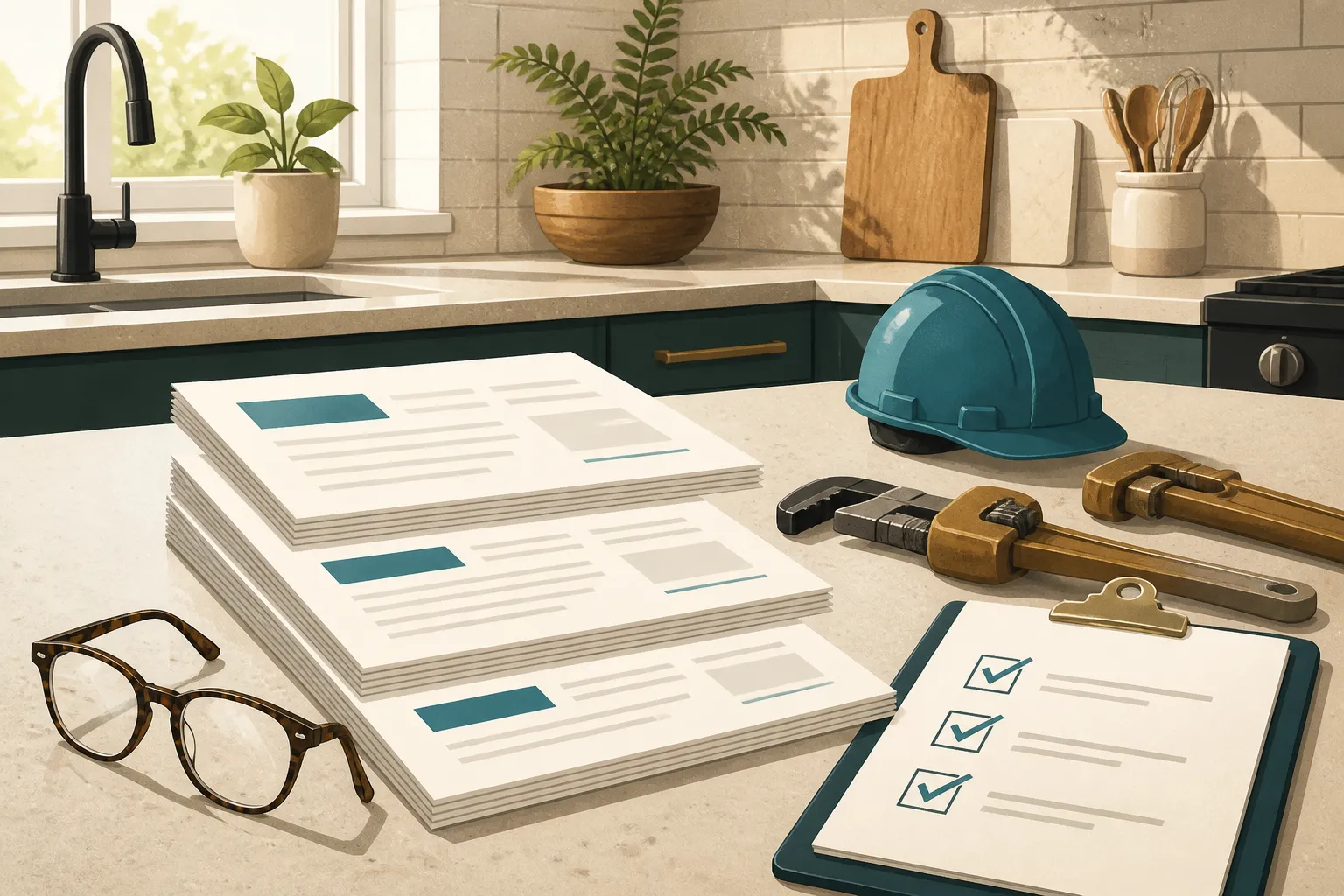
What does a plumber actually charge, and how do you know the number on the page is fair? The honest answer is that it depends on your state, your house and the job. The sources behind this guide give no national dollar figures for hourly rates, service call fees, emergency surcharges or project totals, so this piece does not invent any. What it does give you is a way to collect local quotes and compare them without getting burned. This is general information, not personal legal, financial or medical advice. A licensed professional or your state licensing agency can speak to your situation.
Why licensing matters for plumbing work
Some states license plumbing contractors, and the reasoning is plain. Indiana, for example, treats plumbing as work that affects the public interest, so people in the business must show competency and qualifications before they are licensed. Whether your state requires a license, and which board runs it, depends on where you live. Your first step is to find your state's licensing agency.
The stakes are real. Plumbing and heating work protects against carbon monoxide poisoning, water damage, sewer gas, scalding, mold, waste water leaks and injury from improper installation. Trade groups point consumers toward a trained, full-time professional rather than someone who does the work on the side.
California shows how visible the system can be. Every contractor ad there must carry a state license number, including online ads, flyers and company names painted on trucks. The board lets you check status online or by phone. If an ad shows no number, search the business or contractor name before you call. Other states differ, but the habit of checking the official record travels well.
How to check a plumber before you hire
Verification takes about twenty minutes and is worth doing before anyone enters your house. Work through it in order:
- Confirm the license is current, and read the record for status and any disciplinary history.
- Ask for proof of insurance, and confirm workers' compensation coverage. Without it, you could face liability if a worker is hurt on your property.
- Read customer reviews and look up the Better Business Bureau profile, which may show ratings, feedback and reported complaints.
- Look for trade association membership as one extra signal.
Be careful with search results. Scammers and dishonest businesses sometimes pay to sit at the top, so a high ranking is a starting point and nothing more. Association directories are handy for finding members, but membership signals a commitment to training, codes and ethics. It does not replace a license check.
Comparing written estimates and bids
Get at least three written bids, and make sure each one rests on the same plans, specifications and scope of work. If one plumber prices a new shutoff valve and another does not, the totals tell you nothing. Good estimates are detailed and in writing, which is what makes a side-by-side comparison possible.
Read each one for three things:
- What it covers.
- What it leaves out.
- Whether it is a flat rate including materials or bills materials separately.
Be wary of a bid far below the rest. It may reflect a mistake, or it may omit work the others quoted. Either way it can lead to disputes, change orders or substandard work once the job is underway. Since prices vary by state and by job, local written quotes are a better yardstick than any national average.
Buying fixtures and products for the job
Planning to buy the faucet or water heater yourself? Ask first. Some companies will not install customer-supplied products, and the answer changes both your budget and your schedule.
Products should carry the Uniform Plumbing Code stamp or NSF approval. If a product you bought fails, you may be the one responsible for removing or fixing it, not the plumber. Get that allocation of responsibility confirmed in writing before work begins.
Questions to ask and red flags to watch for
Bring this list to every conversation:
- Is the estimate a flat rate including materials, or are materials billed separately?
- Exactly what does it include?
- Will you install products I supply?
- Is your license current, and are you insured?
- Will the work comply with applicable plumbing codes and state requirements?
Slow down if you see a bid well below the others, an ad or listing with no license number, an estimate that does not say what is and is not included, or advertising and search placement offered as proof of quality. Any one of these is reason to verify before committing.
One more limit. The sources reviewed did not cover contract terms, deposits, payment schedules, warranties, permits, or complaint routes. Before you sign, check with your state licensing board and local building department on those points.
Sources
- How To Avoid a Home Improvement Scam | Consumer Advice
- home improvement | Consumer Advice
- How do I find the right licensed contractor? - CSLB
- Find a Contractor - PHCC
- PHCC Home - PHCC
- What the Public Should Know Before Hiring a Plumber - Indiana Plumbing Heating & Cooling Contractors Association
- Consumers – Maine PHCC
- BBB Tip: Hiring a trusted and verified plumber can save you time and heartache
Still have a question?
Related guides
-

Upgrading to 200 Amps Without the Surprise Bill
Panel costs are only part of the story, so here is what a 200 amp upgrade typically runs, what can get added on, and what to ask before you sign.By Neil Ostrander
-

Tank or Tankless? How to Compare Water Heater Bids on Equal Terms
Learn how tank and tankless units differ, and which details a written plumber's quote should spell out so three bids can be compared fairly. By Renata Okafor
-

Find the Water First: A Practical Guide to Deciding on Mold Testing and Cleanup
Before anyone runs a sample or quotes a job, the moisture source and the size of the visible patch settle most of the decision. By Gideon Aldaine