How to Compare Roofing Bids Without Getting Fooled by the Lowest Price
Three bids, one suspiciously low, and no clear way to judge them. Confirm the contractors are pricing the same job before you compare anything else.
 By Gideon Aldaine ·

Three roofing bids land in your inbox, and one is thousands of dollars lower than the others. Is that a bargain or a warning? Before you can answer, you need to know whether the three contractors are even pricing the same job. This guide walks through the steps in a sensible order. It is general information, not personal financial or legal advice. Check anything big with a licensed professional in your state.
Make sure every bid covers the same job
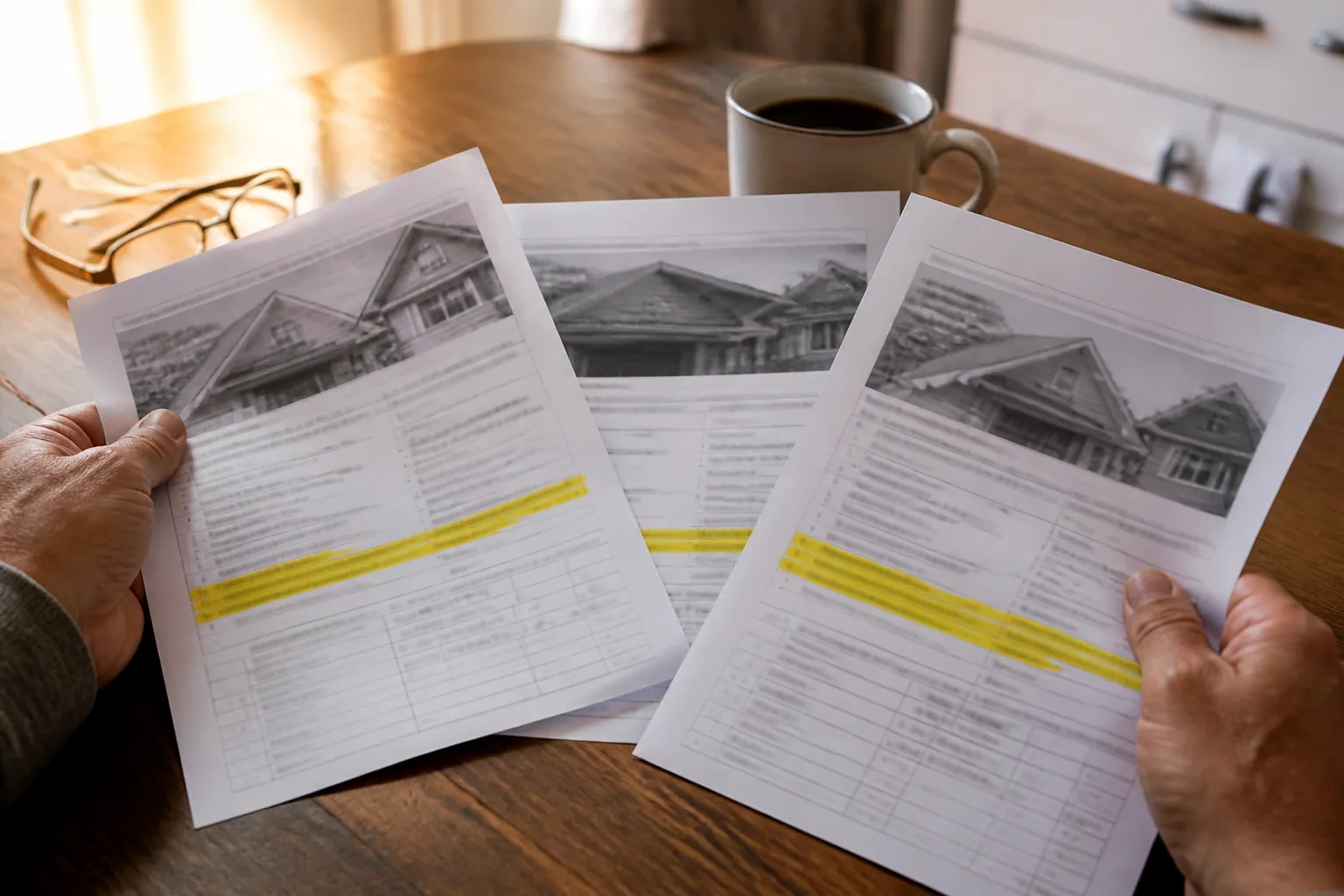
Start by gathering at least three written bids. The California Contractors State License Board advises that each one should rest on the same plans, specifications and scope of work. If the bids describe different jobs, the prices cannot be fairly compared, even when the pages look alike.
Two questions change the price more than most people expect. Is this spot repair or a full replacement? And will the old roofing be torn off, or will the new roof go over it? The Better Business Bureau lists both as things to clarify up front. A bid that covers only part of the work can look cheaper than it really is. Check that each proposal matches on these points:
- Materials, including brand and type
- Underlayment and flashing approach, where relevant
- Tear-off or cover-over of the old roof
- Start and completion dates
If a bid is missing something the others include, ask that contractor to correct it so you are comparing like with like. Take a highlighter to the scope section of each bid. Differences jump out once the pages sit side by side.
Read the price in context
The lowest number is not automatically the best one. The CSLB warns that a bid far below the rest may mean a mistake, missing work, or corners being cut. The National Roofing Contractors Association (NRCA) makes the same point from the trade side: price is only one criterion for choosing a roofer.
Ask each contractor to explain how they got their number. A good answer walks through labor, materials, tear-off, disposal and cleanup. Vague totals, or pressure to sign today, are reasons to slow down.
For a rough sense of scale, This Old House's 2026 cost guide puts the average spend on a new roof for a 2,000 square foot home at about $29,909. That is one national average. We did not find a sourced low-to-high range to give you here, and the guide says costs vary by state. The same publisher's 2026 roofing survey is a place to look for more detail. Treat the average as a reference point only. If your bids sit far from it, ask each contractor why. Material, roof size and local labor rates can all move the number.
Timing can matter as well. The BBB notes that fall may bring lower prices, better material availability and milder temperatures.
Compare the written terms, not just the totals
The NRCA says to insist on a written proposal with a complete description of the work and specifications, start and completion dates, and payment procedures. That paper is what lets you hold someone to what was promised. The BBB adds that a detailed roofing contract should cover materials, scope of work, warranties, payment procedures and debris removal.
Line those items up across all three bids. Warranties deserve extra attention, because the wording can differ even when the prices are close. Ask each contractor what would void the warranty, and get the answer in writing. Our sources do not explain deposit limits or payment schedules, so ask your state contractor licensing board what rules apply where you live. Then put these questions to everyone:
- What cleanup and waste removal is included, and will all old materials leave the site?
- Who will oversee the project?
- How many workers will be on-site?
- What quality control steps will you use?
Notice who answers plainly and who gets fuzzy. That tells you something the totals cannot.
Verify credentials before you sign
Where your state requires it, confirm the contractor holds a valid license in good standing. The CSLB says license status, disciplinary history and workers' compensation status can be checked on its lookup, online or by phone. In California, that number is (800) 321-CSLB (2752). Rules differ by state, so find your own board.
Then work through the rest of the file:
- Copies of liability insurance and workers' compensation certificates, in effect for the entire job
- References and a list of recent projects, with calls to past clients
- A permanent business address, working phone number, tax ID and business license where required
- Roofing association membership, and any complaints on file with the local Better Business Bureau
Ask for the certificates themselves, not a verbal yes. The NRCA recommends confirming the coverage runs for the whole job. A phone call to two past clients takes ten minutes and often tells you more than a brochure.
Watch for warning signs and scams
Be cautious about unusually low bids, ads with no state license number, and pricing that seems too good to be true. The CSLB says contractor ads must show the license number. The NRCA lists reluctance to provide a written proposal, references or proof of insurance as a reason to walk away.
The BBB flags post-storm roofing scams as a concern, so check credentials carefully after severe weather, even when you feel rushed. The Federal Trade Commission also warns that dishonest businesses may pay to appear at the top of search results, so a high ranking proves nothing.
Give the comparison the time it needs. Do it before you sign, not after.
Sources
- Selecting a Contractor - National Roofing Contractors Association
- How do I find the right licensed contractor? - CSLB
- How To Avoid a Home Improvement Scam | Consumer Advice
- BBB Tip: Roofing contractors
- New Roof Cost Guide (2026)
- Roofing Survey Results (2026)
- Is the BBB a Trusted Source for Quality Roofing Contractors?
Still have a question?
Related guides
-

Upgrading to 200 Amps Without the Surprise Bill
Panel costs are only part of the story, so here is what a 200 amp upgrade typically runs, what can get added on, and what to ask before you sign. By Neil Ostrander
-

Tank or Tankless? How to Compare Water Heater Bids on Equal Terms
Learn how tank and tankless units differ, and which details a written plumber's quote should spell out so three bids can be compared fairly. By Renata Okafor
-

Find the Water First: A Practical Guide to Deciding on Mold Testing and Cleanup
Before anyone runs a sample or quotes a job, the moisture source and the size of the visible patch settle most of the decision.By Gideon Aldaine