How to Price a New Deck and Vet the Builder Who Will Build It
Without a reliable national price, your best tools are a consistent scope, three written estimates, and a builder whose license and insurance you have checked yourself.
 By Neil Ostrander ·
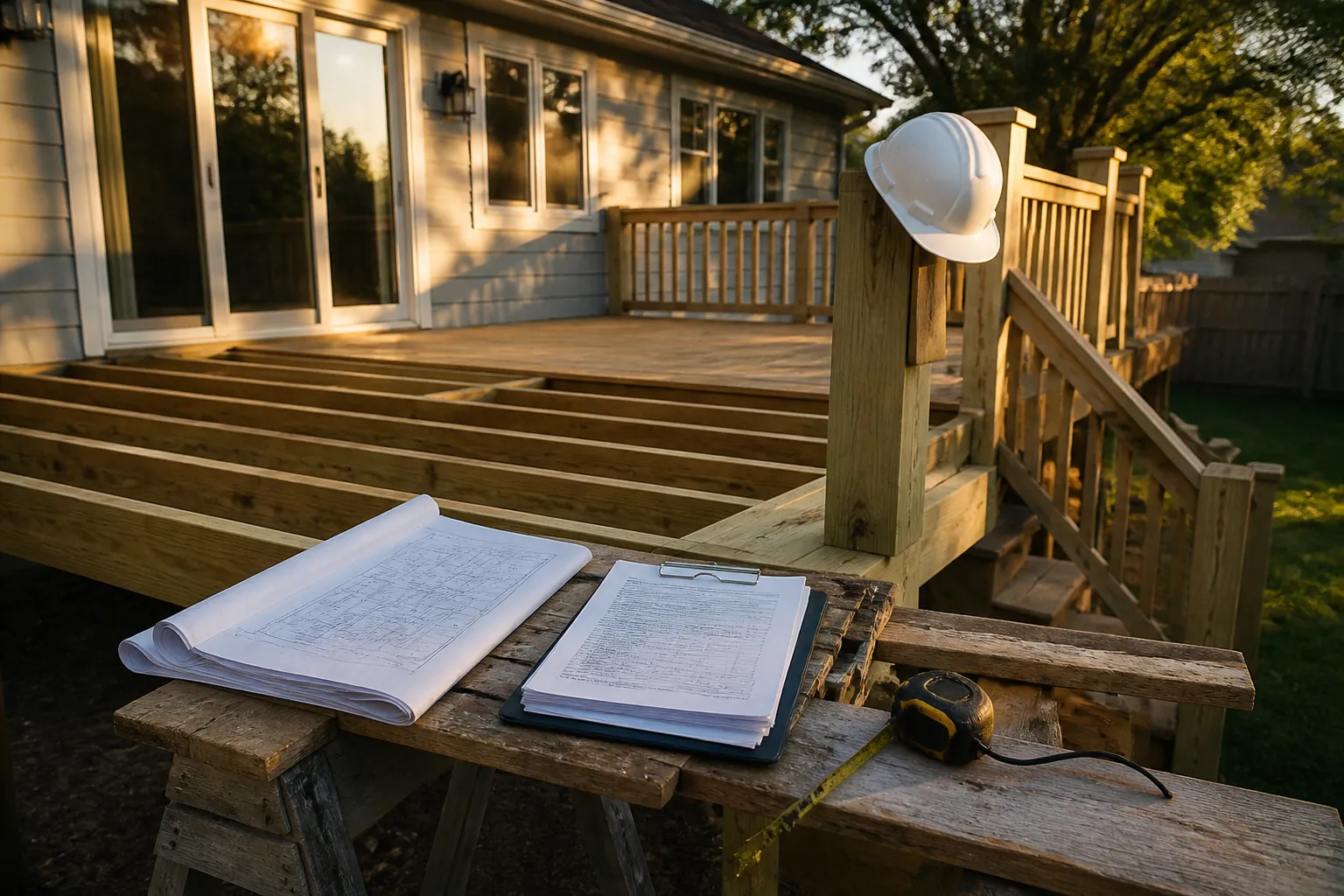
What does a new deck cost, and how do you know the person quoting it is the right one to build it? The honest answer to the first half is that no single national number holds up, and the second half matters more than most homeowners expect. This guide walks through both, in order, so you can sit down with three bids and know what you are reading. It is general information, not personal financial, legal or medical advice, so check specifics with licensed professionals in your area.
Why deck cost is hard to pin down
The research behind this guide did not turn up a reliable national dollar range for a new deck, so you will not find one here. Any figure you see online should be treated as a rough starting point and checked against current local quotes. Costs vary by state, by metro area and by the details of your yard, because labor rates, permit fees and code requirements all differ from place to place.
Resale reports add some confusion. Zonda's 2025 Cost vs. Value report ranks remodeling projects by return at sale and says exterior replacement projects generally add more value than large interior remodels. The excerpt we reviewed did not list decks, though, so do not read it as a deck price guide. Before you collect bids, settle these points:
- The size and height of the deck.
- The material you prefer, or whether you want two options priced.
- Railing style, stairs and any built-in seating or lighting.
- Who pulls permits and who handles cleanup.
Give every bidder the same list. Otherwise you are comparing different decks, not different prices.
What drives the price
After size, material is usually the biggest variable. Wood decking tends to cost less up front but asks for more upkeep. Composite and other engineered boards cost more at purchase and need less routine care. If you are undecided, ask the builder to quote both so the gap is in front of you in writing.
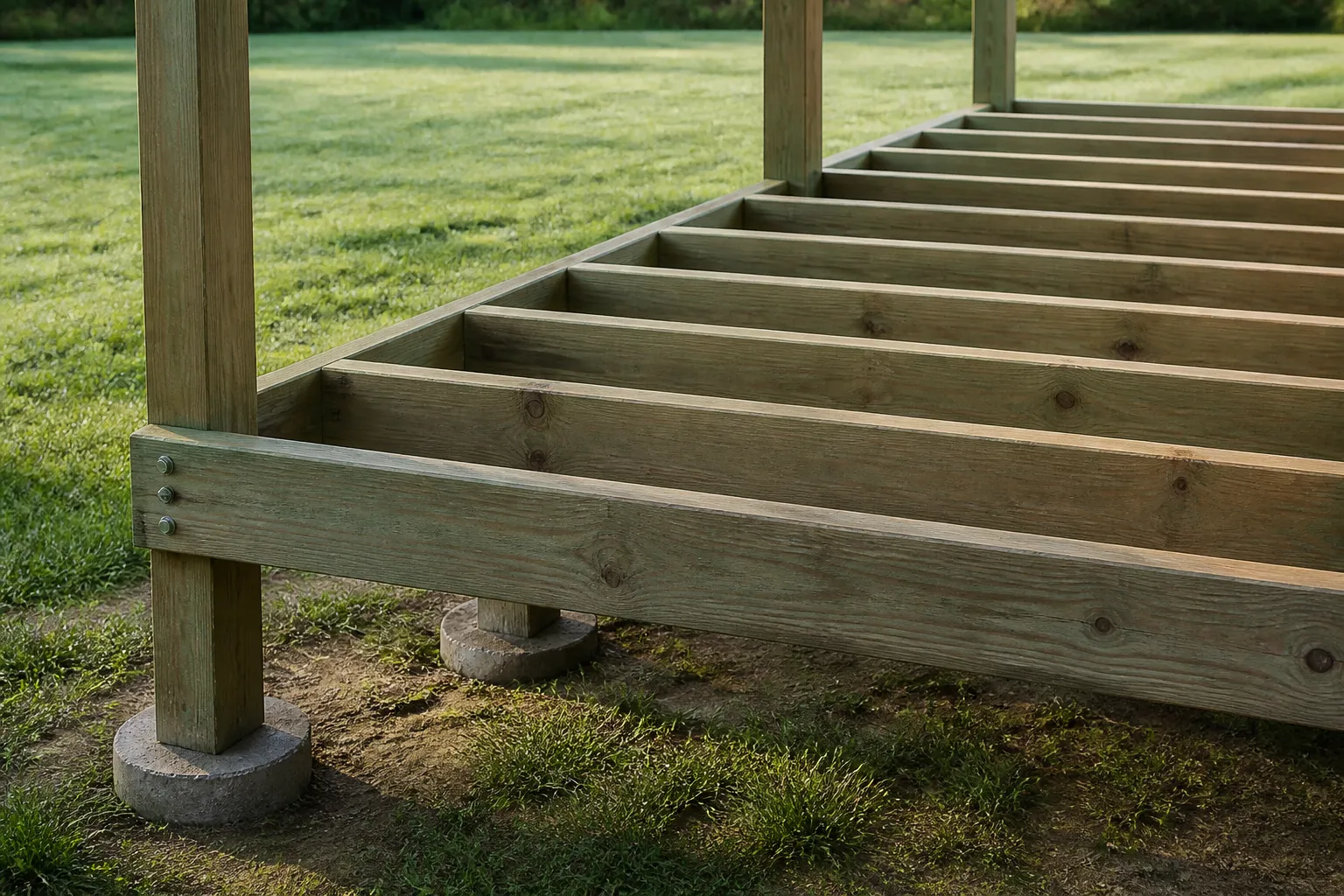
Then look underneath. Footings, posts, beams, joists and the ledger board that ties the deck to your house all affect cost, and they affect safety even more. A bid that is much lower than the others may have trimmed exactly the parts you cannot see once the boards go down. Ask what is under the surface, not only what is on top.
Climate matters too. Freeze-thaw cycles, snow loads, moisture, rot and corrosion all stress decks over time, so a builder who knows your local conditions can recommend suitable materials, fasteners and footing depths. Permits are the other wild card. Whether you need one depends on your jurisdiction, so call your local building department before you sign anything.
How to choose a deck builder
Think of this as a short sequence you can follow in order. Each step narrows the field before price even comes up.
- Check the license. Confirm whether your state requires a contractor license for this work, ask for a copy and verify it with the licensing board yourself. Rules differ by state.
- Check the insurance. Ask for a certificate of current general liability insurance and confirm it with the insurer.
- Ask about standards. Look for a builder who follows a written code of ethics and can explain how they handle code compliance, inspections and warranty claims.
- Collect three written estimates. Each should spell out dimensions, materials, footings, railings, stairs, permits, cleanup and warranty terms.
Industry associations such as NADRA say their builder members must follow a code of ethics and meet state licensing and insurance requirements, and its membership application asks for a license copy and proof of liability coverage. That is a useful signal. It is not a replacement for checking the paperwork yourself.
If you already own a deck and are wondering whether it needs repair or replacement, look for an inspector with deck evaluation training. The sources estimate about 60 million decks stand in the U.S., with roughly 30 million past their useful life. Inspection checklists typically cover joists, posts and ledger boards for rot, plus fasteners, railings, lighting and hazards nearby. Many homeowners treat a yearly check, ideally before summer use, as a habit.
Questions to ask before you sign
Bring a printed list to each consultation and write down the answers. Specific answers are worth more than general reassurance.
- Do you hold the contractor license my state requires, and can you show it?
- Do you carry current general liability insurance, and can you give me a certificate?
- How well do you know local code and our conditions, such as freeze-thaw, snow load, humidity or coastal salt air?
- Will you check the joists, posts, ledger board, fasteners and railings during the build, and put your findings in writing?
- What does the contract cover: payment schedule, change orders, timeline, warranty length, and who handles permits and inspections?
On payment, look for a schedule tied to finished work rather than a large deposit. A licensed attorney can review the contract if the job is big, and your insurance professional can tell you how a new deck affects your homeowner policy.
Red flags and open questions
The clearest warning sign is a builder who cannot show a required license or proof of liability insurance. Resolve that before work starts, not after. Other things to slow down for:
- Vague estimates with no itemization.
- A bid far below the others with no explanation.
- Pressure to pay everything up front.
- Reluctance to pull permits.
Ask for any clarification in writing. A good builder will not mind.
Be aware of what we could not confirm. Typical costs by material and size, state licensing rules and standard contract terms were not available in our sources. Many deck safety checklists also come from industry groups or contractors who have a commercial interest, so treat them as a starting point. For answers that fit your situation, contact your state licensing board and your local building department, and consider a licensed attorney or insurance professional for the contract and coverage questions.
Please seek a professional. This article is general information, not legal advice. Please seek a licensed attorney in your state about your own situation.
Sources
- 2025 Cost vs. Value Report - Zonda
- Remodeling Impact
- Remodeling Impact Report: Outdoor Features
- NADRA | North American Deck & Railing Association
- Deck Safety Month - Promoting Deck Inspections and Checks | NADRA - North American Deck & Railing Association
- Become a Member - NADRA
- Deck Safety Checklists | Deck Dogs
- Deck Safety Checklists | Deck Crafters
Still have a question?
Related guides
-

Upgrading to 200 Amps Without the Surprise Bill
Panel costs are only part of the story, so here is what a 200 amp upgrade typically runs, what can get added on, and what to ask before you sign.By Neil Ostrander
-

Tank or Tankless? How to Compare Water Heater Bids on Equal Terms
Learn how tank and tankless units differ, and which details a written plumber's quote should spell out so three bids can be compared fairly. By Renata Okafor
-

Find the Water First: A Practical Guide to Deciding on Mold Testing and Cleanup
Before anyone runs a sample or quotes a job, the moisture source and the size of the visible patch settle most of the decision. By Gideon Aldaine