How to Spot a Dishonest Contractor Before You Sign
Spot the warning signs before you sign: how a contractor finds you, how they sell, what they ask you to pay, and why a rock-bottom bid deserves a second look.
 By Neil Ostrander ·
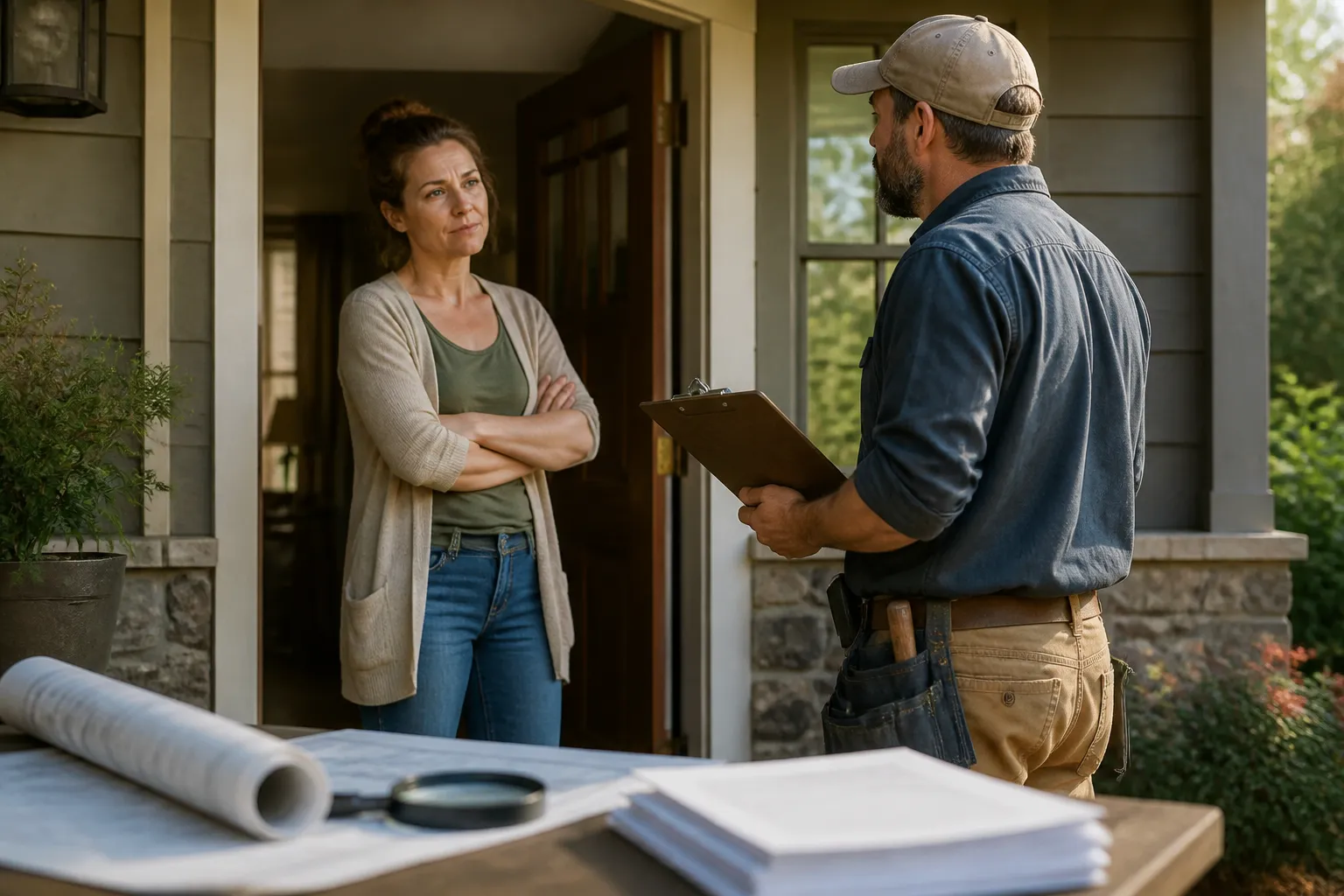
How do you tell a careful, honest contractor from one who will cost you months and thousands of dollars? Most licensed contractors are honest, but home improvement is still a top source of consumer complaints nationwide. The same warning signs show up again and again, and nearly all of them can be spotted before you sign anything. This guide walks through them in the order you will meet them. It is general information only, not legal, financial or personal advice, so check your own state's rules and consider a licensed professional for anything high stakes.
Warning signs before the first meeting
Start with how the contractor found you. Did someone knock on your door and say they noticed a problem while working nearby? The Federal Trade Commission notes that home improvement scams often begin this way, and unsolicited visits tend to lead to high-pressure sales and inflated prices. A good contractor can be found through referrals, a licensing directory or your own search, so an offer that starts on your porch deserves extra scrutiny.
Search results need the same care. The FTC advises looking past the top listings, because dishonest businesses sometimes pay to appear first. Before you call anyone, run through this short list:
- Does the company have a real street address, not just a cell phone or P.O. box?
- Is there a working phone number that someone answers?
- Can you look up the business registration yourself?
If any answer is no, move on. There are plenty of other companies to call.
Red flags in the sales conversation
Pressure is the clearest signal. A reputable contractor gives you time to read a written proposal, compare it with other bids and ask questions. If someone insists a price is only good today, treat that as a reason to slow down. Walking away costs you nothing, and a real price will still be there tomorrow.
Next, ask for paperwork. Request a license number, proof of liability insurance and proof of workers' compensation. Liability coverage and workers' compensation protect you from lawsuits and injury claims if someone is hurt on your property. Be wary of anyone who hesitates or says insurance is unnecessary. Then verify the documents yourself with the insurer or licensing board instead of trusting a photocopy.
Also listen to how the job is described. A general handyman who offers to take on larger licensed work may not have the legal authority to do it. In California, for example, work over $500 generally requires a valid state license, and handymen cannot legally bid above that. Thresholds differ by state, so ask which license covers the exact work you need.

Red flags in payment and contracts
Be alarmed by a request for the full project cost up front. Once the money is gone, the contractor has little reason to finish. A small deposit to schedule work is normal, and 10 percent is often described as standard. Some states set legal caps. California limits deposits to 10 percent of the contract price or $1,000, whichever is less. That is a California rule, so look up your own state's limit.
Tie payments to milestones instead of dates. Typical stages look like this:
- Rough framing complete.
- Rough electrical and plumbing inspected and approved.
- Drywall complete.
- Final walkthrough and punch list done.
Be cautious if you are asked to pay in cash or to make checks out to an individual instead of the company. Both make money harder to trace and recover.
A handshake deal is a red flag even when the person seems trustworthy. A written contract should be dated, list both parties' names, addresses and phone numbers, describe the project in detail and include the payment schedule. Read it against your conversations. If something you were promised is missing, ask for it in writing before you sign.
Why an unusually low bid is a warning
Everyone likes a bargain, but a bid 30 to 50 percent below the others is better treated as a question mark. Low prices can mean cheaper materials, skipped permits, thin warranty coverage or a plan to recover the difference later through change orders.
Comparing bids only works when each one covers the same scope. Ask these questions of every contractor:
- Is this a guaranteed price or an estimate that could rise?
- What exactly is included, and what is not?
- What materials and warranty terms are behind the number?
Then weigh long-term value, not just the lowest figure. Costs vary widely by state, home and project, so the bids you gather locally are your best guide.
Checking the contractor before you commit
Verify the license with your state licensing board directly. California's board, the Contractors State License Board, runs a lookup at cslb.ca.gov, and other states have their own agencies. Check business registration and Better Business Bureau ratings, and look for complaints with consumer protection offices. For specialized work such as mold, asbestos or hazardous waste, confirm the certifications that trade requires.
Call references and ask specific questions. Did the contractor keep to the schedule and the contract terms? Were you pleased with the finished work? When problems came up, were they resolved, and were corrections made willingly? Those answers tell you more than a star rating. Also ask how quickly the contractor returns calls and whether they can explain the process and timeline clearly.
Finally, confirm that permits will be secured before work starts. Rules vary by city and county, so ask your local building department what your project needs. A contractor who suggests skipping permits to save time or money is showing one of the clearest red flags of all. If any single item in this guide leaves you uneasy, pause, and consider talking with a licensed attorney or your state's consumer protection office before you sign.
Sources
- How To Avoid a Home Improvement Scam | Consumer Advice
- Home Repair Scams | Consumer Advice
- 10 Contractor Red Flags — Warning Signs Before You Hire - BadContractorLaw.com
- https://vertexaisearch.cloud.google.com/grounding-api-redirect/AUZIYQEJ6hBCea-VwMbwyut_vPJuOGpGlETZlF5myX8ffoYYmrjXGqVs4i56JalNyvEnUTD7j38RkeT_tHwxisQQiskPeSznzwZVUDpjjhkihmM4jFJOHbLOyvMK6Tm1k7MOOL3reTGZxNdV8rLcCnT35kZIvQJ3pfj11Yp6WzlUtqg=
- Red Flags to Know When Hiring a Contractor
- 10 Common mistakes to avoid for your home improvement project
- Here’s How to Hire a Reliable Contractor
- Do some research before you choose a contractor. - Jason Rakow Construction,LLC
Still have a question?
Related guides
-

Upgrading to 200 Amps Without the Surprise Bill
Panel costs are only part of the story, so here is what a 200 amp upgrade typically runs, what can get added on, and what to ask before you sign.By Neil Ostrander
-

Tank or Tankless? How to Compare Water Heater Bids on Equal Terms
Learn how tank and tankless units differ, and which details a written plumber's quote should spell out so three bids can be compared fairly. By Renata Okafor
-

Find the Water First: A Practical Guide to Deciding on Mold Testing and Cleanup
Before anyone runs a sample or quotes a job, the moisture source and the size of the visible patch settle most of the decision. By Gideon Aldaine