Separate Architect and Contractor, or One Team for Everything?
A practical comparison of design-bid-build and design-build, with the questions to ask before you sign anything.
 By Neil Ostrander ·

Are you about to remodel or build, and wondering whether to hire one team for everything or an architect and a contractor on their own? It is a fair question, and the answer changes how many contracts you sign, who you call when something goes wrong, and how much of the managing lands on you. This guide walks through both paths in order, with questions to bring to every conversation. It is general information only, not personal legal, financial or construction advice, so check specifics with a licensed professional in your state.
What the two approaches are
The traditional route is called design-bid-build. You sign one agreement with an architect, who designs the project. You then sign a separate agreement with a contractor, who builds from those drawings. The AIA notes these contracts have traditionally been separate for the owner, the architect and the builder.
Design-build is different. You sign one contract with a single entity that provides both design and construction. The designer and builder work as one team from the start and give you unified recommendations that fit your schedule and budget.
Industry primers from the AIA and AGC name three common methods: design-bid-build, construction management at risk, and design-build. They do not say any one is best. The Design-Build Institute of America (DBIA) calls design-build the fastest-growing and most commonly used method in the country. That is an industry claim about national construction spending, not a statement about what a homeowner will pay.
How the work is organized day to day
With separate contracts, design usually moves in phases. On a custom house, a quick checklist of the typical order looks like this:
- Schematic design, where basic requirements are set out in drawings.
- More detailed design, where choices get firmer.
- Construction drawings, which give the builder the details needed to build.
You can usually review the drawings at several of these stages and give input. The architect often helps you find a contractor and may provide administration and oversight during construction.
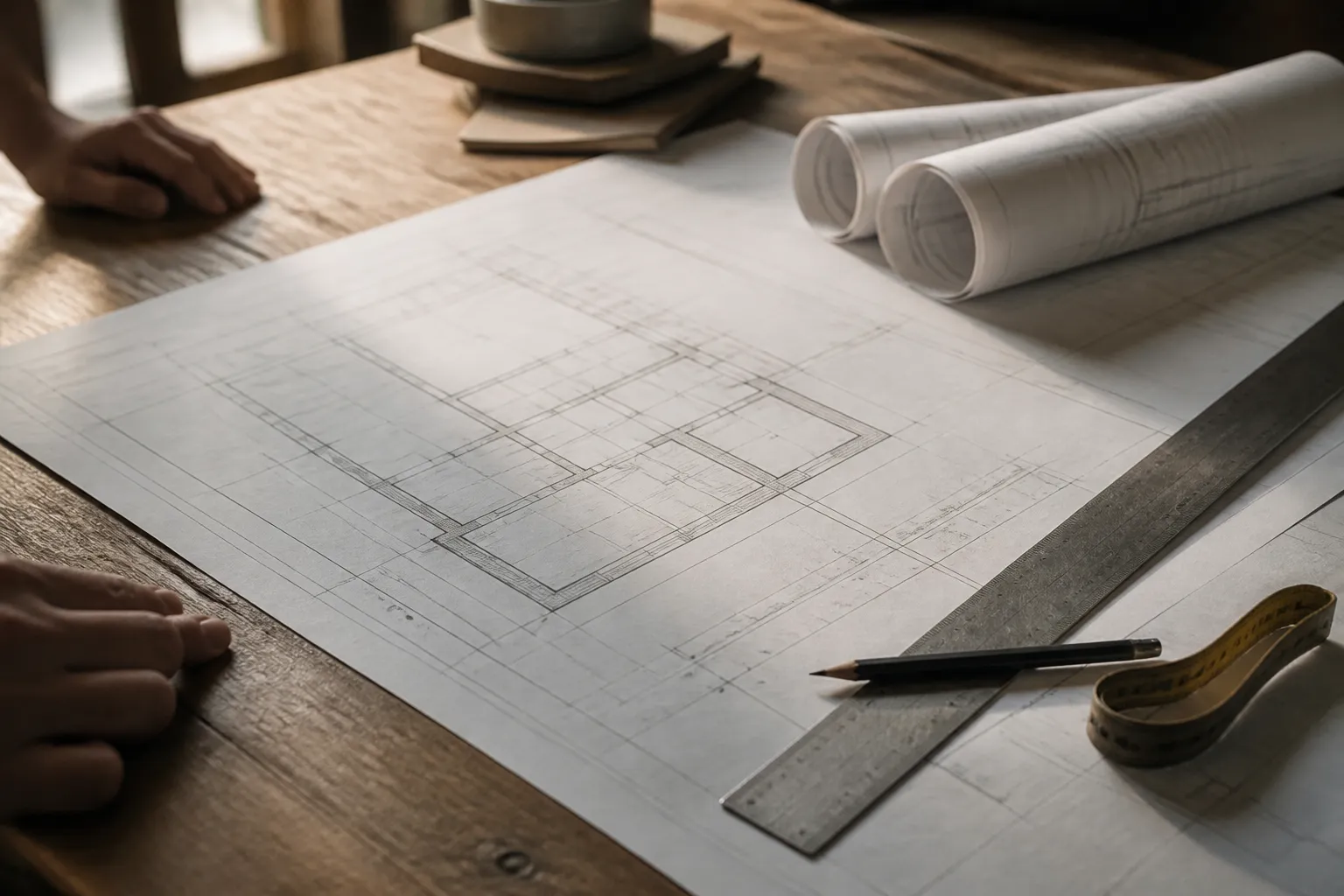
In design-build, the designer and builder collaborate from day one. DBIA describes it as an integrated approach built on trust, teamwork and shared goals, not only a sole-source contract. When something changes, the whole team handles it instead of passing it between two companies. Keep in mind that DBIA is an industry group that promotes this method.
How owners usually choose the team
Owners generally pick a team in one of three ways. Low bid goes to the lowest total cost. Best-value weighs cost against other things, such as qualifications. Qualifications-based selection leaves cost out, or looks at it only alongside qualifications and fees.
When both price and qualifications matter, owners often use a request for qualifications, a request for proposals, and interviews. Contacting more than one provider is typical, since it encourages competitive and responsible bids. The AIA and AGC point out that your selection method affects the delivery method and the contract relationship. So choosing how to select is also choosing how the project is structured. They also advise asking whether you want to outsource responsibility and administration, or keep it.
The AIA says this comparison is most relevant to small commercial and residential owners. The research behind this guide did not include government sources, so confirm licensing and permit rules with your state separately.
Questions to ask before choosing
Bring a short list to every interview, and write down the answers so you can compare them later:
- Will I have one contract or two, and who is my single point of responsibility?
- How will the design be reviewed at each stage, and where can I give input?
- Who will administer and oversee construction?
- Which selection method is being used: low bid, best-value or qualifications-based?
- Who has the authority to legally bind me on the project?
- How will changes and unforeseen conditions be handled and priced?
Cost is the question the sources leave open. None gives US consumer price ranges for either approach, and none explains how design fees, contractor fees, contingencies or change orders affect the total. Costs vary by state and by project, so ask for written estimates that list each of those items on its own line.
Red flags and limits of the evidence
DBIA says that with separate contracts, you manage two agreements, and the designer and contractor can end up blaming each other for cost or schedule overruns, sometimes leading to disputes and delay. That is DBIA's own view, so weigh it accordingly. A good separate team can work well, and a poor single team can still leave you stuck.
Be cautious if a single low bid is the only thing being weighed. The primers describe it as one approach and do not call it wrong, but it ignores qualifications. Ask what else was considered.
Finally, know what these sources do not cover: how to verify licenses, insurance, bonding or credentials, plus lien rights, payment rules, consumer protections and dispute steps. Get those from your state licensing board and consumer agency before you sign anything, and consider having a licensed attorney read the contract.
Sources
- Construction Basics for Owners: Design-Bid-Build vs. Design-Build | AIA Contract Documents
- A primer on project delivery terms | AIA
- https://vertexaisearch.cloud.google.com/grounding-api-redirect/AUZIYQH6wKga-WoLeU2C9vkY6bIgtc2Q7ow6NSTZNYsjCSg9_scEK0-4V9waTt1aeth3KdXr9RhU0gjrau49njqq4LjZPDG6S6JSd_puqUWh4pXnmdo8ztT86upjYsc1ZNF6aZ-V8Y0TbncftaDHIQUm-bbKdgIfd4y5IuL5316KtcTDOgULzWsiBbiVST7WYaYlajKluL439epvVA==
- What Is Design-Build? - DBIA
- What is Design Build?
- Design-Build | Associated General Contractors of America
- Integrated Project Delivery | Associated General Contractors of America
- Construction Law | Associated General Contractors of America
Still have a question?
Related guides
-

Upgrading to 200 Amps Without the Surprise Bill
Panel costs are only part of the story, so here is what a 200 amp upgrade typically runs, what can get added on, and what to ask before you sign.By Neil Ostrander
-

Tank or Tankless? How to Compare Water Heater Bids on Equal Terms
Learn how tank and tankless units differ, and which details a written plumber's quote should spell out so three bids can be compared fairly. By Renata Okafor
-

Find the Water First: A Practical Guide to Deciding on Mold Testing and Cleanup
Before anyone runs a sample or quotes a job, the moisture source and the size of the visible patch settle most of the decision. By Gideon Aldaine