What a Backyard Pool Really Costs, Beyond the Quote
Install prices span a wide range, and yearly upkeep can add thousands to what you spend over a decade.
 By Neil Ostrander ·
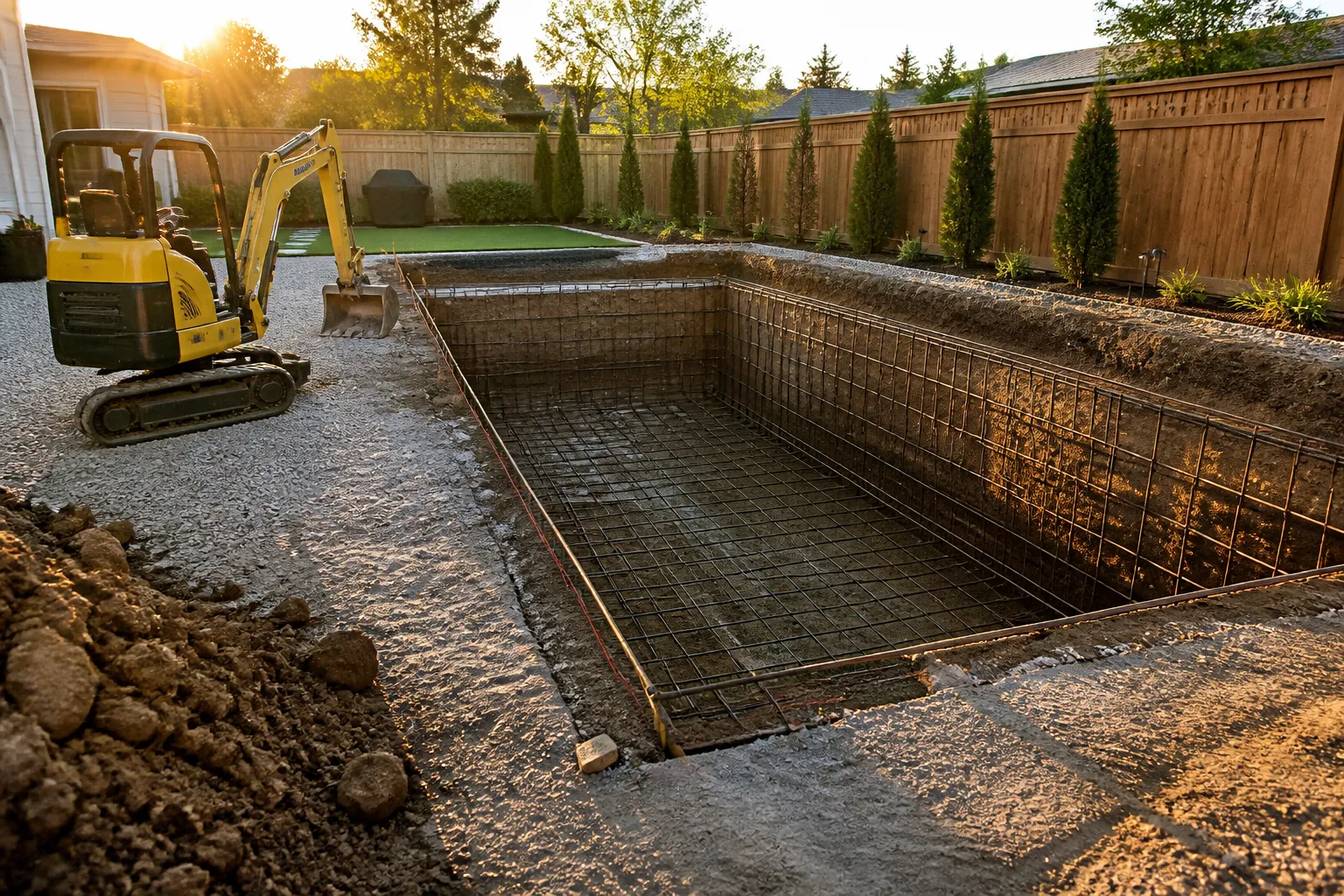
How much should you plan to spend on a backyard pool, and what will you still be paying for after the last shovel of dirt is gone? The honest answer is a wide range. Published estimates put the typical cost of building a pool at about $1,800 to $58,540, with a national average near $36,730. Those figures come from a guide last updated May 29, 2024, so treat them as a starting point and not a quote. This is general information only, not personal financial advice. A licensed local contractor can price your actual yard.
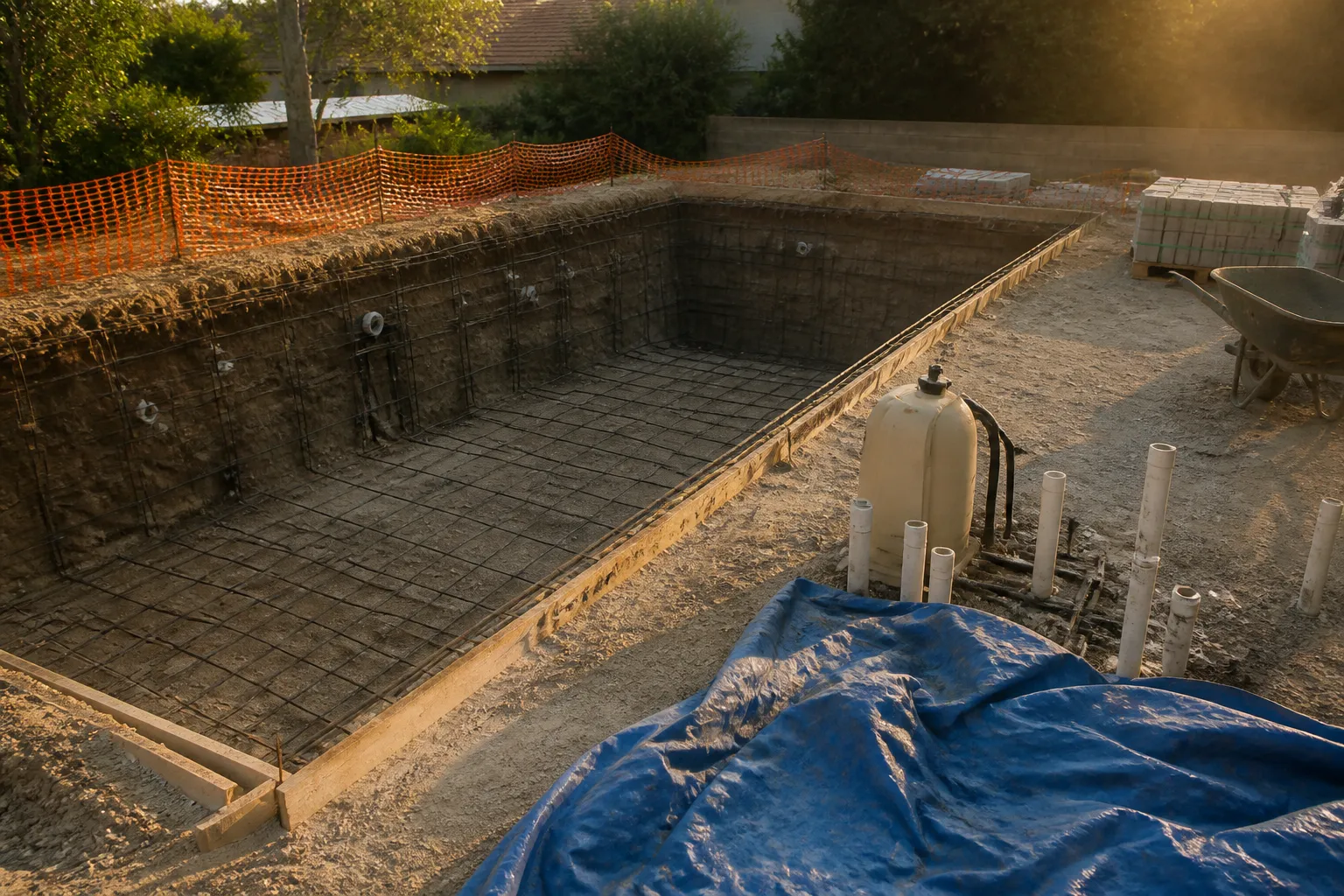
The gap between $1,800 and $58,540 is huge, and it has reasons. The low end usually reflects small, simple designs with basic materials. The high end reflects larger pools, complex shapes, and heavy excavation or finishing work. Custom pools with luxury add-ons can reach $125,000 or more. Costs also vary by state and by local labor and permit rules. The sources do not say by how much, so your area may run well above or below the national average.
What drives the price
Before you call anyone, it helps to know which choices move the number. A rectangular pool with straight walls is generally simpler to build than an irregular shape with built-in features. Beyond shape, the main cost factors named in published guides are:
- Pool size, shape, and type
- Materials
- Location and access to the yard
- Labor and permits
- Amount of excavation needed
- Filter type and pump type
Access is worth a thought. A crew that cannot get equipment into the yard easily may spend more hours on the same hole, though the sources do not put a figure on that. Equipment matters too. The filter and pump you pick affect the upfront cost and likely how the system performs over the years, so ask each builder exactly which models are in the quote.
Maintenance is a separate budget line
An installation quote covers building the pool. It does not cover living with it. Typical yearly maintenance runs about $80 to $1,050, and the national average for pool cleaning alone is about $270. What you land on depends on:
- How often service is done and what kind
- The pool's size
- Its type and material
- Any repairs that come up
- Local labor rates
Owners often split the work. They handle daily tasks themselves and hire a professional for harder jobs such as vacuuming or adding chemicals. Professional service is often cited for better water quality, less water loss, improved safety, and better appearance. It can also save you time and energy.
A ten-year picture using the published ranges
Numbers are easier to judge when you stretch them over time. Take the national average build cost of $36,730. Add the low end of yearly maintenance, $80, for ten years. That is $800, for a rough total of $37,530. Now use the high end, $1,050 a year. Ten years comes to $10,500, and the total climbs to about $47,230.
The same pool, then, can cost roughly $9,700 more over a decade depending on how much upkeep it needs. That is a simple multiplication of the published ranges, not a forecast. It leaves out repairs that fall outside the yearly range, utility bills, insurance, and anything else the sources do not cover. Still, it shows why a cheaper build with costly upkeep may not be the bargain it looks like, and why the reverse can also hold.
How to approach choosing an installer
Building a pool is complex and time-consuming. Sources generally say it is best left to experienced professionals. Doing it yourself is possible in principle, but it carries real risk and is rarely simple. So the practical question is how to pick well. A sensible order looks like this:
- Write down your budget for both installation and yearly upkeep.
- Gather more than one written estimate from local builders.
- Compare what each estimate covers, including excavation, equipment, and finishing.
- Weigh the installation price against the expected maintenance cost over several years.
The third step is where most confusion starts. Two quotes can differ by thousands of dollars because one includes a pump and filter upgrade and the other does not. Line the quotes up item by item. If one is missing a line the others have, ask why before you assume it is cheaper. Ask for everything in writing, and be wary of any price that is only good this week.
What the published numbers do not tell you
The sources behind these ranges leave real gaps. They do not break costs down by pool type, such as inground, above-ground, vinyl, concrete, or fiberglass. They do not explain permits, inspections, contract terms, payment schedules, or warranties. They also offer no state-by-state breakdown. The figures are also more than a year old, and prices may have moved since.
That means some homework falls to you. Contact your local building department about permits and inspections. Check with your state licensing board about how to verify a contractor's license, and ask about insurance. Then bring those answers to a licensed professional before you sign anything. For further reading, see the build cost guide and the maintenance cost guide behind the figures above. Both are consumer home-improvement sites, so use them for a rough range and not as a final word.
Sources
- How Much Does an Inground Pool Cost? (2026 Guide)
- Outdoor Living Trends 2025
- How Much Does It Cost to Build a Pool? - Bob Vila
- How Much Does It Cost to Maintain a Pool? - Bob Vila
- Remodeling Impact Report: Outdoor Features
- Homeowners’ Zeal for Curb Appeal May Pay Off Handsomely
- https://vertexaisearch.cloud.google.com/grounding-api-redirect/AUZIYQHkJ_HzlfldsQmEkCwqLYVLwnSkJrDh12UO6pc6gkeI1pxdyhRBtXMVtk5sz_8EzbHmRMkcdWfubeDOF366O2ByxsqUBhiF0EYsdO5tSOEkZ8tCLQDxfoWecYzR4vOT7bJdZKOCobiH59StkN-rz8AYBZ6dXcOVgSVyOOWackenLrcLBNq4O2cafyOQhc_TnGZOljTWRXA0bq7_JxokQHab5AybiQ4=
Still have a question?
Related guides
-

Upgrading to 200 Amps Without the Surprise Bill
Panel costs are only part of the story, so here is what a 200 amp upgrade typically runs, what can get added on, and what to ask before you sign.By Neil Ostrander
-

Tank or Tankless? How to Compare Water Heater Bids on Equal Terms
Learn how tank and tankless units differ, and which details a written plumber's quote should spell out so three bids can be compared fairly. By Renata Okafor
-

Find the Water First: A Practical Guide to Deciding on Mold Testing and Cleanup
Before anyone runs a sample or quotes a job, the moisture source and the size of the visible patch settle most of the decision. By Gideon Aldaine