What a Concrete Driveway Replacement Really Costs and How to Compare Quotes
Published price ranges vary widely, so this guide breaks down the per-square-foot numbers, the factors that move a bid up or down, and the checklist to use before signing.
 By Gideon Aldaine ·
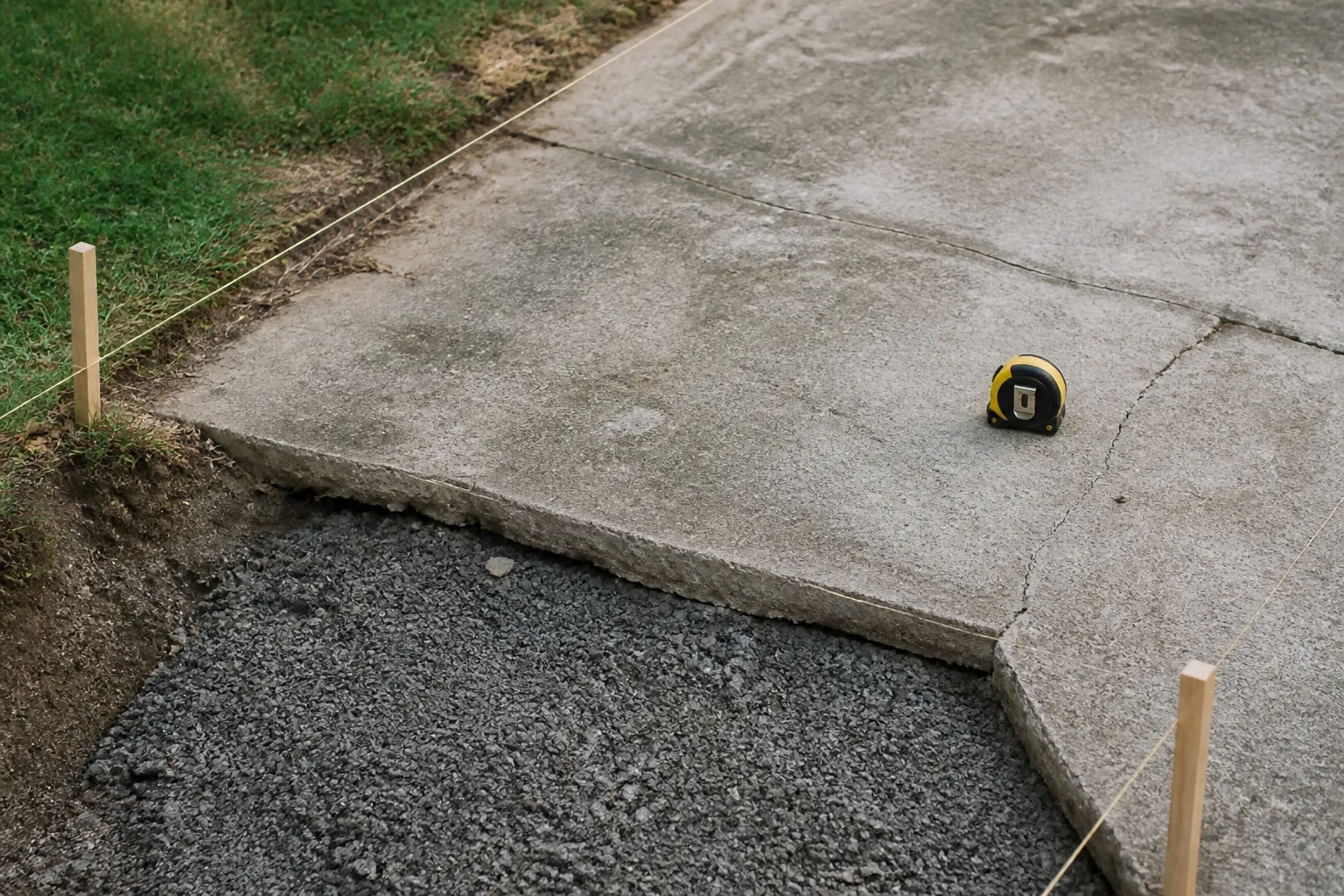
How much should you expect to pay when the old slab is cracked, heaved, and past patching? Most published guides land somewhere between a few thousand dollars and well over ten thousand, and the gap comes down to size, thickness, finish, and how much work the ground underneath needs. This guide walks through the numbers, the price drivers, and the questions worth asking before you sign anything. It is general information only, not personal financial or construction advice, so a licensed local contractor is the right person to price your actual site.
Plain gray concrete commonly runs about $5 to $8 per square foot. Decorative work can run from $8 to $21 or more.
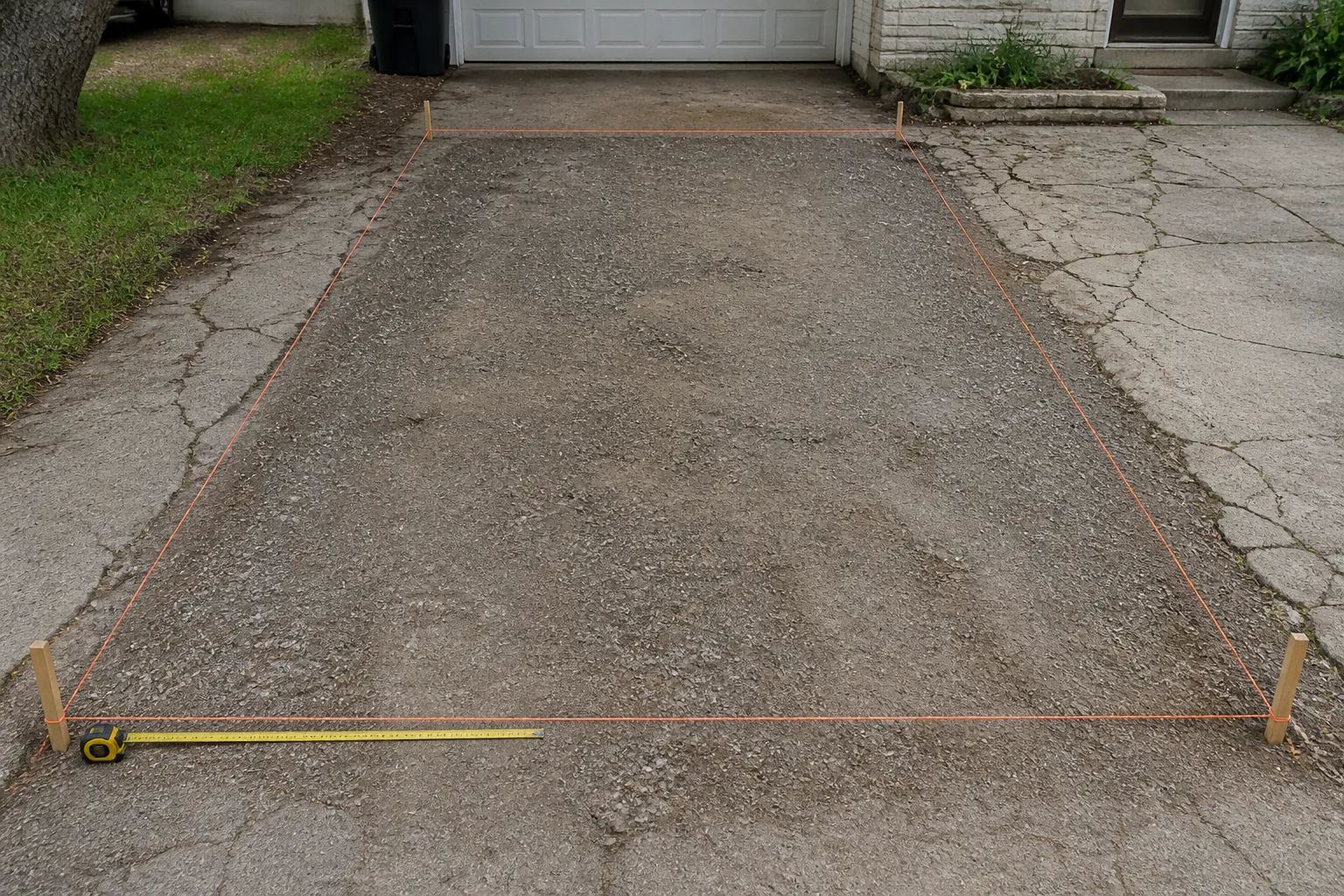
What national cost ranges show
Published guides give a wide spread. Concrete Network reports a national total of about $3,200 to $13,000 for a concrete driveway, with decorative colors and finishes pushing toward the top. Bob Vila gives a more basic range of $1,800 to $6,000, with a national average near $3,000. A general driveway paving guide from the same publisher, which covers all materials and not just concrete, lists $2,500 to $7,028.
Contractors often quote by the square foot, and that is the number that makes bids comparable. Concrete Network breaks it into tiers:
- Plain: about $5 to $8, traditional gray with a broom finish.
- Basic: about $8 to $14, with one coloring method, a texture, exposed aggregate, or a simple border.
- Mid-range: about $14 to $21, with stamping, engraving, or multiple colors.
- High-end: $21 and up.
One Atlanta contractor blog cites a national benchmark of roughly $9.50 per square foot, within a broad range of about $4.50 to $14.50. A Florida guide for 2026 puts replacement at $5 to $18 per square foot, with a standard two-car driveway around $5,400 to $8,600. These are national or regional averages from sources dated 2024 through 2026. None is state-specific, so use them as a rough budget before you collect local quotes.
What drives the price up or down
Several things move the total, and it helps to check them one at a time.
- Size and thickness. More area and a thicker slab mean more concrete and more labor. A driveway that carries heavy vehicles is often poured thicker than a walkway.
- Shape. Curves, angles, and tight turns take more forming and cutting than a plain rectangle.
- Finish. A broom finish is the cheapest. Color, stamping, borders, and exposed aggregate add material and crew time.
- Site preparation. Removing the old slab, hauling debris, grading, compacting the base, and fixing soft soil all cost money before any concrete arrives.
- Reinforcement and delivery. Steel may be included or priced as an add-on, and ready-mix suppliers can add a short-load surcharge.
Small jobs feel this most. Forming, setup, and crew time are fixed costs, so a small pour often costs more per square foot than a large one. One source contrasts a six-inch stamped driveway over weak soil with a four-inch plain driveway on stable ground. They are very different projects, even at the same footprint. Truck access and disposal can also add time.
How to read and compare a contractor quote
A quote you can trust usually splits the job into line items, so you can see where the money goes. Before comparing bids, check that each one states:
- Measured area and slab thickness
- Finish type and sealing
- Reinforcement method
- Demolition and haul-off scope
- Base preparation and any drainage allowance
- Control joints and cleanup
- Delivery charges, including short-load fees
The lowest total is not always the best value. A bid that leaves out demolition, weak-subgrade correction, drainage, or reinforcement can look cheap and then grow through change orders. Ask every contractor to put the scope in writing so the proposals line up side by side. If a bid is a lump sum with no detail, ask for the breakdown first.
A simple question list helps. Is demolition included? Who corrects the base? Is rebar in the price, or an add-on? Are delivery and short-load charges covered? Does the price include sealing, cleanup, and control joints? Vague answers, or a quote that never mentions thickness or base prep, are red flags. So is a driveway over soft or washing-out soil with a quote that shows no extra prep.
Replacement versus repair
Not every bad driveway needs to come out. Isolated cracks or one small problem can often be repaired. Replacement is more often suggested when you see multiple potholes, cracks that connect, ongoing drainage trouble, or repeated repairs of different kinds. Because replacement adds demolition and base work, it usually costs far more than patching.
So ask the contractor why replacement is needed and what is wrong underneath the slab. A good answer points to the condition of the concrete and the soil. Some experienced homeowners consider doing the pour themselves, but one major guide notes that most people will want a professional for speed, safety, and thoroughness, especially with grading, reinforcement, and drainage involved.
Gaps and what to verify locally
The sources reviewed here do not give state-by-state prices, and none of these figures is a quote for your property. They also do not cover permit rules, licensing, or building code requirements, which vary by city and state. Your local building department and state contractor licensing board are the places to check.
Contract terms, warranties, payment schedules, and how to verify a contractor's insurance and credentials are not covered either, so confirm those directly before signing. The same goes for expected service life, comparisons with asphalt or pavers, and any financing or tax questions. For those, a licensed professional or tax adviser is the right call. Gather several current local quotes, then run each one through the checklist above.
Sources
- How Much Does a Concrete Driveway Cost? 2026 Prices - Concrete Network
- Cost to Install a Concrete Driveway in Atlanta | Atlanta Concrete Solutions Blog
- Cost to Replace a Concrete Driveway in FL (2026 Guide)
- Driveway Repair and Replacement: Options & Costs - This Old House
- Determining Which Driveway Surface is Best for You - This Old House
- Planning Driveways and Sidewalks - This Old House
- Concrete Driveway Installation Cost: A Budget Guide
- How Much Does It Cost to Pave a Driveway? A Budget Guide
Still have a question?
Related guides
-

Upgrading to 200 Amps Without the Surprise Bill
Panel costs are only part of the story, so here is what a 200 amp upgrade typically runs, what can get added on, and what to ask before you sign. By Neil Ostrander
-

Tank or Tankless? How to Compare Water Heater Bids on Equal Terms
Learn how tank and tankless units differ, and which details a written plumber's quote should spell out so three bids can be compared fairly. By Renata Okafor
-

Find the Water First: A Practical Guide to Deciding on Mold Testing and Cleanup
Before anyone runs a sample or quotes a job, the moisture source and the size of the visible patch settle most of the decision.By Gideon Aldaine