What a Fence Really Costs: Benchmarks, Hidden Fees and What to Ask Before You Sign
National averages give a useful starting point, but material, yard size, permits and local labor rates decide what your fence will actually cost.
 By Gideon Aldaine ·
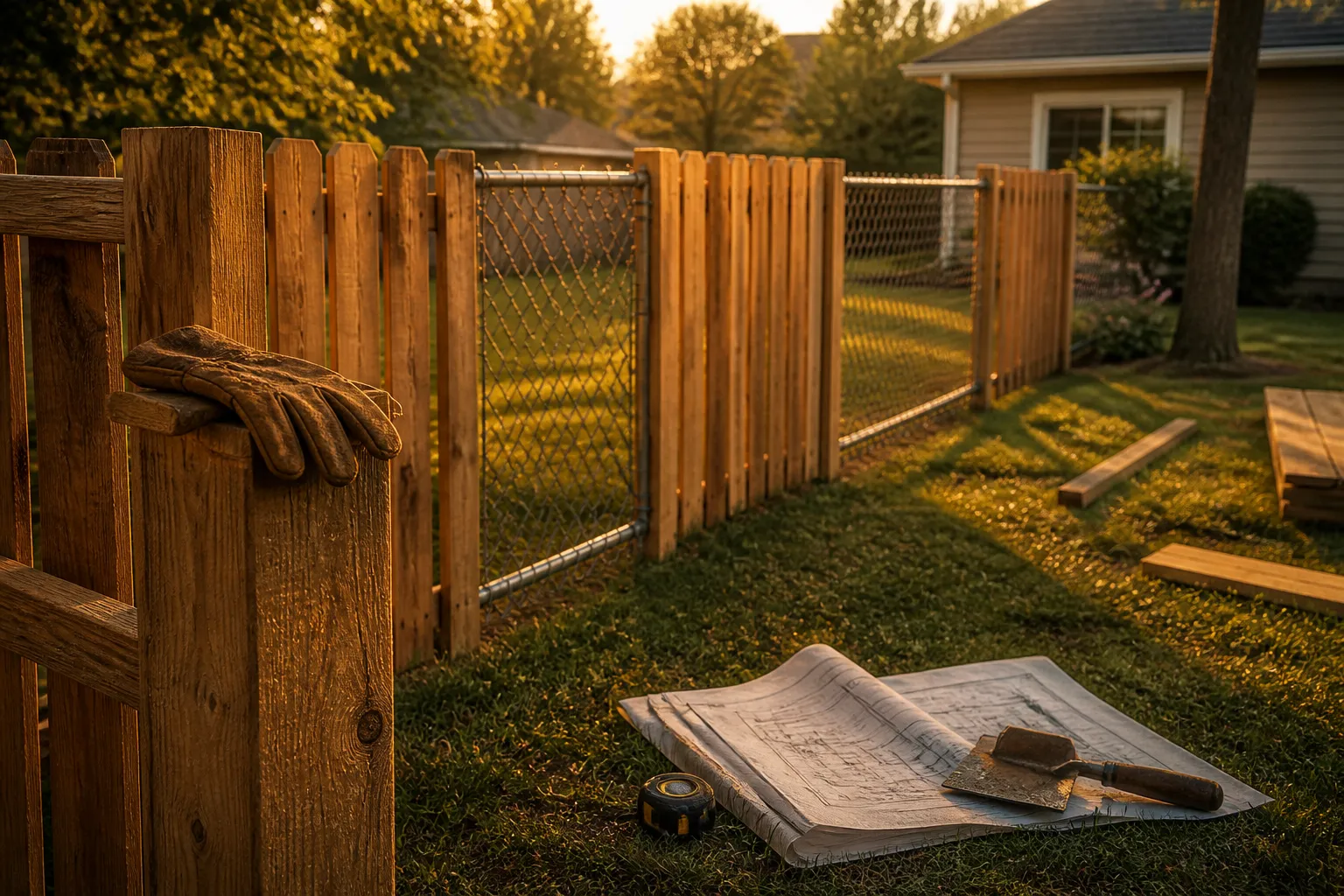
Wondering what a fence will actually cost you? The short answer is that published figures often land between $20 and $60 per linear foot fully installed, but your yard, your material and your state can move that number a long way. This guide walks through the benchmarks, what pushes the price around, what quotes tend to leave out, and what to ask before you sign. It is general information, not personal financial advice, so check your own numbers with licensed local professionals.
What fences typically cost in the US
Start with the per-foot view, because it is the easiest way to compare materials. One national guide puts fully installed fencing at roughly $20 to $60 per linear foot. Chain link starts near $8 per foot, and wrought iron can pass $100 per foot. Those are broad benchmarks, not quotes, and different sources blend materials and labor in different ways.
Total-project averages disagree too, which is a useful lesson in itself. Bob Vila's guide cites an average of about $3,059, with a typical range of $1,743 to $4,431. HomeAdvisor's 2026 page gives a normal range of $1,860 to $4,843 and an average of $3,277. Neither is wrong. They simply measure slightly different slices of the market.
Yard size gives a better sense of scale. One installer guide offers these ballparks:
- Small yard, about 100 linear feet: $2,000 to $4,000
- Average yard, about 150 linear feet: $3,000 to $6,500
- Large yard, 200 linear feet or more: $5,000 to $12,000 or more
HomeAdvisor's overall homeowner range is much wider, from $425 to $13,700. Costs vary by state and by situation, so treat every figure here as a starting point.
What drives the price up or down
Material is the biggest single driver. After that come total length, site conditions and where you live. Two fences of identical length can land thousands of dollars apart if one is chain link and the other is ornamental metal.
Height and post spacing matter as well. A taller fence needs more material and extra structural support. Closer post spacing means more posts and more labor. When two quotes look alike on the surface, these are the details that often explain the gap.
Labor rates and contractor pricing also shift through the year and between regions. That is why any number you read, including the ones above, is a planning benchmark and not a fixed price. The sources reviewed give national figures without state breakdowns, so your own state may sit above or below them.
Costs that are easy to miss
Many a budget is blown by items that never appeared in the first estimate. HomeAdvisor lists several to plan for beyond materials and labor:
- Permits
- Land surveys
- Removal of an old fence
- Site preparation
None of the sources reviewed give local permit fees or survey prices, so call your building department and ask what applies in your town. Doing that before you hire anyone keeps the surprises small.
Gates and specialty features are another gray area. In many cases they are priced separately, and the sources do not break them out in detail. Ask whether gates, hardware and any ground work are inside the total before you compare two bids.
How to compare estimates and what to ask
National averages do not reflect your local material and labor prices, so gather several written estimates. Make them comparable by holding four things steady: fence type, height, approximate length and included work. Then ask for an itemized quote based on a measurement of your actual property.
Here is a short checklist to bring to each conversation:
- Is the price per linear foot or a total project figure, and what length does it assume?
- Does it include permits, a land survey, removal of the old fence and site preparation?
- How are height and post spacing handled in the price?
- Are gates and hardware included?
- How will the posts and structure be anchored?
That last question deserves a moment. Secure anchoring affects how a fence holds up over time, and a professional installer should be able to explain the method plainly.
Red flags
Be wary of any estimate built only on a single national range with no local measurement. Also watch for quotes that quietly leave out permits, surveys, removal or site prep. Either one can make a low number misleading.
What the sources do not cover
A few gaps are worth naming. The sources give no state-by-state ranges and no local permit fees, so you will need to check your own state and city. The Bureau of Labor Statistics publishes occupational data for fence erectors, but its labor figures were not extracted here, so it is best used as general labor-market context and not as a price benchmark.
Long-term maintenance and lifetime cost comparisons between materials are also not covered. A lower upfront price may cost more in upkeep later, so weigh that before you decide. For anything specific to your property, a licensed local contractor or your municipality can give answers this guide cannot.
Sources
- Fence Erectors
- Average Fence Cost Per Foot in 2026: Prices by Material & Region
- Fence Installation Cost: What Homeowners Should Expect
- How Much Does It Cost to Install a Fence? [2025 Data]
- What Is The Average Fence Replacement Cost in? What Homeowners Should Really Expect - Fantastic Fence
- Fence Cost Calculator — Estimate Installation Cost Per Foot
Still have a question?
Related guides
-

Upgrading to 200 Amps Without the Surprise Bill
Panel costs are only part of the story, so here is what a 200 amp upgrade typically runs, what can get added on, and what to ask before you sign. By Neil Ostrander
-

Tank or Tankless? How to Compare Water Heater Bids on Equal Terms
Learn how tank and tankless units differ, and which details a written plumber's quote should spell out so three bids can be compared fairly. By Renata Okafor
-

Find the Water First: A Practical Guide to Deciding on Mold Testing and Cleanup
Before anyone runs a sample or quotes a job, the moisture source and the size of the visible patch settle most of the decision.By Gideon Aldaine