What a Home Standby Generator Really Costs, and Why Quotes Vary So Much
Installed prices range widely, so a line-by-line checklist of size, electrical and gas work, and ongoing upkeep will help you compare quotes fairly.
 By Renata Okafor ·
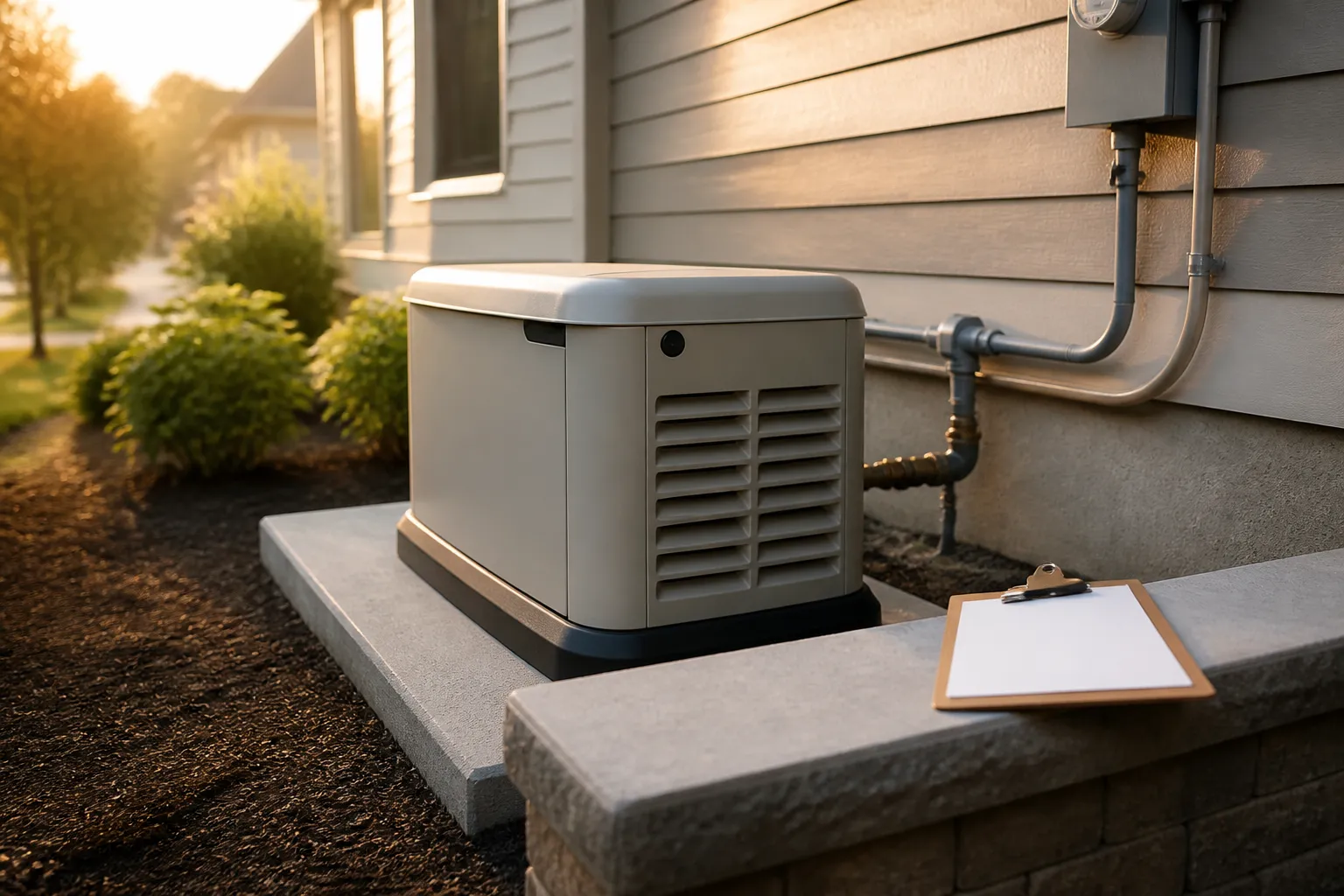
How much should you expect to pay to put a generator beside your house, and why do the quotes you find online seem to disagree by thousands of dollars? The short answer is that a whole-house standby system usually lands somewhere between about $5,000 and $25,000 installed, depending on size, fuel, distance and local rules. The longer answer is below, organized so you can use it as a checklist when quotes start arriving. This is general information only, not personal financial or legal advice, so check details with a licensed professional in your area.
What a Home Generator Typically Costs
Published numbers vary a lot. One consumer guide, updated in mid-2024, puts a typical whole-house generator between roughly $1,500 and $8,700, with an average near $5,100. A 2025 regional estimate for the Boulder and Denver area runs much higher, about $8,000 to $20,000 or more installed. Another source describes a common quote range of $7,000 to $25,000 or more for a whole-home standby system. The gap comes from different years, different regions, and whether labor, permits and gas work are counted.
Before you compare any two figures, ask yourself three things:
- Is this the price of the generator alone, or the full installed system?
- Does it include permits, the transfer switch and gas work?
- What state and year is it from?
One estimate puts the unit alone at about $3,000 to $12,000 and installation at a similar range, so the final bill can be roughly double the equipment price. Costs also vary by state, local labor rates, permit fees and utility requirements. The sources reviewed here do not break out state-by-state figures, so treat any national range as a starting point and get local quotes.
What Drives the Price
Size comes first. Generators are rated in kilowatts (kW), and a 2025 regional price list shows the pattern clearly:
- 10 to 12 kW: about $2,800 to $5,200
- 16 to 20 kW: about $4,200 to $7,200
- 22 to 26 kW: about $5,800 to $9,200
- 30 kW and up: about $7,500 to $18,000 or more, depending on brand
Larger homes, central air conditioning and pools usually push you toward the bigger end.
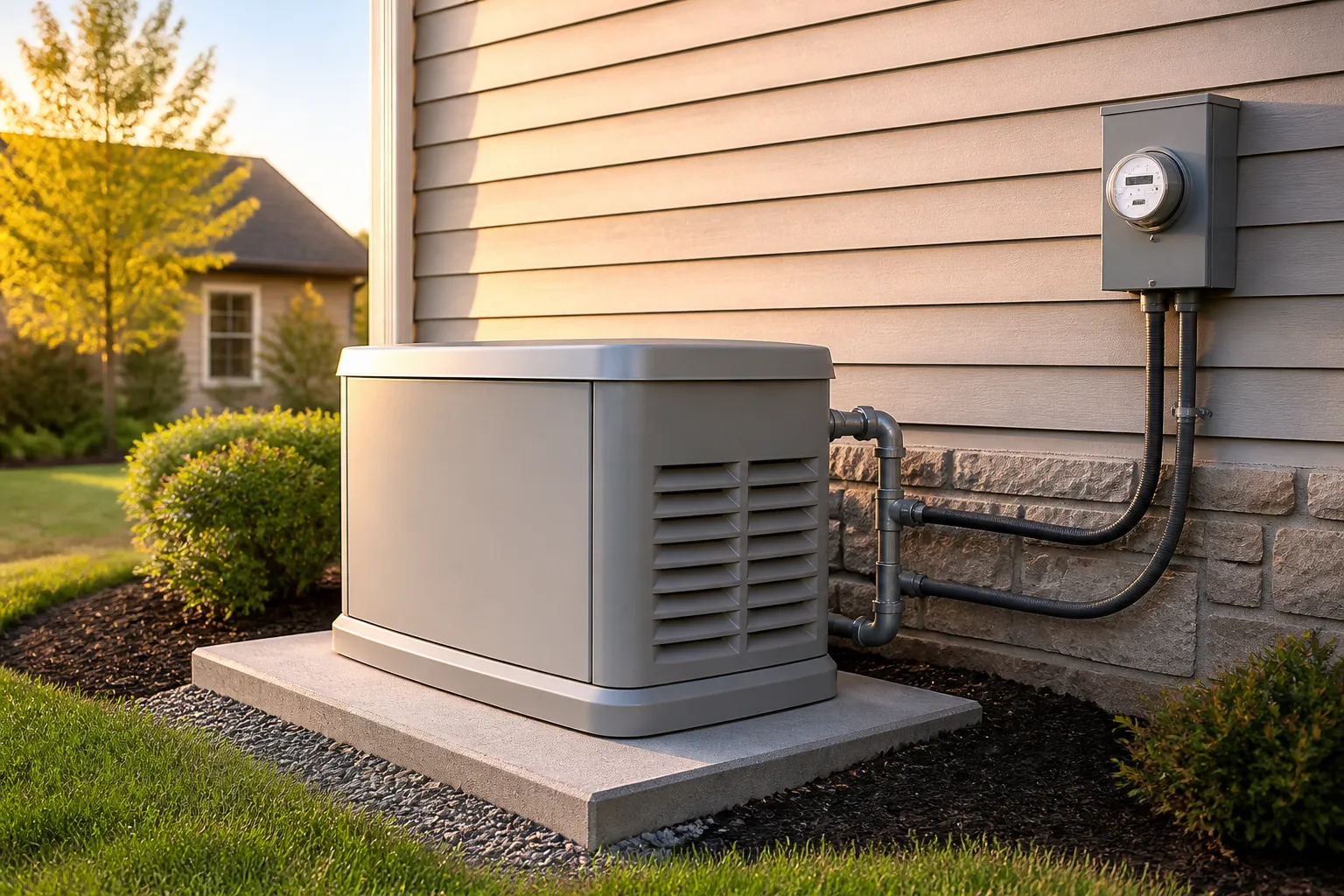
Electrical work is often the second-largest line. The same source estimates $2,500 to $4,500 for the transfer switch (about $800 to $1,500), panel changes ($500 to $1,200), code upgrades ($300 to $800) and permits ($200 to $500). The transfer switch is the part that senses an outage and moves your home's load onto the generator, so it is not optional.
Fuel supply adds more. Gas line installation is often estimated at $1,200 to $3,500. Extending a natural gas line may run $15 to $25 per linear foot, and a meter upgrade, if your utility requires one, can add $500 to $1,200. Distance matters too. Each extra 50 feet from the electrical panel can add $300 to $600, and from the gas meter $400 to $800. A concrete pad and placement typically add $800 to $2,000.
How Installation Works and What Should Be Included
A standby generator is permanently installed outside and starts on its own when the power drops. A portable unit has to be wheeled out, started and connected by hand. That convenience is why standby systems cost more. Most home units run on natural gas, propane or gasoline, and the fuel you pick changes both the purchase price and the running cost, so decide early.
A professional job typically follows these steps:
- Site assessment and sizing to your actual loads
- Written quote
- Permitting and code compliance
- Site preparation and pad
- Electrical and gas hookups
- Commissioning and safety testing
- Walk-through and owner training
Ask the installer to confirm in writing which of these are included. Battery backup is a separate product category. One source suggests a 5 to 10 kWh battery may cover critical circuits, while whole-home coverage can take 15 to 30 kWh or more. Compare batteries on their own terms rather than against a generator's sticker price.
Running Costs and Long-Term Ownership
The purchase price is only part of the story. One estimate puts fuel at roughly $25 to $150 per day while a standby unit runs, plus $300 to $600 per year for maintenance such as oil changes, filters and an inspection. Actual fuel use depends on how often the power fails and how much you load the unit.
So compare several years of ownership, not just day-one cost. Ask the installer and the manufacturer:
- What is the expected lifespan?
- What do typical repairs cost?
- Is a maintenance plan required to keep the warranty valid?
Sources on these points are thin. Financing, tax incentives and utility rebates may exist in some places, but the material reviewed here offers little detail. Check with your state, local government and utility before counting on any of them.
How to Choose an Installer and Spot Red Flags
Start with sizing. Decide whether you want essential circuits only (refrigeration, heating, lighting, a few outlets) or the whole home, including large air conditioners or pool equipment. Oversizing adds cost. Undersizing leaves important circuits dark. A standby unit makes particular sense if you work from home, face frequent severe weather, or rely on a sump pump or electric medical devices.
Then put these questions to every installer:
- Is the quote written and itemized, with the transfer switch, electrical work, gas work, permits and pad listed separately?
- Who pulls the permits, and will the work meet local code?
- How far is the site from the electrical panel and gas meter, and what does each extra foot add?
- Does the price include commissioning, safety testing, training and warranty registration?
- What maintenance plan and annual cost apply?
Verify licensing and insurance yourself with your state contractor licensing board or local authority, not from an ad. Watch for these red flags:
- Anyone suggesting you do the fuel or electrical hookups yourself. One installer says these are not legal or safe for homeowners.
- Guaranteed return-on-investment claims, which appear in sponsored content and are not independent evidence.
- Pricing that comes mainly from lead-generation or "free estimate" pages. Several sources reviewed here were sponsored or affiliate content.
Prices change, and the sources here disagree on dates and ranges. Gather at least a few local, itemized quotes, and consider a licensed electrician or contractor for advice on your specific home.
Sources
- How Much Does a Whole-House Generator Cost to Install?
- Whole House Generator Cost (2026): Install & Operating | Willow Home
- With Up to 150 Percent ROI, This Home Amenity Practically Pays for Itself
- Generator Installation Costs, Process & Benefits | Paschal
- How Much Does a Whole-Home Generator Cost in the US - Anker SOLIX US
Still have a question?
Related guides
-

Upgrading to 200 Amps Without the Surprise Bill
Panel costs are only part of the story, so here is what a 200 amp upgrade typically runs, what can get added on, and what to ask before you sign. By Neil Ostrander
-

Tank or Tankless? How to Compare Water Heater Bids on Equal Terms
Learn how tank and tankless units differ, and which details a written plumber's quote should spell out so three bids can be compared fairly.By Renata Okafor
-

Find the Water First: A Practical Guide to Deciding on Mold Testing and Cleanup
Before anyone runs a sample or quotes a job, the moisture source and the size of the visible patch settle most of the decision. By Gideon Aldaine