What a Skylight Really Costs and How to Hire the Right Installer
A practical guide to skylight prices, the installation details that drive them, and the questions that separate a careful installer from a careless one.
 By Renata Okafor ·
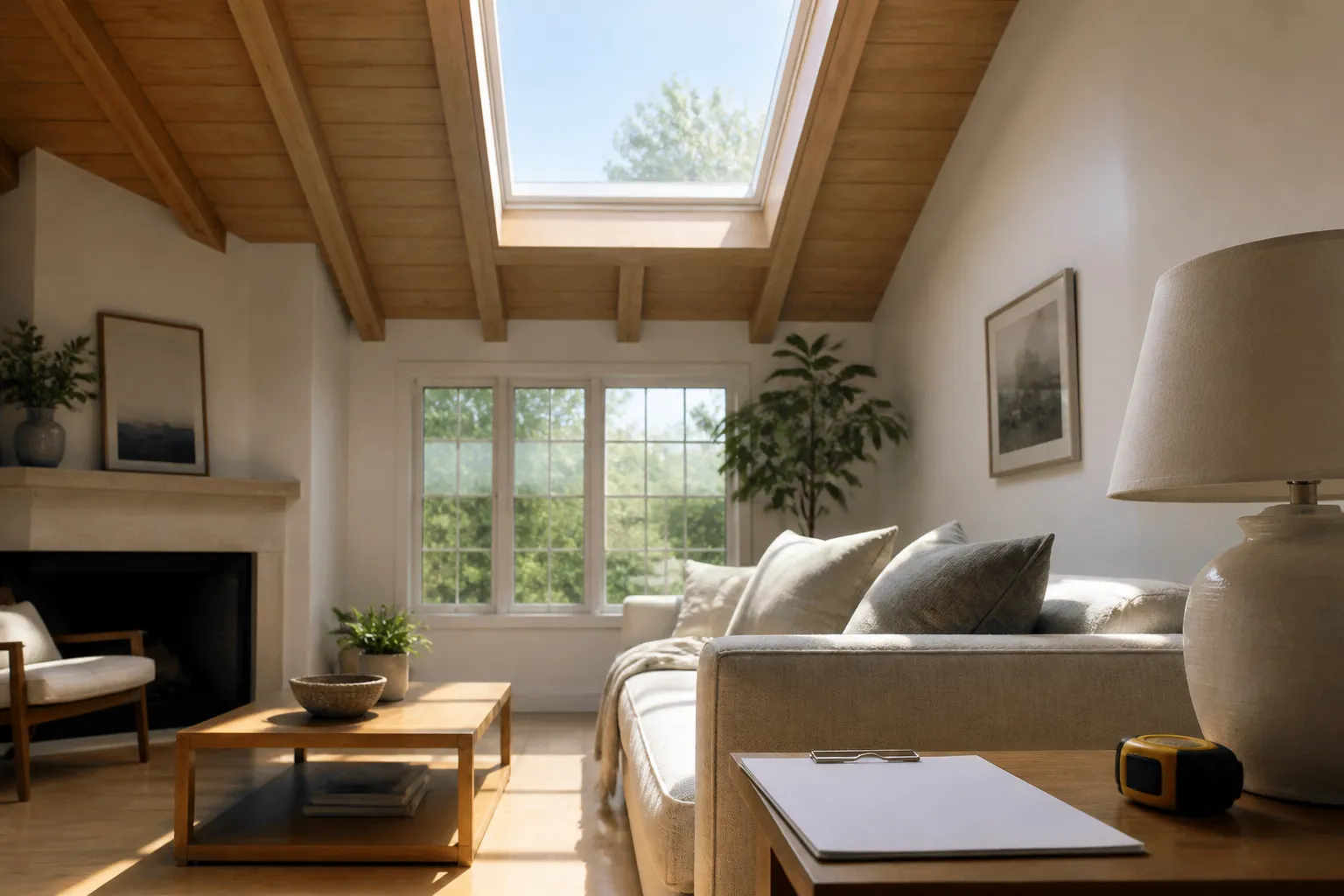
Thinking about adding a skylight and wondering what number to expect on the quote? Most homeowners want three answers before they call anyone: what it costs, what changes the price, and how to tell a careful installer from a careless one. This guide walks through each in order, with a short checklist at the end of every section. It is general information only, not personal financial, tax or legal advice, so confirm details with a licensed professional.
What skylights typically cost
Price depends first on the type of unit. The ranges below are installed costs for the United States, and they come from a contractor-network article and a window manufacturer's blog, not from a government or professional-body source. Costs vary by state, roof type and project, and the sources do not say by how much. Treat these as a starting point.
- Fixed skylight (sealed, does not open): about $1,500 to $4,500 for a standard unit. It has no moving parts, so it is the least expensive full-size option.
- Venting skylight (opens by hand or motor): about $3,500 to $8,500. The gap reflects added hardware, and motorised models sit near the top.
- Tubular skylight (small dome and reflective tube): about $600 to $1,100, and it often needs no structural framing.
Get at least three local quotes and ask each installer to itemise labor, the unit, flashing and any framing. The sources do not give a clear labor-versus-materials split, so the itemised quote is how you find it.
How the installation works and what drives cost
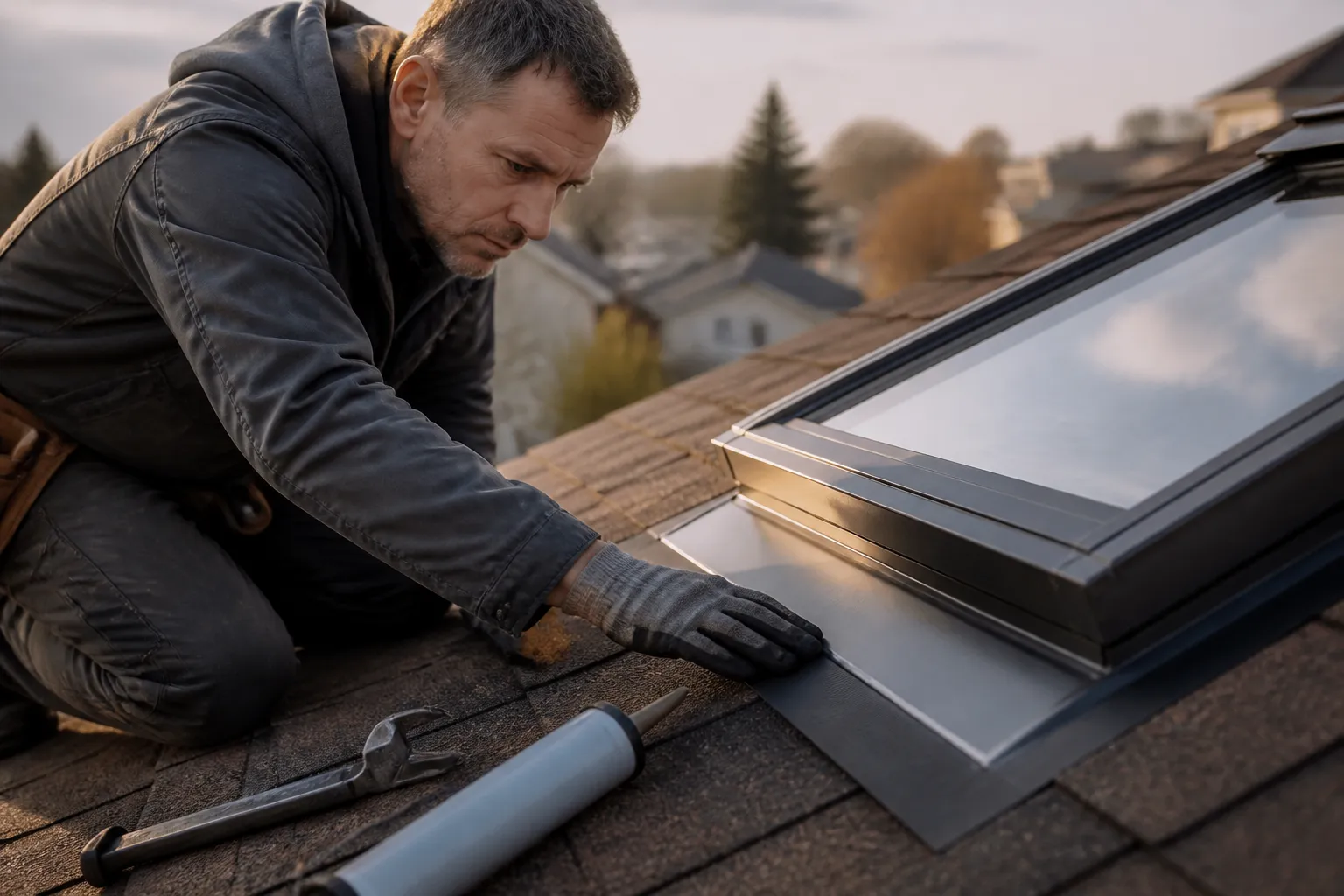
A skylight is a hole in your roof, and the flashing around it is what keeps water out. Poor flashing is a common route for leaks that reach the attic and cause real damage. That is why the roof work matters as much as the glass.
For a curb-mounted replacement, the steps look like this:
- Cut back shingles and underlayment only as far as needed, about 2 inches from the curb at the sides and 3 inches at the top and bottom, to expose the roof deck.
- Wrap the sill and jamb with self-adhered membrane, tucked below the shingles and above the underlayment.
- Cut diagonal slits in the underlayment at the head so the membrane sticks directly to the deck.
- Weave step flashing into each shingle course along the curb.
That last step is widely described as the most important factor in a leak-free install. Surface-mounted tape alone is a weaker approach. Deck-mounted units need a larger cutaway than curb-mounted ones, which generally adds labor.
Slope matters too. A standard deck-mounted skylight needs about 15 degrees, roughly 3:12. Low-slope roofs generally need a curb mount and at least 2 degrees of slope for drainage. Beyond that, cost moves with framing work, the size and number of openings, roof material, access, and whether you are cutting a new opening or replacing an old one.
Federal tax credits and their current status
One manufacturer source says exterior windows or skylights that meet Energy Star Most Efficient criteria may earn a credit of up to 30% of cost, capped at $600. An overall annual limit of $3,200 applies across qualifying improvements. You claim it on IRS Form 5695 with your return.
Here is the catch. Sources disagree on timing. One says the credit covers products installed through December 31, 2032. Another says federal energy credits expired December 31, 2025. The IRS page listed in our research did not settle it. Read the current IRS guidance on the Energy Efficient Home Improvement Credit and confirm with a tax professional before counting on savings.
- Ask for the efficiency certification in writing before you buy.
- Compare the full price first, then subtract any credit you can confirm.
How to choose a skylight type
Start with what the room needs, then look at price. A hallway or stairwell usually wants daylight, not airflow, so a fixed unit fits. It has no operating parts or gaskets, so it is generally less likely to develop operational leaks.
A kitchen or a hot upstairs room may justify a venting unit. You get ventilation, but you also get more mechanical parts, higher cost and more to maintain. Motorised versions add convenience and expense. For a closet, small bathroom or narrow hall, a tubular unit brings in light at the lowest cost and usually avoids major structural work.
- Name the room's purpose: light, air, or both.
- Pick the type that matches.
- If the credit matters to you, confirm Energy Star Most Efficient certification before ordering.
What to ask and what to watch for
Good questions are specific. Before signing, ask:
- Will flashing be woven into each shingle course along the curb, and will shingles be cut back only as little as needed?
- Is the unit curb-mounted or deck-mounted, and does my roof slope meet the manufacturer's minimum?
- What does the written warranty cover for the roof work, and what for the unit?
- Do you hold a roofing license, not only a general contractor license?
- How will permits and local code be handled?
The sources say little about licensing, permits or code, so call your local building department to check what applies to you.
Walk away or keep shopping if you see surface-mounted tape instead of woven step flashing, a plan that never mentions flashing, or a contractor with no roofing license. Be skeptical of dramatic leak statistics from sellers too. One figure, a 70% callback rate, came from a single contractor network and is unverified. Ask for references and recent completed jobs instead.
One last gap to note: the sources do not cover repair costs for existing leaks or the price difference between a new opening and a replacement. Ask your installer to quote those separately if either applies to you.
Sources
- Energy Efficient Home Improvement Credit | Internal Revenue Service
- 2024-2025 Energy Tax Credits: Which Home Improvements Qualify? - TurboTax Tax Tips & Videos
- Window And Skylight Tax Credit | Vector Windows
- Purchasing Energy-Efficient Residential Windows, Doors, and Skylights | Department of Energy
- Flashing around a Skylight without Roof Removal | Building Science Education
- How Much Does Skylight Installation Cost in 2026? (Expert Reviewed)
- Skylight Installation: Natural Light Solutions 2026
- Skylight Design and Costs for Adding or Replacing
Still have a question?
Related guides
-

Upgrading to 200 Amps Without the Surprise Bill
Panel costs are only part of the story, so here is what a 200 amp upgrade typically runs, what can get added on, and what to ask before you sign. By Neil Ostrander
-

Tank or Tankless? How to Compare Water Heater Bids on Equal Terms
Learn how tank and tankless units differ, and which details a written plumber's quote should spell out so three bids can be compared fairly.By Renata Okafor
-

Find the Water First: A Practical Guide to Deciding on Mold Testing and Cleanup
Before anyone runs a sample or quotes a job, the moisture source and the size of the visible patch settle most of the decision. By Gideon Aldaine