What Crawl Space Encapsulation Costs and How to Compare Quotes
Public sources give relative effort rather than price lists, so this guide shows what drives the bill and what to confirm in writing before you hire anyone.
 By Neil Ostrander ·
Are you trying to figure out what crawl space encapsulation should cost, and finding that quotes and web pages do not line up? You are not imagining it. The public guidance is thin on dollar figures, so this guide walks through what the sources do say, what pushes a price up, and what to confirm in writing before you sign anything. It is general information only, not personal financial, legal or medical advice, and costs vary by state and by house.
The most useful cost guidance from federal sources is a relative scale, not a price list. Treat it as a way to judge effort, then get written quotes for your own house.
What people mean by encapsulation
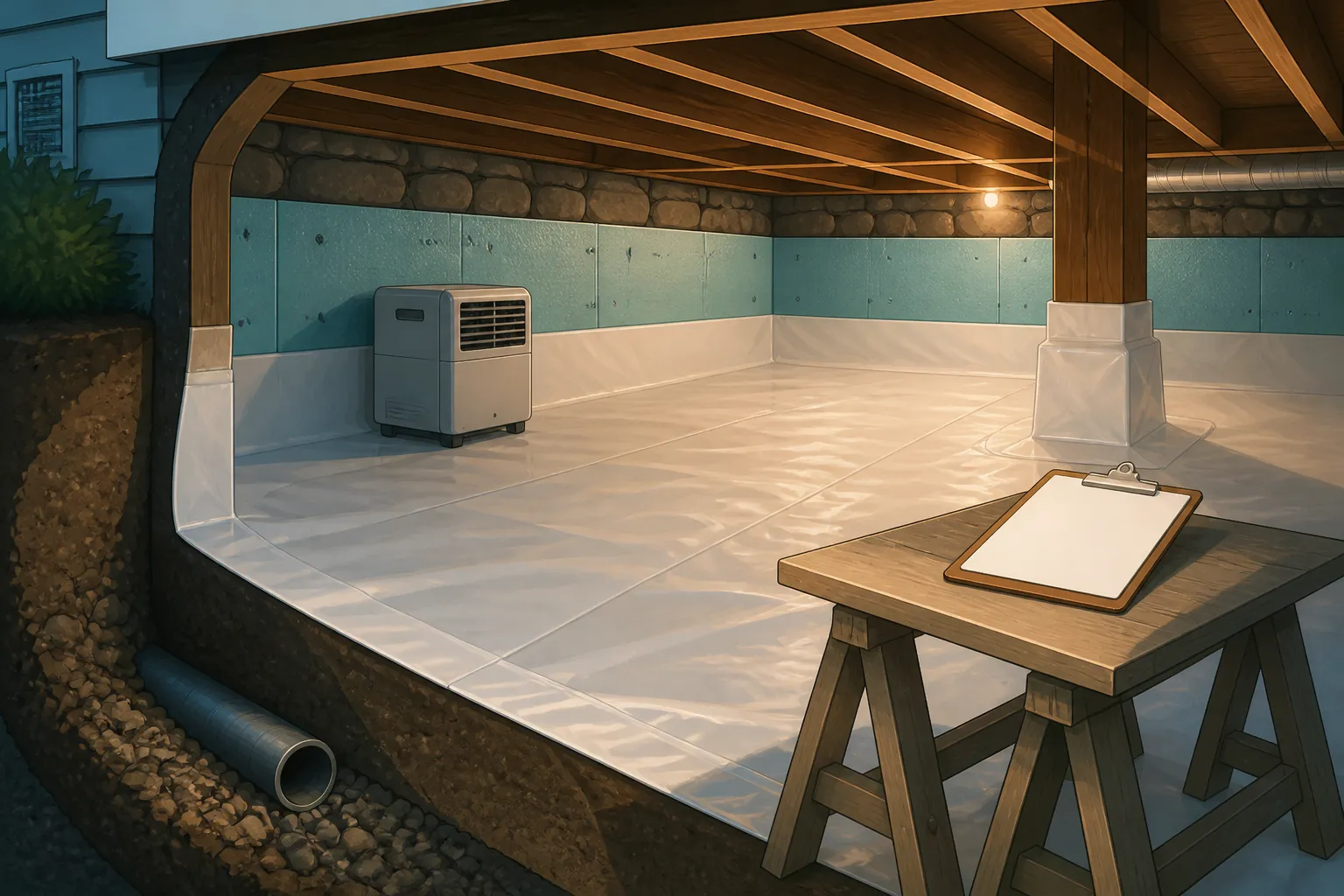
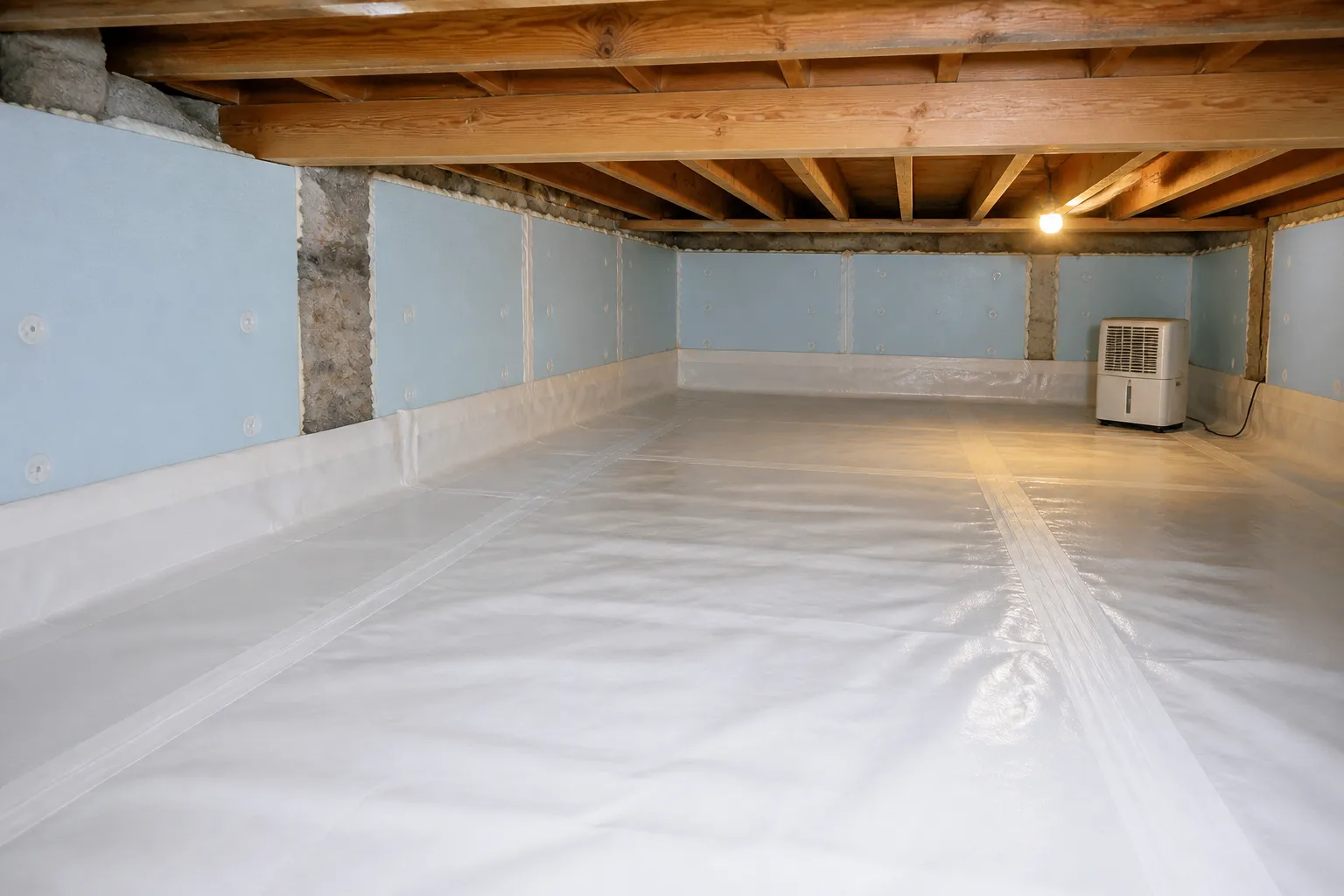
Contractors often say "encapsulation." The building-science sources used for this guide mostly say unvented, insulated crawl space instead. In that approach, the perimeter walls are insulated with rigid foam, and the crawl space becomes part of the home's conditioned space. If you search with both terms, you will find more reliable information, and you will be able to compare quotes that use different wording.
A related job is converting a vented crawl space to an unvented one. According to the Building America Solution Center, that conversion can reduce utility costs and improve comfort, indoor air quality and durability. Before you compare prices, settle one question: is your crawl space already vented, or is it something else? The scope changes, and so does the bill.
What the published cost guidance actually says
The most direct guidance is ENERGY STAR's effort chart for basement and crawl space air sealing and insulation. It uses dollar signs, not dollar amounts. Here is how it reads:
- Do-it-yourself: rated moderate to difficult, about 1 to 3 days, cost level $$$.
- Hiring a contractor: about 1 to 2 days, cost level $$$$.
- Key: $ means under $100, and $$$$$ means over $2,000. The levels in between are not defined.
So the sources do not turn those symbols into a price range for crawl space work, and they give no state-by-state breakdown. The chart also notes that results depend on the home's age, construction and condition, and on contractor estimates. Think of it as a sense of relative effort. A hired job costs more than a DIY one, and neither is a quote. Any dollar range you see elsewhere should be checked against written bids from licensed local contractors.
What affects the price
The work itself is a series of steps, and each one adds material and labor. Per the Building America guide, a typical job can include:
- Covering the floor and walls with a polyethylene vapor retarder.
- Fastening rigid foam to the walls with masonry fasteners and large button cap washers.
- Cutting foam to fit vent openings and sealing it with spray foam or caulk.
- Leaving a pest control inspection strip where local codes call for one.
- Insulating and air sealing access doors with gaskets or weather stripping.
- Sealing and insulating the band joist area, if suitable.
A crawl space with many vents, an awkward door or damaged areas will usually cost more than a simple, clean one. Conditions before the work matter too. The Department of Energy checklist calls for an inspection for bulk water, moisture and pest damage first. If problems turn up, they may need repair before any insulation goes in, and that cost sits on top of the insulation job. Ask for any problems to be listed in writing so you can see what is included and what is not.
Local code can change the scope as well. The guide recommends checking with local authorities that the rigid foam meets code. It also applies to crawl spaces with solid concrete walls, or concrete masonry units with a continuous brick cap or bond beam, so your wall type matters.
Choosing between DIY and a contractor
Start with an honest look at the effort chart. ENERGY STAR rates this as moderate to difficult for a homeowner, and it notes that a qualified home performance contractor can do the work. Then work through a short list:
- Check your climate. ENERGY STAR gives guidance by IECC climate zone.
- Confirm whether the crawl space is vented now.
- Call your local building department about foam and code requirements.
- Get more than one written quote, with the same scope on each.
The sources do not explain how to find or vet contractors beyond that mention of home performance contractors. Check licensing and references with your state or local authorities, and consider talking with a licensed professional about your particular house.
Questions to ask before you agree to a price
Bring this list to every estimate. Each question comes straight from the checklists and guides above.
- Has the crawl space been inspected for bulk water, moisture and pest damage, and will problems be listed for me before work starts?
- Does the planned insulation meet or exceed code or energy-efficiency program requirements?
- Has the rigid foam been confirmed with local authorities?
- Is a pest control inspection strip included where local codes require one?
- Will access doors be insulated and air sealed?
- Will you sign and date a completion checklist? The Department of Energy describes this as a way to certify the work.
- Does my utility offer rebates for an assessment or air sealing, and does the quote list every item in scope?
A quote that skips most of these is a red flag. So is one that cannot say what is included.
Savings, and what the sources leave out
Many local utilities may offer rebates for a professional energy assessment or certain air sealing work. ENERGY STAR also lists tax credits as a related resource. Neither source gives amounts, so check with your utility and a tax professional before counting on any offset.
Other gaps are worth knowing about. The sources give no price breakdowns for foam, vapor barrier or spray foam. They do not say how long the work lasts or what warranties and maintenance apply. Ask each provider for warranty terms in writing. Then compare the quotes line by line, not by the bottom number alone.
Sources
- Unvented, Insulated Crawlspaces | Building America Solution Center
- Vented to Unvented Crawl Space | Building America Solution Center
- Basement & Crawlspace Air Sealing and Insulating Project | ENERGY STAR
- https://vertexaisearch.cloud.google.com/grounding-api-redirect/AUZIYQGpGb6sQ9IkF97LF_ukPIdx8uiJZ9w6kDJpLPmpQT7ut7eJyBIQzZWU3YTCktK8_SZUP8nD-Q1uNRZahNKi1N64ywIcYXb6Vvwo3DV9K3cv2kAcATn3o_amJDqC4sXPL_icL15alO6zuuXjzZ61Y4eufakhjYwW5657Vo-hghvUWbSwKesnHvDB9OJw0vbKl2XRMTM0tOISybX9w3356HbfZ2dXzP-STckCkAE=
- Determine the Effort Required | ENERGY STAR
- Identify the Problems You Want to Fix | ENERGY STAR
- Unvented, Conditioned Crawlspaces - Building America Top Innovation | Department of Energy
- Info-512: Crawlspace Insulation | buildingscience.com
Still have a question?
Related guides
-

Upgrading to 200 Amps Without the Surprise Bill
Panel costs are only part of the story, so here is what a 200 amp upgrade typically runs, what can get added on, and what to ask before you sign.By Neil Ostrander
-

Tank or Tankless? How to Compare Water Heater Bids on Equal Terms
Learn how tank and tankless units differ, and which details a written plumber's quote should spell out so three bids can be compared fairly. By Renata Okafor
-

Find the Water First: A Practical Guide to Deciding on Mold Testing and Cleanup
Before anyone runs a sample or quotes a job, the moisture source and the size of the visible patch settle most of the decision. By Gideon Aldaine