What Radon Mitigation Costs and How to Judge a Quote
Radon fixes vary widely by home, so this guide shows how to build a realistic price from your own house and how to vet contractors before you sign.
 By Gideon Aldaine ·
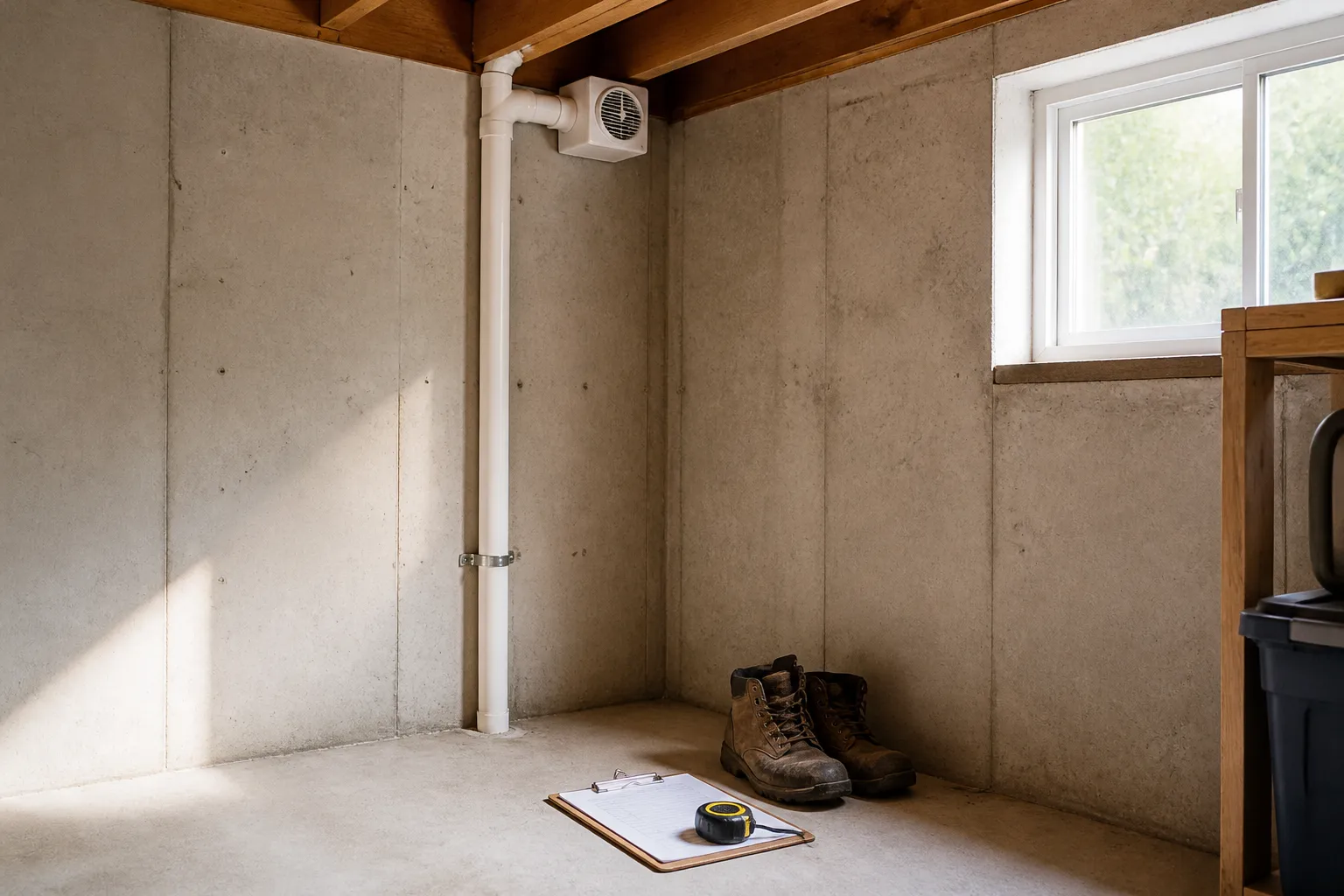
How much will it cost to get radon out of your house, and how do you know a quote is fair? The honest first answer is that it depends. The sources behind this guide do not give a full US dollar range for an initial installation, and I would rather say that plainly than hand you a number I cannot back up. What follows is a step-by-step way to get to a real figure for your own home. This is general information only, not personal medical, legal or financial advice, so check details with a licensed professional in your state.
Why the price is hard to pin down
Radon mitigation costs vary with home size, foundation design, and which reduction methods the home needs. A slab-on-grade ranch and a house with a basement plus a crawl space are different jobs. The EPA's cost guidance points readers to estimates from qualified contractors rather than a fixed figure.
Costs also vary by state and by local labor markets. Any dollar amount you see online should be checked against current quotes where you live. The state-by-state differences are not quantified in the sources I used.
The EPA does say most homes can be fixed for about the same cost as other common home repairs. That helps set expectations, but it is a general statement, not a quote. If you are weighing whether to act at all, the EPA recommends fixing a home at 4 pCi/L or higher, and considering a fix between 2 and 4 pCi/L, because there is no known safe level of exposure.
What a typical system involves
For a typical single-family home, the main method is active soil depressurization, usually called ASD. A qualified contractor can often install it in one day. A pipe runs from the soil beneath the home to a fan, and the fan vents the gas outdoors, away from windows and other openings. The EPA generally recommends soil suction because it keeps radon from entering the home in the first place.
Some systems can reduce radon levels by up to 99 percent. Results still depend on the home and on correct installation and upkeep.
- Sealing alone is not enough. Sealing cracks is not a reliable or durable fix. It is done alongside other steps.
- Multiple foundation sections cost more thought. Contractors can sometimes connect the sections so one fan serves them all, which can change the price.
Ongoing costs: the fan and retesting
The installation is not the only expense. Replacing a system fan typically costs around $200 to $350 including parts and labor, according to the EPA. That is one of the few specific figures in the sources, and local prices may differ.
Fans may last five years or more, but manufacturer warranties tend not to exceed five years. So it is smart to assume a replacement could come up during the life of the system. Running the fan is cheap, since fans typically draw less than 90 watts each.
Two habits keep the system honest:
- Check the warning device regularly to confirm the system is working.
- Retest at least every two years to confirm levels stay low. Budget for that as a recurring cost.
Choosing a qualified contractor
Start with credentials. Hire someone qualified under a state license or a national proficiency program, and ask which standard they install to. Three standards are in use by states or proficiency programs, and they are largely consistent. Florida, Illinois and Pennsylvania have their own.
Then compare. Get estimates from more than one qualified contractor and check what each one includes, since size, design and method drive the price.
Licensing rules differ by state. Minnesota, for example, requires licensing under the Minnesota Radon Licensing Act, passed in May 2015 and enforced by the state health department. You can read about it in the state's licensing overview. That license covers measurement professionals, meaning people who place or retrieve test devices in buildings they do not own or lease. Rules for other states are not described in my sources, so look up your own.
The EPA's Consumer's Guide to Radon Reduction offers tips for checking a contractor's work. Read it before you sign.
Questions to ask and red flags to watch for
Bring this short list to every estimate visit:
- Are you licensed or certified where required, and which installation standard do you follow?
- What does the estimate cover, and what does it depend on?
- What warranty covers the fan?
- Will the system be checked by retesting after installation?
Two red flags matter most. One is a plan that relies on sealing or caulking alone. The other is a contractor who is not state-licensed or certified where licensing applies.
Some gaps remain. The sources do not cover the cost of testing before mitigation, or whether insurance, loans or assistance programs help pay. Minnesota lists a financial assistance page among its resources, but I did not see its contents, so check it and your own state's equivalent directly. A licensed professional can help with the money questions.
Sources
- How much can a radon mitigation system cost? | US EPA
- https://vertexaisearch.cloud.google.com/grounding-api-redirect/AUZIYQEHY_3f_yoR9OAMPOZyl1sPkVU6fzNAJLdCaGCbXbySnfZvjwrwDaQzS1SQwQGeQlCmFiVBZZcM_j1eyIdVhlAX9FNDu8y3FGHplsNjOOb3mF2HV586okQf6PhlqDZ0Nh5IeGJkWE4C5y0wTmVLAOSLPJmpN6yjvShABgpZVplMWlBkcuyPJHl2KH4jyqPM5JJ_yIhUnC8vvRDf
- Reducing Radon In Your Home | National Radon Program Services
- How do I know if my radon mitigation system is working properly? | US EPA
- What is EPA's Action Level for Radon and What Does it Mean? | US EPA
- Radon Mitigation Systems - MN Dept. of Health
- https://vertexaisearch.cloud.google.com/grounding-api-redirect/AUZIYQHwm4IqB6JFvGgfhXavSmrlQR_RtmmMpyycw3rQzukhivuhObrotlkRHXT01YH37PFRrXHflszrqgxIxQn7StnF9lXf3KJurfVq3gZq5o0QLu-8LI7UFJvhUIxhb8GQHwojrrnjmILX0hcV_4rrjI-o-fZ27Gsp4PCvlI0U84ooO7c5srm8D5y4Ggefy9G78BtM
- Licensing for Radon Professionals - MN Dept. of Health
Still have a question?
Related guides
-

Upgrading to 200 Amps Without the Surprise Bill
Panel costs are only part of the story, so here is what a 200 amp upgrade typically runs, what can get added on, and what to ask before you sign. By Neil Ostrander
-

Tank or Tankless? How to Compare Water Heater Bids on Equal Terms
Learn how tank and tankless units differ, and which details a written plumber's quote should spell out so three bids can be compared fairly. By Renata Okafor
-

Find the Water First: A Practical Guide to Deciding on Mold Testing and Cleanup
Before anyone runs a sample or quotes a job, the moisture source and the size of the visible patch settle most of the decision.By Gideon Aldaine