What Tile Installation Really Costs, and the Questions That Keep Your Quote Honest
National price ranges, the factors that move them, and the written answers to get from every installer before you sign.
 By Neil Ostrander ·
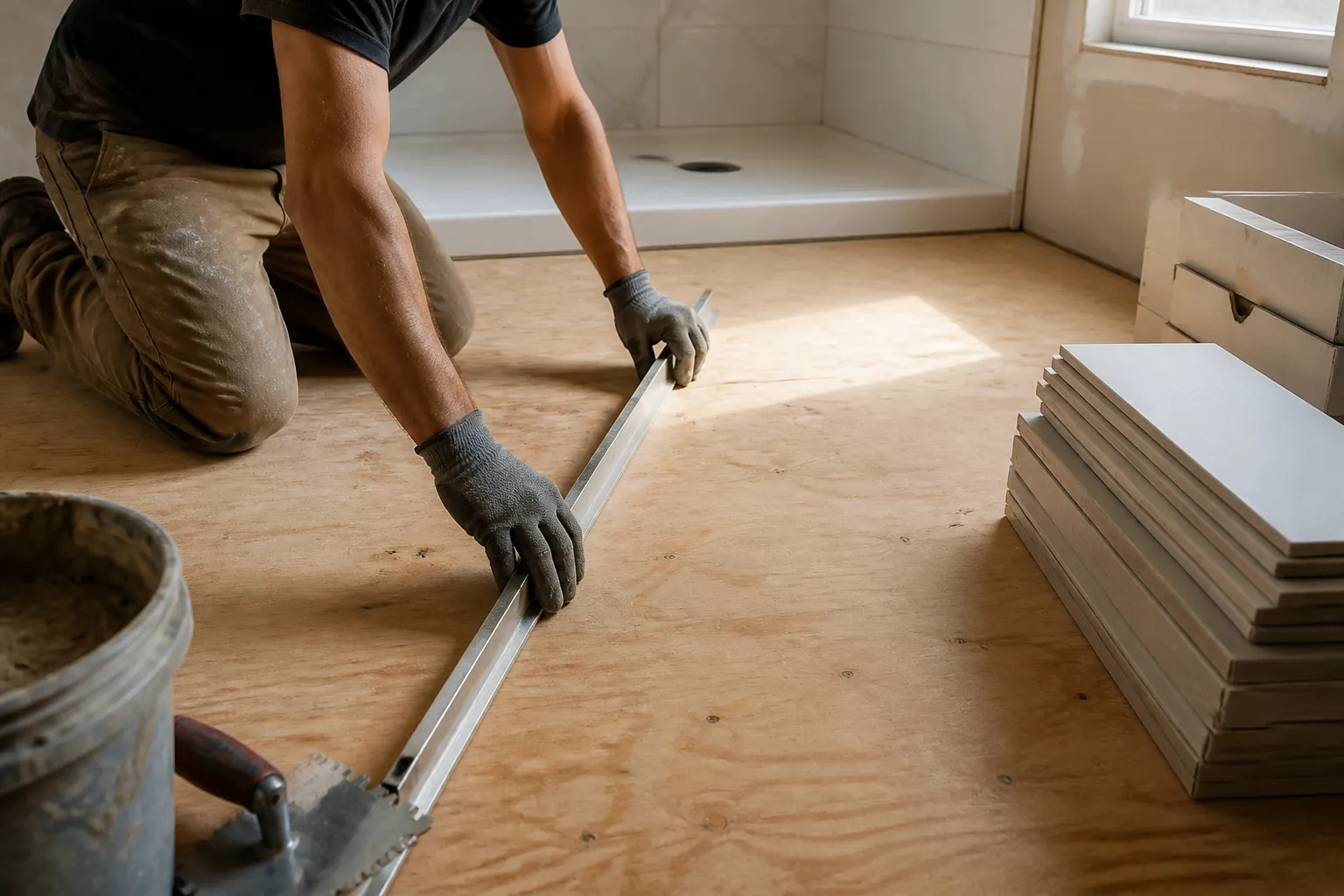
What should a tile job actually cost, and why do two quotes for the same bathroom sometimes sit thousands of dollars apart? Most of the gap comes down to what is, or is not, written into each bid. This guide walks through the national numbers, the factors that move them, and the checks worth making before you sign. All figures are national estimates and vary by state, region and your particular room.
What tile installation typically costs
For ceramic or porcelain tile, HomeAdvisor reports an average of about $2,111. The typical range runs from $949 to $3,422, and whole projects span roughly $400 to $7,000 depending on tile type and other factors. A tile tool maker's blog puts most homeowner totals at $1,200 to $6,500. It lists a small powder room near $600 and large areas or high-end kitchens above $8,000.
Measured by area, one source budgets $15 to $75 per square foot for a complete job with materials and professional labor. Labor alone is cited at $5 to $22 per square foot. Demolition and prep can add $150 or more. Outdoor work needs weather-rated setting materials and membranes, and is reported to add about 15 to 20 percent over an interior dry space.
Treat these as a starting frame. Local labor rates, permit costs and material prices differ a lot, so quotes from your own area are the only comparison that counts.
What drives the price
Four things do most of the work: the room, the tile, the condition of the surface underneath, and where you live. A small bathroom floor with standard tile over a sound subfloor sits at the low end. A big kitchen with large format tile over an uneven floor sits at the high end.
Large format tile is heavy and needs a flatter base than standard tile. Moving it often takes two people and suction equipment. Mosaics go the other way: they are light, but they take more time and more cuts, so labor per square foot climbs.
Floor prep is where budgets quietly grow. Depending on the floor, it may involve:
- Self-leveling compound, which can raise the floor by up to about a quarter inch
- Patching product to fill low spots
- Grinding to knock down high spots
- Some mix of all three
Some problems, such as a damaged subfloor or uneven framing, only show once the old flooring is up. Kitchens and bathrooms also call for moisture-resistant materials and vapor barriers. The setting materials that hold the tile down and the prep underneath are both real costs, and skimping on either is a common cause of failure. A bid far below the others often has less or cheaper material behind it.
How to choose an installer
Start with qualifications. The NTCA Five-Star Accredited Contractor program counts Certified Tile Installers (CTI) and US Department of Labor approved tile setters among qualified labor. For residential contractors, it asks for:
- At least $150,000 in tile installations per year for the past five years
- At least 30 percent CTI or DOL-approved setters on the tile setting staff, not counting helpers
- A list of 50 completed projects
- Three projects of $25,000 or more
Accreditation is one signal among several. The sources I reviewed do not explain how to verify CTI status or DOL approval, so ask for documentation and check with the issuing group. You can read about the program in ProInstaller Magazine's coverage.
Look past the first number, too. One installer argues that a premium leveling approach costs more up front but can cut later repairs. Industry standards, including ANSI A108/A118/A136.1 published through the Tile Council of North America, are a useful reference. Ask your installer in plain terms how their work meets them.
Questions to ask before you sign
Put these to every installer, and get the answers in writing:
- Does the quote include demolition, floor preparation and leveling, or only tile setting?
- If the floor's condition is unknown until the old flooring comes up, is there an allowance for unexpected labor? How would extra work be priced and approved before it starts?
- Which setting materials are included, and are they suited to the room, such as a wet or outdoor area? Ask for product names.
- Are the installers CTI-certified or DOL-approved tile setters?
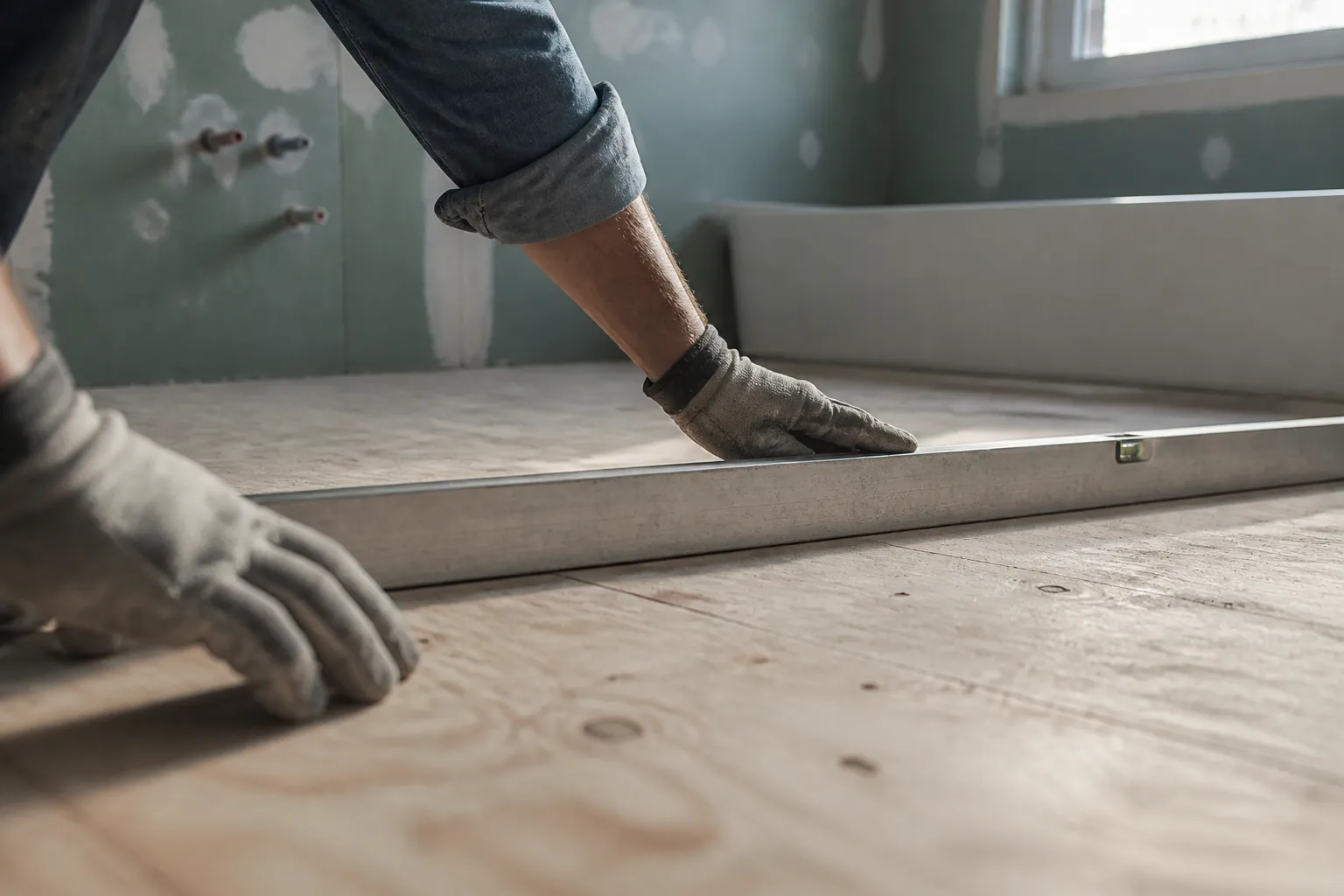
- Will the floor meet the TCNA flatness tolerance for your tile size? For tiles 15 inches or longer, the 2016 manual cited gives 1/8 inch in 10 feet, and no more than 1/16 inch variation in 24 inches.
- Which grout joint size and layout does the tile manufacturer specify?
Many disputes begin when a low quote leaves out work the floor needs. Question two and question one together prevent most of them.
Red flags in a quote or contract
A few patterns deserve a pause. Very low bids that cut corners on setting materials can lead to failure. Extra charges that show up only after tear-out, with no allowance in the contract, can turn a fair quote into a fight. A contractor who will not say whether floor prep is included has left a major cost unclear. And a plan to set large format tile on an uneven floor without addressing flatness will likely cause trouble later, such as lippage or cracked tile.
What these figures do not cover
The numbers above are national. They do not break costs down by state, and they do not cover permits, licensing or warranty terms. Check your state licensing board and local building department. No figures were found for natural stone, glass or heated floor add-ons, so ask for separate quotes if you want any of those.
This is general information, not advice for your project. Get written quotes from several qualified installers for your own room, and consider talking with a licensed professional about contracts or financing.
Sources
- Flooring Installers and Tile and Stone Setters : Occupational Outlook Handbook: : U.S. Bureau of Labor Statistics
- Tile Council of North America | Voice of the Ceramic Tile Industry
- 2026 Tile Floor Installation Cost
- Publications | Tile Council of North America
- Hamilton Tile | The added cost of floor prep for large form…
- NTCA Five-Star Contractor Program Updated with Accreditation - ProInstaller Magazine
- How Much Does It Cost To Install Tile Flooring? (2026 Guide)
- How Much Does It Cost to Install Ceramic and Porcelain Tile? [2025 Data]
Still have a question?
Related guides
-

Upgrading to 200 Amps Without the Surprise Bill
Panel costs are only part of the story, so here is what a 200 amp upgrade typically runs, what can get added on, and what to ask before you sign.By Neil Ostrander
-

Tank or Tankless? How to Compare Water Heater Bids on Equal Terms
Learn how tank and tankless units differ, and which details a written plumber's quote should spell out so three bids can be compared fairly. By Renata Okafor
-

Find the Water First: A Practical Guide to Deciding on Mold Testing and Cleanup
Before anyone runs a sample or quotes a job, the moisture source and the size of the visible patch settle most of the decision. By Gideon Aldaine