What Water Damage Restoration Really Costs and How to Compare Quotes
A clear breakdown of the price drivers, insurance context, and checklist questions that help you judge restoration bids before you sign.
 By Neil Ostrander ·
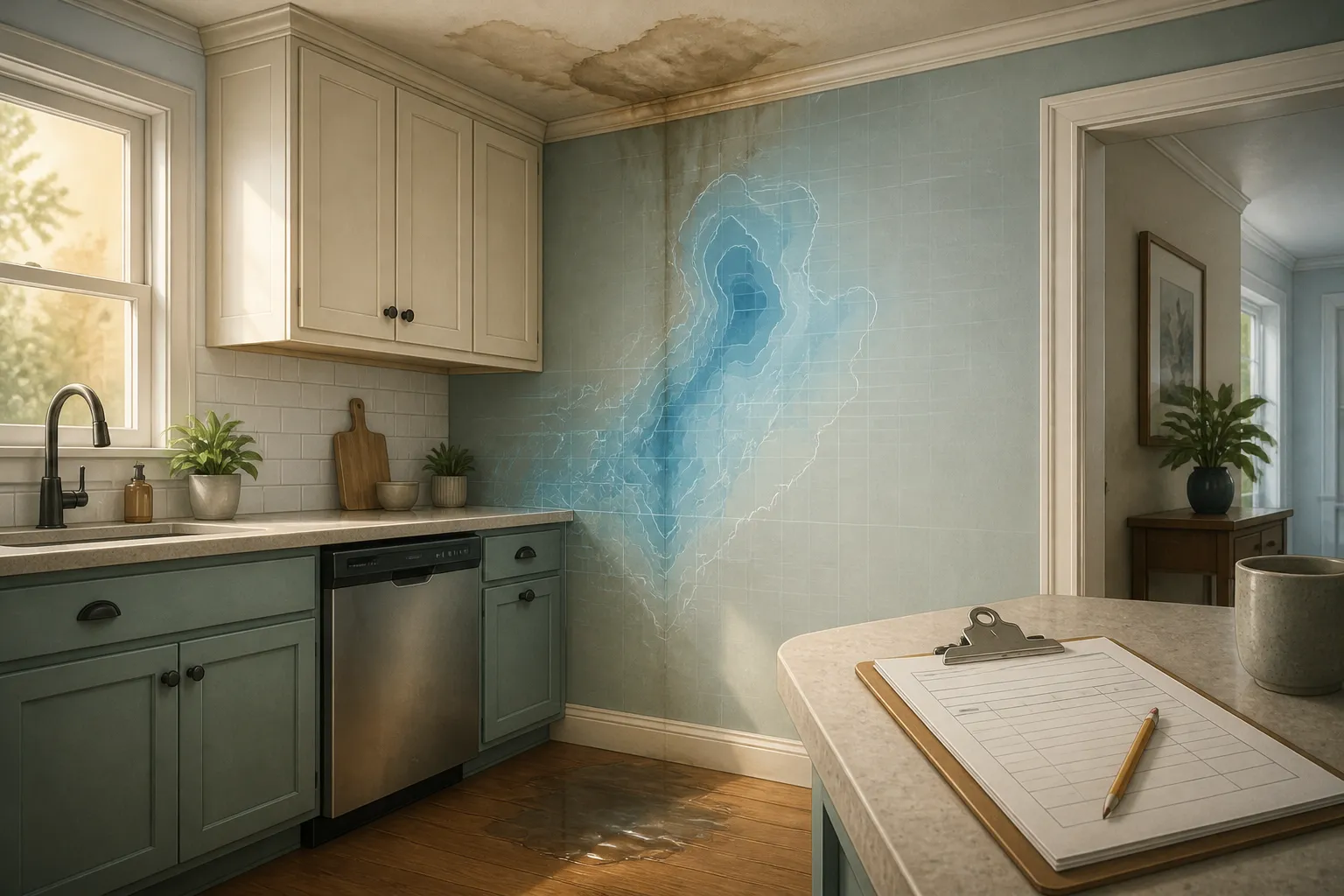
You find a stain spreading across the ceiling, or an inch of water under the dishwasher, and the first question is always the same: what is this going to cost me? The honest answer is a range, and the range depends on a handful of things you can check. This guide walks through them in order, so you can compare quotes with a clear head. It is general information only, not personal financial, legal or insurance advice, so confirm specifics with a licensed professional in your state.
What a typical water damage restoration job costs
One restoration cost calculator put a typical residential job at roughly $5,700 to $8,600, with a midpoint near $7,100. The tool itself calls that a planning range, not a quote, and says it does not replace an on-site moisture map and a written scope. Treat it the same way.
The breakdown in that same run is more useful than the total, because it shows where the money goes:
- Mitigation and drying: about $1,400
- Selective demolition: about $436
- Sanitation and mold controls: about $154
- Rebuild and finish work: about $3,900
- Contents and pack-out: about $790
- Emergency or complexity charges: about $380
Notice that rebuilding is the biggest slice. A small leak can still become a larger bill once walls, flooring and cabinets need to be replaced. Costs also vary by state, metro area, and the age and construction of the home. The sources behind this guide have no state-by-state pricing, so get local quotes before you decide anything.
What changes the price
Start with the type of water. Restorers sort water into three categories, and the category shapes the whole job.
- Category 1 is clean water, such as a broken supply line. It is usually the simplest and least costly to dry.
- Category 2 is gray water with significant contamination. Expect more aggressive extraction, possible removal of porous materials, antimicrobial treatment and protective gear.
- Category 3 is black water, such as sewage or floodwater. It calls for the most safety precautions and generally costs more.
The sources do not give exact dollar gaps between categories, so ask each bidder to explain theirs.
Time is the next driver. Clean water can slide into a more contaminated category if it sits for about 48 to 72 hours, and mold can start on wet porous materials within roughly 24 to 48 hours. Faster drying often means a smaller scope.
Mold is priced separately. A lead-generation guide cites about $500 to $6,000 for typical residential remediation, averaging near $2,200, with big jobs passing $10,000. It adds that black mold protocols can run 30 to 50 percent higher, and that drywall, subfloor or joist repairs can add 40 to 80 percent on top. That is marketing content, so use it as rough guidance only. Contents and pack-out, meaning moving, cleaning and storing furniture or electronics, is one more line that should be spelled out.
How insurance fits in
Insurance data shows how common and costly these events are. The Insurance Information Institute reports that the average paid homeowners water damage and freezing claim was about $20,062 in 2023, up from about $13,884 in 2019. Water damage and freezing made up about 22.6 percent of homeowners insurance losses in 2023.
Keep the limits in mind. Those are averages across every cause and size of loss, not prices for your repair. The sources here also do not explain deductibles, how insurers approve or pay restoration vendors, or how to appeal a decision. Call your insurer, or your state insurance regulator, to confirm those rules for your policy.
How to compare quotes and choose a restorer
Quotes only compare fairly when they cover the same work. Before you collect bids, make a short checklist and ask every company to answer it in writing:
- What is the water category and class?
- Which materials are affected?
- What is the drying plan?
- Is any mold work included?
- Which structural repairs are included?
- How will contents be handled?
Then check credentials. Look for firms and technicians with IICRC certification who work to the ANSI/IICRC S500 standard, the industry framework for water damage restoration. IICRC publishes a locator for certified firms and professionals, which is a practical way to verify a claim. The S500 page at IICRC explains what the standard covers.
Also ask who is fixing the leak itself. The S500 assumes finding and correcting the source is the property owner's responsibility, though you may hire the restorer or another specialist to do it. If a bidder folds that into the drying job, ask for it as a separate, explained line item. Licensing, contract terms and complaint history are not covered in the sources, so check your state licensing board and local consumer protection office.
Red flags and questions to ask
A bid that never names the water category or the work it covers is hard to judge and can hide added charges later. Be careful with urgency, too. Drying should start fast, but a pitch built on fear instead of documented moisture readings deserves a second look. Ask to see the readings or moisture map behind the scope.
Bring these questions to every call:
- How soon can drying begin?
- Has the water source been confirmed and fixed, or is that on me?
- Are mold, structural and contents work included or quoted separately?
- Will the written estimate follow the S500 approach?
Last, remember where the numbers come from. Many published ranges come from marketing tools and lead-generation sites, not independent price surveys. Use them to set expectations, then rely on written, on-site quotes from licensed local professionals.
Sources
- S500 – IICRC
- Water Damage Repair Cost Calculator — 2026 Estimate by ZIP | Free
- Essential IICRC Standards | Restoration Guide | ADRI
- Water Damage Restoration Cost: Complete 2026 Pricing Guide
- Water Damage Categories & Classes Explained | IICRC Guide
- Facts + Statistics: Homeowners and renters insurance - Triple-I®
- Table Archive
- The average water damage and freezing claim: $13,954 (Insurance Information Institute, 2018 to 2022). The repair is usually small. Finding the leak is the hard part. That's why leak detection is a specialty. Training for plumbing companies: https://leak.pro | Roger Wakefield
Still have a question?
Related guides
-

Upgrading to 200 Amps Without the Surprise Bill
Panel costs are only part of the story, so here is what a 200 amp upgrade typically runs, what can get added on, and what to ask before you sign.By Neil Ostrander
-

Tank or Tankless? How to Compare Water Heater Bids on Equal Terms
Learn how tank and tankless units differ, and which details a written plumber's quote should spell out so three bids can be compared fairly. By Renata Okafor
-

Find the Water First: A Practical Guide to Deciding on Mold Testing and Cleanup
Before anyone runs a sample or quotes a job, the moisture source and the size of the visible patch settle most of the decision. By Gideon Aldaine