When a Contractor Walks Off the Job: A Homeowner's Step-by-Step Guide
Documenting the problem, sending written notice, and filing with the right board gives you the strongest footing to recover your position and protect your next project.
 By Gideon Aldaine ·
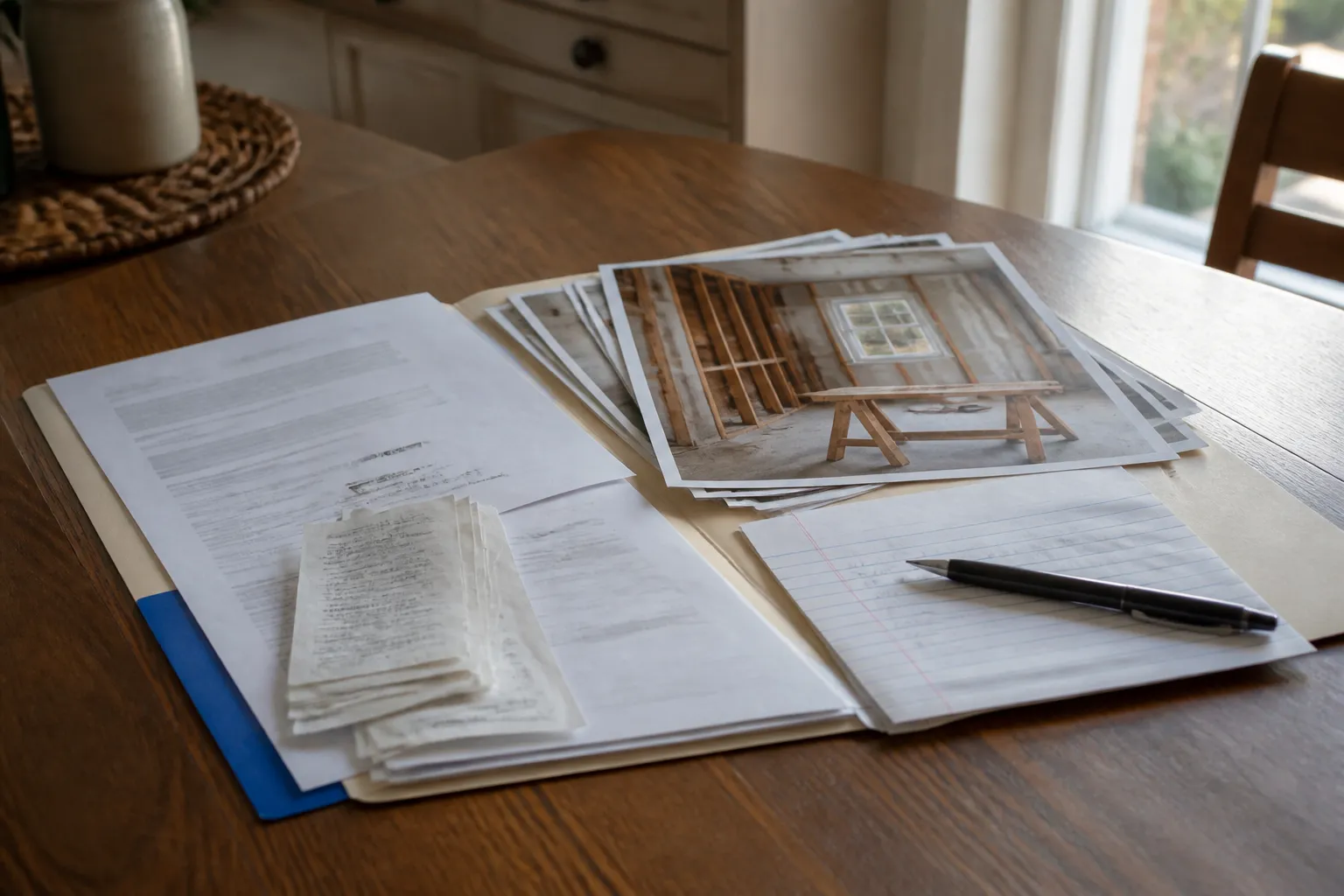
What do you do when the crew stops showing up, the tools disappear, and your half-finished project sits there with no one answering the phone? It is stressful, and it is more common than most homeowners expect. The good news is that there is an orderly path to follow. This guide walks through it in steps: document, notify, report, weigh the money options, and then hire more carefully next time. It is general information only, not legal or financial advice, so check with a licensed professional about your own situation.

Recognize abandonment and document it
Abandonment generally means a contractor stops work before the job is finished without a legitimate reason. California's contractor licensing board, CSLB, lists it as a failure to fulfill an agreement that can be filed as a complaint. Other states use different wording and different agencies, so look up your own state's board. Knowing the term helps you describe the problem clearly when you report it.
Before you do anything else, pull your records together. A simple checklist works well:
- The signed contract and any change orders
- Proof of every payment, including checks, receipts and bank records
- Texts, emails and voicemails with the contractor
- Dated photos of the work as it stands today
- A log of when work stopped and each time you tried to reach the contractor
Also look for the license number. In California, licensed contractors must list it on all advertising, including contracts and business cards. A missing number is worth writing down, because it may mean the contractor was not licensed at all.
Send written notice before filing
CSLB asks whether you formally notified the contractor of your concerns before you filed. A written notice gives you a clear record of what you asked for and when. It also gives the contractor a fair chance to come back and finish. The board offers a sample letter in English and Spanish, and you should keep a copy to submit with your complaint.
Keep the letter plain and factual. Include these points:
- The contract date and the work that was agreed to
- What has been completed so far
- The date work stopped
- What you are asking the contractor to do, and by when
Skip insults and threats. An investigator or a judge may read this letter later, and a calm tone helps you. Keep proof that it was sent, such as a mailing receipt.
File a complaint with the licensing board
In California, CSLB investigates complaints against both licensed and unlicensed contractors for violations of Contractors State License Law. It generally handles complaints for up to four years from the date of the act. The sources here are California-specific, so if you live elsewhere, confirm your own state's agency and deadline.
Complaints can come from homeowners, other contractors, subcontractors, employees and public agencies. Separate forms apply to licensed and unlicensed projects, so check the contractor's license status first and pick the right one. If the abandoned work creates a danger, such as exposed wiring or an open structure, say so plainly. Complaints involving a threat to public health and safety get the highest priority.
If the board cannot settle the matter, you may be pointed to alternative dispute resolution resources. The sources do not say how long investigations take, so plan for it not to be quick.
Understand the money side and your court options
Here is the part that surprises people. CSLB says its purpose is protecting the public, and its investigations are not aimed at restitution. A complaint can lead to action against a license without putting your money back in your pocket. If financial recovery is your main goal, the board suggests considering the courts.
For limited damages, CSLB points to a small claims guide. For greater damages, it says to consult an attorney. Small claims limits and procedures vary by state, so read your local court's rules before filing. The sources do not explain how to recover a deposit or how a judgment is obtained, so a licensed attorney or court self-help office is the right place to ask.
There is one useful link between the two paths. CSLB can suspend the license of a contractor who fails to satisfy final judgments substantially related to construction, with sufficient proof. That adds pressure, but you still have to win the judgment first.
What will it cost? The sources give no figures for a replacement contractor or for legal fees, and both vary widely by state and by the size of the job. Get written quotes for the remaining work, and ask the court or an attorney about filing and legal fees before you commit.
Protect yourself on the next hire
Before signing anything, ask these questions:
- Does the contractor hold a license, and does the number appear on the contract and advertising?
- Is the license active, and which complaint process would apply if something went wrong?
- If I ever have concerns, how will we put them in writing?
Be careful with unlicensed work. In California, it is illegal for an unlicensed person to do contracting work on any project priced at $1000 or more, labor and materials included. Hiring one can leave you with fewer options if things fall apart.
Watch for these red flags: a contractor who stops before completion, one who fails to pay subcontractors, suppliers or employees and leaves liens or disputes behind, and one who cannot show a valid license. For broader advice on home improvement scams, the FTC publishes guidance at consumer.ftc.gov. You can also read the board's own pages on filing a construction complaint and how the complaint process works.
Sources
Still have a question?
Related guides
-

Upgrading to 200 Amps Without the Surprise Bill
Panel costs are only part of the story, so here is what a 200 amp upgrade typically runs, what can get added on, and what to ask before you sign. By Neil Ostrander
-

Tank or Tankless? How to Compare Water Heater Bids on Equal Terms
Learn how tank and tankless units differ, and which details a written plumber's quote should spell out so three bids can be compared fairly. By Renata Okafor
-

Find the Water First: A Practical Guide to Deciding on Mold Testing and Cleanup
Before anyone runs a sample or quotes a job, the moisture source and the size of the visible patch settle most of the decision.By Gideon Aldaine