Who Pays When a Contractor Damages Your Home or Leaves the Job Unfinished
Homeowners insurance may cover sudden accidental damage from a contractor, but it generally won't fix bad workmanship or finish an abandoned project.
 By Gideon Aldaine ·
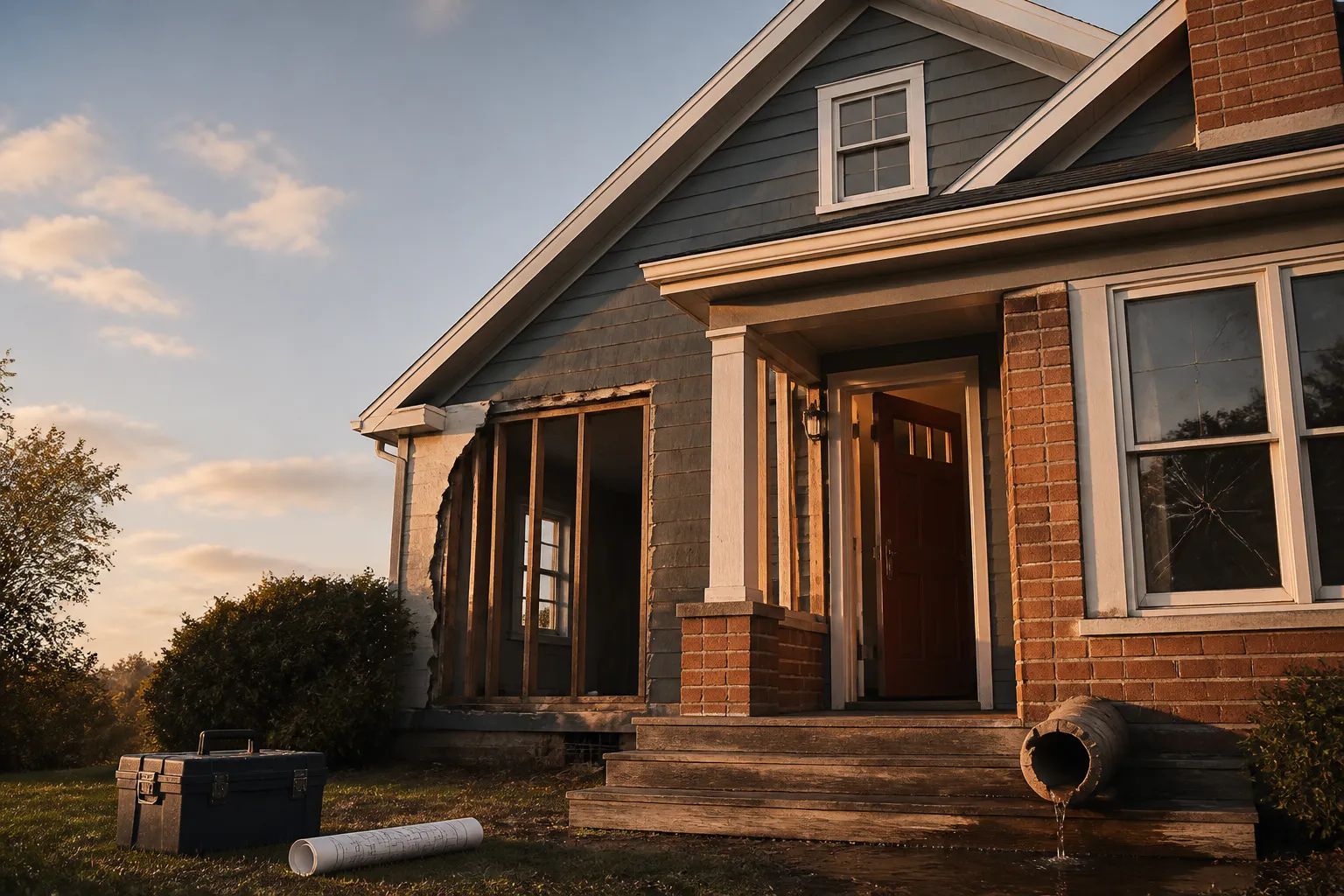
You hired a contractor to improve your house, and now something is cracked, leaking or half done. Who pays? The short answer is that homeowners insurance may cover sudden, accidental damage a contractor causes, but it usually does not pay to redo bad work or finish a job that was left hanging. This guide walks through where that line falls and what to do before and during a project. It is general information, not legal, insurance or financial advice, so check your own policy and talk with a licensed professional about your situation.
When homeowners insurance may cover contractor damage
Think of it as accident versus workmanship. If a contractor causes damage that is sudden and accidental, your homeowners policy may respond. A common example is a worker drilling through a load-bearing wall. The repair to the wall may be covered, though the decision belongs to your insurer under your own policy, and nothing is guaranteed. The cost of fixing the contractor's faulty work itself is a different matter, covered in the next section.
Several things shape what you actually receive:
- Your coverage limit. The policy will only pay up to its limit for that kind of loss.
- Your deductible. You pay it first, so a small accident can cost you more out of pocket than the claim would return.
- Loss of use. If the home becomes unlivable during repairs, additional living expenses may pay for hotel stays and meals above what you normally spend.
Water damage is a frequent case. If a plumber installs a pipe badly and it leaks, the policy may cover the resulting damage to walls, floors and furniture. It likely will not pay to reinstall the pipes.
Poor workmanship and unfinished work
Homeowners insurance typically does not cover poor workmanship, or damage that flows from contractor negligence in the work itself. If the tile is crooked or the deck is built wrong, correcting it is usually your responsibility unless the contractor fixes it or another remedy applies. Insurance is built for accidents, not for a job that simply came out badly.
So what should you do when work is defective? Try this order:
- Reach an agreement with the contractor on how the work will be corrected.
- Put that agreement in writing and keep copies.
- If you cannot agree, you may file a complaint with the government agency that licenses the contractor, though whether it can take a complaint about a specific job depends on your state and the trade.
- You may also pursue a civil lawsuit.
Unfinished work is murkier. The sources we reviewed do not explain recovery after a contractor stops or abandons a job. If that happens, review your contract, call your insurer, and consider a licensing agency or an attorney. Stop further payments until you understand where the project stands.
Protecting yourself before and during the project
Have you called your insurance agent yet? Do it before the first day of work. Ask whether your homeowners policy needs updating for the project and whether you need other coverage while it is underway. Then work through this checklist:
- Ask about builder's risk. Also called course-of-construction coverage, it generally protects the home during construction from wind and rain, theft of materials and vandalism. It can be stand-alone or an add-on to a homeowners policy. It generally does not cover the contractor's own equipment.
- Ask to see the contractor's policies. A licensed, insured contractor should carry commercial general liability insurance and workers' compensation.
- Walk away if they will not verify. If a contractor is not adequately insured or will not confirm coverage, consider hiring someone else.
- Document everything. Take photographs and keep records and receipts before, during and after the work.
Photos taken before demolition are the cheap step people skip. They make any later claim or complaint far easier to support.
Red flags and questions to ask
Contractor fraud tends to spike after storms and other catastrophes, and it often leaves incomplete work and poor workmanship behind. The National Insurance Crime Bureau reported that contractor fraud cases rose 38% over the past three years. Be cautious of unsolicited contractors at the door, flyers, or online offers that push immediate action. Pressure to sign quickly, thin vetting and agreements signed under duress are all warning signs.
Before you sign, verify credentials, compare several written estimates and read the contract closely. Then ask:
- Will my insurer need to be told about this project, and do I need builder's risk coverage?
- Can I see your general liability and workers' compensation policies?
- What will you do to correct the work if it is not right?
- Can the licensing agency take a complaint about your work?
After hiring, watch for signs of financial hardship or work that stalls. Those can point to a contractor who will not finish.
What this guide does not settle
Your policy is the final word, and the sources here do not state the terms, exclusions or limits of any particular one. Read it, then ask your insurer directly how it treats contractor-caused damage. No state-by-state licensing or insurance rules are provided, and no typical dollar figures for repairs, deductibles or limits are given. Costs and rules vary by state, so check with your state licensing board and insurance department.
The sources also do not walk through filing a claim for contractor damage, checking a license with a specific agency, or pursuing unfinished work in court. For those steps, a licensed insurance professional or attorney can give advice that fits your situation.
Sources
- What to Look for When Hiring a Pressure Washing Company in Houston - Advantage Pro Services
- If You Are Planning to Remodel Your Home, Notify Your Insurance Company First - Triple-I®
- Contractor Fraud After Disaster: A Persistent Challenge in the Recovery Process - Triple-I®
- Does Homeowners Insurance Cover Contractor Damage? | Progressive
Still have a question?
Related guides
-

Upgrading to 200 Amps Without the Surprise Bill
Panel costs are only part of the story, so here is what a 200 amp upgrade typically runs, what can get added on, and what to ask before you sign. By Neil Ostrander
-

Tank or Tankless? How to Compare Water Heater Bids on Equal Terms
Learn how tank and tankless units differ, and which details a written plumber's quote should spell out so three bids can be compared fairly. By Renata Okafor
-

Find the Water First: A Practical Guide to Deciding on Mold Testing and Cleanup
Before anyone runs a sample or quotes a job, the moisture source and the size of the visible patch settle most of the decision.By Gideon Aldaine