Who Pulls the Permit on a Home Remodel, and What That Means for You
Whether you or your contractor files the paperwork shapes your liability, your costs, and how closely your work gets inspected.
 By Gideon Aldaine ·
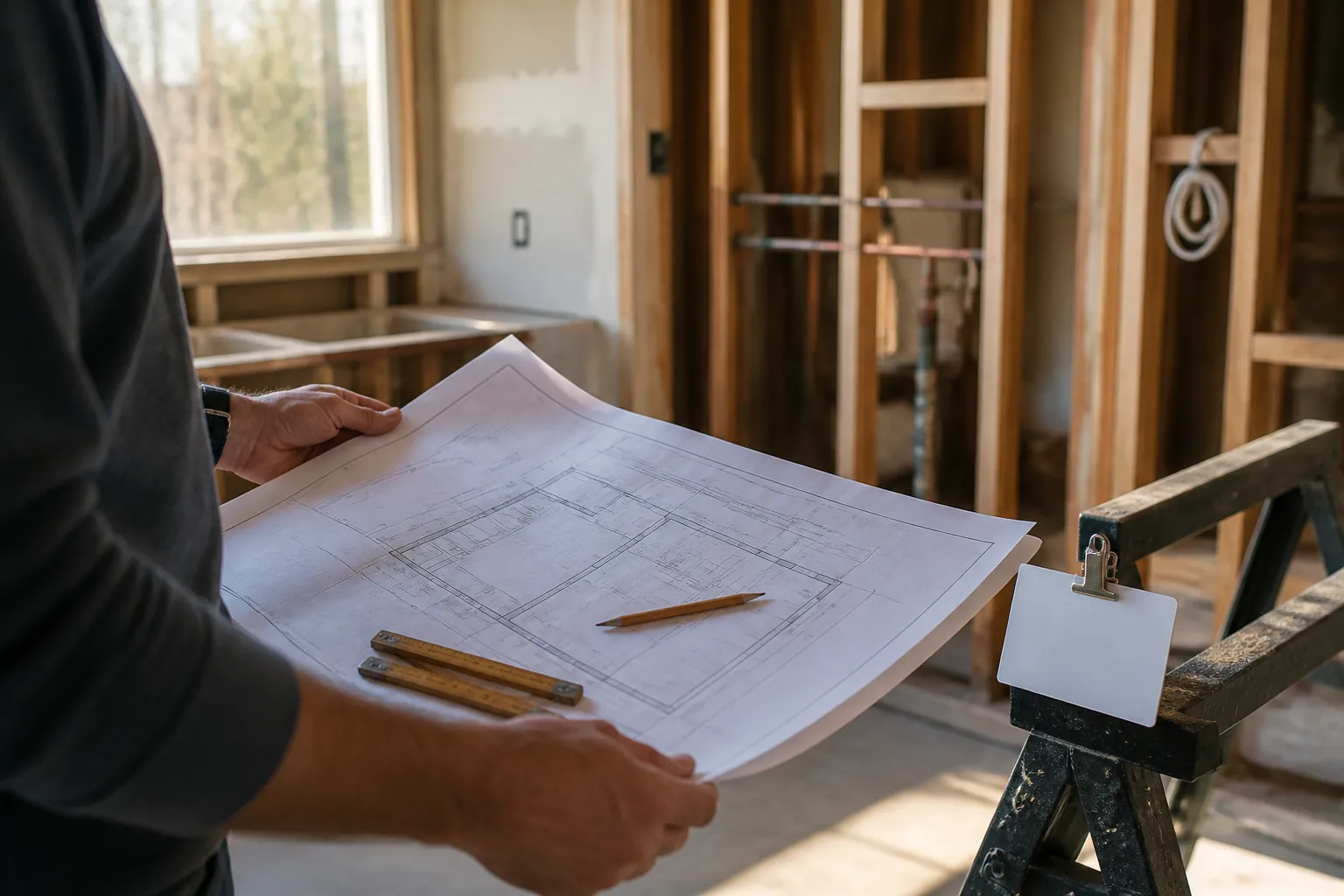
Are you about to knock out a wall, move a sink, or add a circuit, and wondering whether the city needs to know? Most remodels that touch structure, plumbing, electrical, or mechanical systems do need a building permit. The second question is just as important: who pulls it? The answer affects your liability, your costs, and how carefully the work gets checked.
Why remodel permits exist
Building permits are required by law as a public safety measure. They confirm that construction meets state and local codes, including safety standards. A permit also creates a record that a qualified official reviewed the plans and will inspect the work at key stages.
Rules differ by state and town, so the same bathroom project may need a permit in one place and not in the next door town. Oregon, for example, requires local permits for new construction and for structural, plumbing, mechanical, and electrical changes to existing homes. Your first step is always the same:
- Call or visit your city or county building department.
- Describe the project in plain terms.
- Ask whether a permit is required and what it covers.
Skipping a required permit does not make the project simpler. It can leave you with uninspected work, which may complicate insurance claims, a home sale, or later repairs.
Who is allowed to pull the permit
In many places, a homeowner may pull permits for work on a home they own and live in. Michigan allows this, but it is against the law there for contractors to do work under a permit a homeowner obtained. The permit holder and the person doing the work have to line up. In Oregon, the person performing the work, homeowner or contractor, is responsible for obtaining the permits.
So the answer usually follows the labor. If a contractor is doing the job, the contractor generally pulls the permit. If you are doing it yourself, you do. One township building office also makes a point worth remembering: homeowner permits are not cheaper, not faster, and not held to a lower standard than contractor permits.
What owner-builders take on
If you pull the permit and act as an owner-builder, signing the application means you assume full responsibility for all phases of the project and its integrity. The work must pass code and building inspections. You also become the project manager, which means you will:
- Order materials and make sure suppliers get paid.
- Supervise and schedule subcontractors.
- Pay those subcontractors on time.
Hiring anyone other than a licensed subcontractor may make you an employer. That can bring registration with state and federal agencies, income tax withholding, Social Security taxes, workers' compensation insurance, disability insurance costs, and unemployment contributions. Many homeowners who plan to hire out most of the work find the permit is the easy part. The coordination and payroll duties are where the time and risk add up. The California licensing board explains these duties in its owner-builder responsibilities page.
Permit timelines and inspections
Permits do not last forever. In Oregon, a permit expires if work does not start within 180 days of issuance, or if work is suspended or abandoned for 180 days or more once begun. You can usually ask the local building official for an extension, so call before the deadline if your project stalls. Oregon's residential permit page lays out these rules.
During the work, keep the permit on site where the inspector can see it, along with approved plans if your permit includes them. Then ask the building department these questions:
- Which inspections are required?
- When must each one be scheduled?
- What must stay uncovered until it passes?
Covering work before inspection can mean opening the wall back up later. That is a costly way to learn the schedule.
Risks of unpermitted work and how to report it
In California, contractors who do improvement work without a local permit can face civil penalties from the state licensing board. The current form cites up to $8,000 per violation, while an older page says up to $5,000, so the figure depends on which version you read. Contractors may also be ordered to pay permit fees and local penalties, and may have their license suspended or revoked. Homeowners can face added liability and costs too. Unpermitted work may have to be opened up, corrected, and permitted after the fact, often at greater expense than doing it right at the start.
If you think a contractor is working without a required permit in California, the board takes reports through its building permit violation form. The board contacts the contractor and can take disciplinary action.
Choosing a contractor with the permit question in mind
Ask early: will you pull the permit? A contractor who asks or insists that you pull it may be dodging liability for quality and workmanship, or may not be licensed. Either is a reason to slow down. Before signing, run through this checklist:
- Are you licensed and registered with the state? Many states, but not all, require licensing or bonding.
- How long have you been in business?
- Can consumer protection officials say whether complaints are unresolved?
- Do you use any other business names?
A clean record does not guarantee a clean past. Problems can go unreported, and some businesses operate under several names, so search each one. Then put it in writing: the contract should say who pulls the permit, who schedules inspections, and who is responsible for code compliance.
Limits of this information and where to get specifics
The sources behind this guide cover parts of Michigan, California, and Oregon only. They give no national rule and no typical permit fees, so fees and project-by-project requirements must come from your own jurisdiction. Contact your city or county building department and ask which projects need a permit, who may pull it, what fees apply, which inspections are required, and how expiration and extensions work. Your state licensing board can answer questions on contractor licensing and complaints.
This is general information, not legal, financial, or insurance advice. Liability, insurance coverage for unpermitted work, and resale disclosure vary by location and policy, so ask a licensed professional in your area.
Sources
- Owner-Builder Responsibilities - CSLB
- Contractor Permits vs Homeowner Permits | White Lake Township MI
- Building Code Complaint -CSLB
- Filing a Building Permit Violation Form
- https://vertexaisearch.cloud.google.com/grounding-api-redirect/AUZIYQF5cBRMKZ2IMy64BSmHSp334jbwdugw2Rrk3gOV8QpFyyDmaY02kqYgoa93sRLKPil2_deme2jVxx-EXR_5CIOo8mQwIK_2Rp7_9FhMOYoaPjk_lC51H_ObaFAS7HEa69qM_w-HWv_Iu9DLuh3Xp2VrLqGcqRrm3gXBm3QoHcWEDHjXxeKsBpwUFg7jr4ZUvWoE
- Remodeling? Who pulls the Permits? — CORE Remodeling Services, Inc.
- Questions to Ask When Hiring a Contractor | Merchants Insurance Group - Earning Your Business Every Day
- Building Codes Division : About Oregon residential building permits : Local Building Department Directory : State of Oregon
Still have a question?
Related guides
-

Upgrading to 200 Amps Without the Surprise Bill
Panel costs are only part of the story, so here is what a 200 amp upgrade typically runs, what can get added on, and what to ask before you sign. By Neil Ostrander
-

Tank or Tankless? How to Compare Water Heater Bids on Equal Terms
Learn how tank and tankless units differ, and which details a written plumber's quote should spell out so three bids can be compared fairly. By Renata Okafor
-

Find the Water First: A Practical Guide to Deciding on Mold Testing and Cleanup
Before anyone runs a sample or quotes a job, the moisture source and the size of the visible patch settle most of the decision.By Gideon Aldaine